Creatine on a GLP-1: Does It Protect Muscle? (Dose & Timing)
Creatine monohydrate is one of the cheapest, best-studied supplements for holding onto strength and lean mass while you lose weight on Ozempic, Wegovy, Mounjaro, or Zepbound. Here's exactly how it works in a calorie deficit, the 3–5 g daily dose (no loading phase needed), the best time to take it around your injection day, the truth about water weight and bloating, and how to stack it with protein and electrolytes.
If you're losing weight on a GLP-1 medication, the honest goal isn't just a smaller number on the scale — it's losing fat while keeping the muscle that keeps your metabolism, strength, and energy intact. Research on semaglutide and tirzepatide consistently shows that roughly 25–40% of total weight lost can come from lean tissue when protein and training are left to chance.
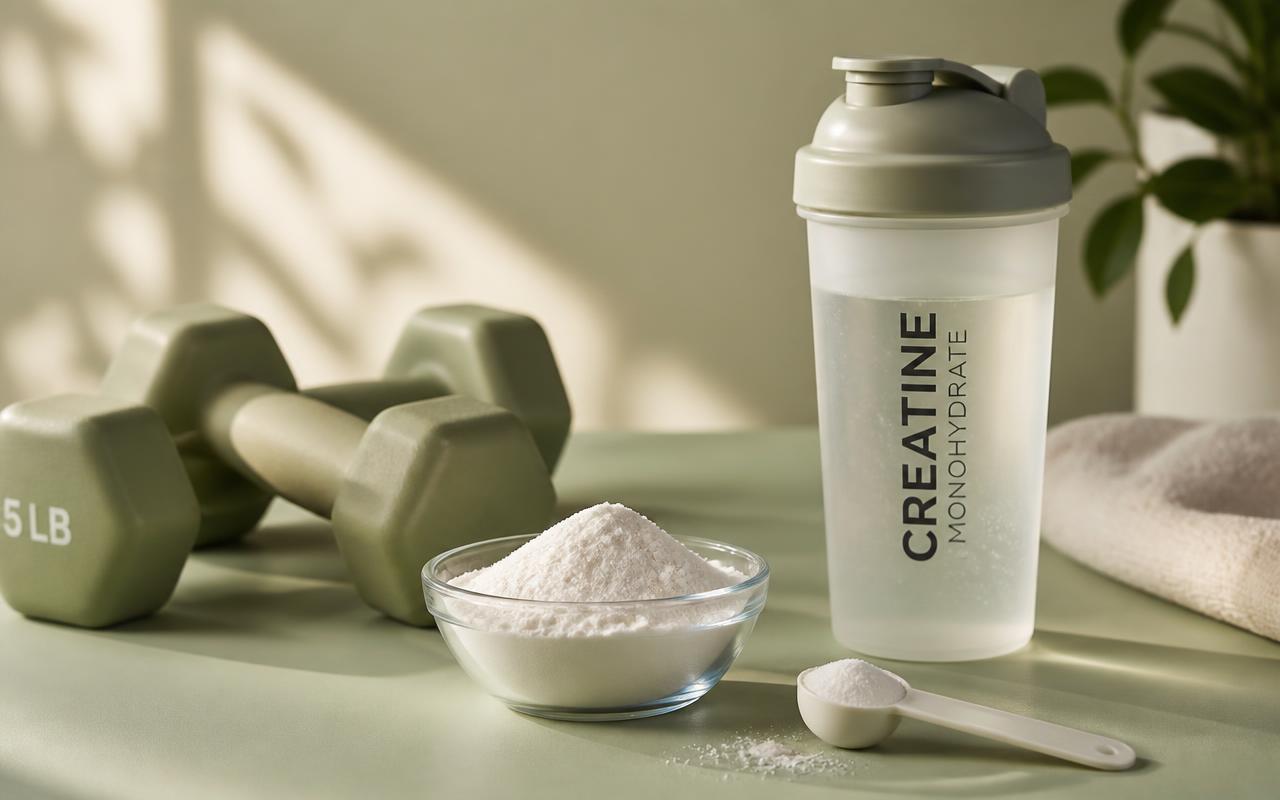
Creatine monohydrate is the single most-studied supplement in sports nutrition (hundreds of human trials, decades of safety data), and its main job is exactly the problem GLP-1 users face: helping muscle hold onto strength and volume when calories are low. It is not a fat burner, and it will not replace protein. But at 3–5 grams a day and pennies per serving, it's one of the highest-value additions to a GLP-1 supplement routine.
This guide covers what creatine actually does in a deep calorie deficit, the exact dose and timing that works with an injection schedule, whether it causes bloating or water weight (mostly a myth, with one nuance), safety questions around kidneys and blood sugar, and how it fits alongside protein, electrolytes, and magnesium in the Elevate GLP stack.
What creatine does — in plain language
Your muscles run short, hard efforts on a fuel called ATP. Creatine is stored in muscle as phosphocreatine, which regenerates ATP between reps and steps. More stored creatine means slightly more work per set, faster recovery between sets, and a stronger training signal to your body to keep the muscle it already has.
You make about 1 gram of creatine a day internally and normally get another 1–2 grams from red meat, fish, and poultry. This is where GLP-1s change the math: when appetite drops 30–50%, meat and fish portions are usually the first thing to shrink. Dietary creatine intake falls right when the demand for muscle preservation is highest. Supplementing simply restores — and then tops off — muscle stores to roughly their saturation point.
Creatine also pulls a small amount of water inside muscle cells (intracellular, not under the skin). That cell volumization is part of how it supports muscle protein synthesis and recovery, and it's why the scale can move up 1–3 lb in the first couple of weeks even while you're losing fat.
Why creatine matters more on Ozempic, Wegovy, Mounjaro, and Zepbound
In a calorie deficit, your body is looking for reasons to keep or shed tissue. Resistance training and adequate protein are the two loudest signals to keep muscle. Creatine amplifies both by letting you train with more load and recover faster, which is exactly what preserves lean mass while fat comes off.
There's a practical side too. Many people report noticeable fatigue and reduced training capacity in the first weeks after each dose escalation. Creatine doesn't fix GLP-1 fatigue — hydration, electrolytes, protein, and sleep do more there — but it does make the workouts you can manage more productive.
- Helps maintain strength output while calories are 30–50% lower than usual.
- Supports lean-mass retention when paired with 2–3 resistance sessions per week.
- Restores dietary creatine lost when meat and fish portions shrink.
- Improves recovery between sessions, which matters when energy is limited.
- Costs a few cents per day and stacks cleanly with protein, electrolytes, and magnesium.
The dose: 3–5 grams a day, no loading phase
Skip the old-school loading protocol (20 g/day for a week). Loading saturates muscle a couple of weeks faster, but it's also the reason creatine got a reputation for stomach upset — and GI comfort is already the main constraint on a GLP-1. A steady 3–5 grams per day reaches the same saturation in about three to four weeks with far less digestive noise.
Use plain creatine monohydrate, ideally micronized so it mixes more easily. The fancier forms (HCl, ethyl ester, buffered 'Kre-Alkalyn') cost more without outperforming monohydrate in head-to-head research. Larger bodies and very active people sit at the 5 g end; smaller bodies do fine at 3 g.
Consistency beats timing. Creatine works by keeping muscle stores topped off, so the daily habit matters much more than the clock. Take it every day — including rest days and days you don't eat much.
- Form: creatine monohydrate (micronized if your stomach is sensitive).
- Dose: 3 g/day if you're under ~150 lb, 5 g/day above that.
- No loading phase — it isn't necessary and increases nausea risk.
- Take it daily, training day or not, to keep stores saturated.
- Mix into 8–12 oz of water, a protein shake, or a smoothie so it fully dissolves.
Best timing around your injection day
Most GLP-1 users tolerate supplements best on their lowest-nausea day and at their lowest-nausea time — usually morning, and usually 2–4 days after the injection rather than the 24–48 hours right after it. If injection day is rough, take creatine with whatever food you do manage; it does not need a big meal.
On training days, either before or after your workout is fine — the research difference is small and inconsistent. What matters more is pairing it with fluid and, when possible, a protein-containing drink so it goes down easily and you get the amino acids that actually build tissue.
If you're following our broader timing framework, creatine belongs in the same slot as your morning protein shake. For a full day-by-day layout, see our guide on the best time to take GLP-1 supplements.
- Morning with your protein shake is the easiest habit to keep.
- Avoid stacking it with a large new supplement dose on injection day.
- Always take it with 8–12 oz of fluid, not a small sip.
- Missed a day? Just resume — one skipped dose doesn't undo saturation.
Water weight, bloating, and the scale
The most common reason people quit creatine is a 1–3 lb scale jump in the first two weeks. That water goes inside muscle cells, not under your skin — it does not look or feel like fat, and it's part of the mechanism working. If your goal is lean-mass retention, that's a signal, not a setback.
Bloating and stomach discomfort are almost always dose-related. They show up with loading protocols, undissolved powder, or taking 10+ grams at once. At 3–5 g in a full glass of water, most GLP-1 users report no GI effect at all. If you're sensitive, split it into 2 half-doses or switch to micronized powder.
Track progress with waist measurements, strength numbers, and how clothes fit for the first month rather than daily weigh-ins. If bloating is a persistent issue for you on your medication generally, our guide on easing GLP-1 bloating covers the bigger drivers.
Is creatine safe on a GLP-1? What the research says
In healthy adults, creatine monohydrate at 3–5 g/day has one of the strongest long-term safety records of any supplement, with trials running years, not weeks. It does not damage healthy kidneys, does not cause dehydration when you drink normally, and does not raise blood pressure.
One thing to know: creatine can slightly raise serum creatinine on a blood panel. That's a measurement artifact of extra creatine in your system, not kidney injury — but tell your provider you supplement so a routine lab isn't misread. If you have existing kidney disease, are pregnant or breastfeeding, or take medications that affect kidney function, clear it with your provider first.
Creatine does not interfere with semaglutide or tirzepatide, does not blunt appetite suppression, and does not affect blood-sugar-lowering effects in a clinically meaningful way. Because GLP-1s already reduce fluid intake for many people, the practical risk isn't the creatine — it's under-hydration. Pair it with adequate water and electrolytes.
- Well-established safety at 3–5 g/day in healthy adults.
- May raise lab creatinine slightly — mention it before blood work.
- Check with your provider if you have kidney disease or are pregnant or nursing.
- No known interaction with semaglutide or tirzepatide.
- Hydration matters: aim for consistent water plus electrolytes daily.
How to stack creatine in the Elevate GLP routine
Creatine is a multiplier, not a foundation. The foundation is protein (1.2–1.6 g per kg of body weight), resistance training 2–3 times a week, and enough fluid and electrolytes to feel human. Creatine makes that foundation pay off faster; it can't substitute for it.
A simple daily stack that covers the nutrient gaps GLP-1s create: a whey or complete protein shake in the morning with 3–5 g creatine, electrolytes through the day, magnesium glycinate at night for sleep and muscle relaxation, and fiber plus digestive support if appetite suppression has slowed your gut.
Not sure how much protein you personally need to make creatine worth taking? Run your numbers with our free protein calculator, and see how to protect lean muscle on GLP-1 medications for the training side.
- Morning: protein shake + 3–5 g creatine monohydrate + water.
- Daytime: electrolytes, especially in weeks after a dose increase.
- Evening: magnesium glycinate for sleep, cramps, and recovery.
- Weekly: 2–3 resistance sessions built around compound lifts.
- Ongoing: fiber and digestive support to keep intake comfortable.
Frequently asked questions
- Does creatine cause weight gain on a GLP-1? It can add 1–3 lb of intracellular water in the first two weeks. That's not fat, and it typically stabilizes.
- Will creatine stop my weight loss? No. It has no effect on appetite suppression or fat loss; it changes what kind of tissue you keep.
- Do I need a loading phase? No. 3–5 g/day saturates muscle in about three to four weeks with far less GI upset.
- Can I take creatine on injection day? Yes, though many people prefer to take it with their easiest meal of the day when nausea is lowest.
- Is creatine gummies or powder better? Powder is cheaper and dose-accurate. Gummies work if they list 3–5 g of creatine monohydrate per serving and you'll actually take them daily.
- Do women benefit from creatine? Yes — women often see meaningful strength, recovery, and cognitive benefits, and the dose is the same 3–5 g.
- Can I take creatine with my protein shake? Yes. Mixing them is the most reliable way to stay consistent.
- How long until I notice something? Strength and recovery changes usually show up in two to four weeks, once muscle stores are saturated.
Related guides
Medication guides mentioned in this article
Related tools
Supplements built for your GLP-1 journey
Formulated for the exact nutrient gaps GLP-1 medications create — protein, electrolytes, magnesium, digestive support, and more. Trusted by thousands staying strong, energetic, and healthy on Ozempic, Wegovy, Mounjaro, and Zepbound.
Continue reading

What to Eat When You're Not Hungry on GLP-1: 15 Small, Protein-Rich Meals
What to Eat on GLP-1 Medications: 25 Foods That Are Easy on Your Stomach

The Best Multivitamin for GLP-1 Users: What to Look For (and What to Skip)
How to Increase GLP-1 Naturally: Foods, Supplements, and Habits That Actually Work