
Magnesium on a GLP-1: Which Type, How Much, and When
The one mineral that fixes the cramps, restless nights, and constipation GLP-1 users complain about most. See which form actually works, the exact dose, and when to take it — most people feel a difference within days.
Key takeaways
- Magnesium is safe alongside every GLP-1 medication — it does not interact with semaglutide or tirzepatide.
- Magnesium glycinate is the best default: 200–400 mg elemental magnesium at night for sleep, cramps, and calm.
- Choose magnesium citrate (200–400 mg) instead if constipation is your main complaint — it draws water into the bowel.
- Avoid magnesium oxide: it is poorly absorbed and the most likely to cause diarrhea.
- Take magnesium at night, at least 2 hours apart from iron, zinc, calcium, and thyroid medication.
- Loose stools are the first sign of too much — drop the dose by 100 mg rather than stopping.
Yes — you can take magnesium while on a GLP-1, and for most people it is one of the two or three supplements that make the biggest day-to-day difference. Magnesium is not a weight-loss aid; it is the mineral that quietly fixes the cramps, poor sleep, constipation, and afternoon headaches that show up when food volume drops.
The reason magnesium runs low on Ozempic, Wegovy, Mounjaro, or Zepbound is simple arithmetic. Magnesium comes from food — greens, beans, nuts, whole grains — and you are eating far less of all of it. Add lower fluid intake and looser stools or vomiting during dose escalation, and intake falls below the 310–420 mg daily requirement for weeks at a time.
This guide covers which form to pick for your specific symptom, exact doses, timing around your injection and other supplements, and the signs you are taking too much.
Why GLP-1 users run low on magnesium
GLP-1 medications reduce appetite by 20–40% for most users, and magnesium-rich foods are usually the first casualty. Beans, whole grains, nuts, and large salads are bulky and filling — exactly the foods that become hard to finish when gastric emptying slows. Protein gets prioritized (rightly), so magnesium intake quietly drops to half of the recommended amount.
Two other factors stack on top. Reduced thirst signals mean lower fluid intake, and dehydration amplifies every symptom of low magnesium — cramping, headaches, palpitations. And during dose escalation, episodes of vomiting or diarrhea flush both magnesium and potassium out faster than food replaces them.
The result is a cluster of complaints most people blame on the medication itself: calf cramps at night, waking at 3 a.m., eyelid twitching, tension headaches, constipation, and a wired-but-tired feeling in the evening. All of them are classic low-magnesium signs.
Which magnesium should you take? Match the form to the symptom
Supplement labels list two numbers: the compound weight and the elemental magnesium. Only elemental magnesium counts. A 1,000 mg magnesium glycinate capsule may deliver just 100 mg of actual magnesium, so read the Supplement Facts panel, not the front of the bottle.
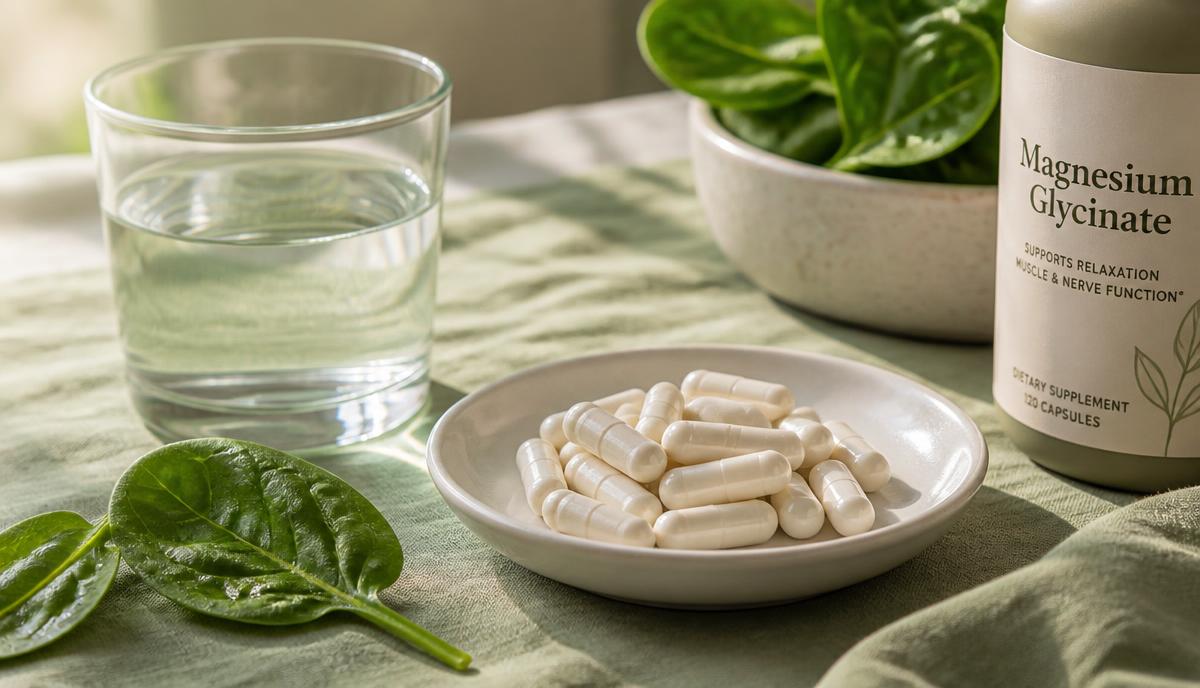
- Magnesium glycinate — best all-round choice for GLP-1 users. Gentle on the stomach, highly absorbed, and calming. Use for sleep, cramps, anxiety, and headaches. 200–400 mg elemental at night.
- Magnesium citrate — mildly laxative. The right pick when constipation is the primary problem. 200–400 mg elemental in the evening, with a full glass of water.
- Magnesium malate — slightly energizing; some users prefer it in the morning for fatigue and muscle soreness. 200–300 mg elemental.
- Magnesium threonate — marketed for cognition and brain fog. Effective but expensive; a nice-to-have, not a starting point.
- Magnesium oxide — avoid. Roughly 4% bioavailable, and the most common cause of supplement-related diarrhea.
- Topical magnesium sprays and Epsom baths — pleasant for sore muscles, but do not count on them to correct low intake.
How much magnesium per day on a GLP-1
Adult requirements are 310–320 mg daily for women and 400–420 mg for men, from food plus supplements combined. Since most GLP-1 users get 150–200 mg from food, a supplemental 200–400 mg of elemental magnesium closes the gap without overshooting.
Start at 200 mg for the first week. If sleep and cramps improve and stools stay normal, hold there. If symptoms persist, add 100 mg and reassess after five days. The upper limit for supplemental magnesium in healthy adults is 350 mg per day per the NIH — higher doses are used therapeutically but should be discussed with your prescriber, especially if you have reduced kidney function.
- Week 1: 200 mg elemental magnesium glycinate, 30–60 minutes before bed
- Week 2+: hold at 200 mg, or increase to 300–400 mg if cramps or insomnia persist
- Constipation-dominant: swap to citrate at the same dose
- Stop increasing at the first sign of loose stools
When to take magnesium (and what not to take it with)
Timing matters less for magnesium than for fiber or fat-soluble vitamins, but two rules make a real difference. First, take it at night — magnesium supports GABA activity and muscle relaxation, so evening dosing gets you the sleep benefit for free. Second, keep it away from minerals that compete for the same absorption pathways.
- Best time: 30–60 minutes before bed, with a small amount of food or water
- Separate by 2+ hours from iron, zinc, and calcium supplements
- Separate by 4 hours from levothyroxine and by 2 hours from any antibiotic in the tetracycline or fluoroquinolone family
- No spacing needed around your GLP-1 injection — magnesium does not interact with semaglutide or tirzepatide
- If a single dose causes loose stools, split it into two smaller doses (morning and night)
Magnesium versus a full electrolyte formula
Magnesium alone fixes cramping, sleep, and constipation. It does not replace sodium and potassium, which are what you actually lose when fluid intake drops on a GLP-1. Headaches, dizziness on standing, and afternoon fatigue are usually sodium-driven, not magnesium-driven.
The practical approach: an electrolyte drink with 500–1,000 mg sodium and 200–400 mg potassium during the day, and magnesium glycinate at night. That pairing covers both the daytime hydration problem and the nighttime recovery problem without doubling up on any single mineral.
Magnesium-rich foods that fit a small GLP-1 appetite
Food still matters, even with a supplement. These options pack the most magnesium into small portions, which suits a reduced appetite. Values are approximate, from the USDA FoodData Central database and the NIH Office of Dietary Supplements magnesium fact sheet.
- Pumpkin seeds, 1 oz (28 g): about 150 mg
- Chia seeds, 1 oz: about 110 mg
- Almonds, 1 oz: about 80 mg
- Cooked spinach, ½ cup: about 78 mg
- Cashews, 1 oz: about 74 mg
- Black beans, ½ cup cooked: about 60 mg
- Plain Greek yogurt or a fortified protein shake: check the label — many add 40–100 mg
A sample day: magnesium on a GLP-1 routine
- Morning: protein-forward breakfast with chia or pumpkin seeds sprinkled on yogurt
- Daytime: low-sugar electrolyte drink for sodium and potassium; iron or a multivitamin with lunch if you take one
- Evening: 200 mg elemental magnesium glycinate 30–60 minutes before bed (or citrate if constipation is the main issue)
- After 1–2 weeks: reassess cramps, sleep, and stools, then adjust by 100 mg as needed
Signs you are taking too much — or still not enough
- Too much: loose stools or urgency within 12 hours, stomach cramping, nausea shortly after the dose
- Still low: night-time calf cramps, eyelid or muscle twitching, tension headaches, waking at 2–4 a.m., constipation that fiber alone does not fix
- See your prescriber if you have chest palpitations, extreme fatigue, or numbness — a blood panel including magnesium, potassium, and B12 is warranted
- Kidney disease, heart block, or myasthenia gravis: do not supplement magnesium without medical clearance
Frequently asked questions
Elevate Supplement Quiz
Answer a few simple questions about your GLP-1 medication, symptoms, and health goals to receive a personalized supplement recommendation.
Supplements for this plan
Formulated for the nutrient gaps GLP-1 medications create.
Medication guides for this topic
Related tools
Terms explained
GLP-1
GLP-1 (glucagon-like peptide-1) is a gut hormone released after eating that stimulates insulin, slows gastric
GlossaryMagnesium glycinate
Magnesium glycinate is a highly absorbable, gentle form of magnesium used for sleep, muscle relaxation, and cr
GlossaryConstipation
Constipation on a GLP-1 is caused by slower gut transit, lower food volume, and reduced fluid intake rather th