
The Ultimate Diet, Supplement, and Health Guide for GLP-1 Users
A complete, doctor-informed playbook for living well on Ozempic, Wegovy, Mounjaro, or Zepbound — what to eat, what to supplement, how to train, and how to handle every side effect.
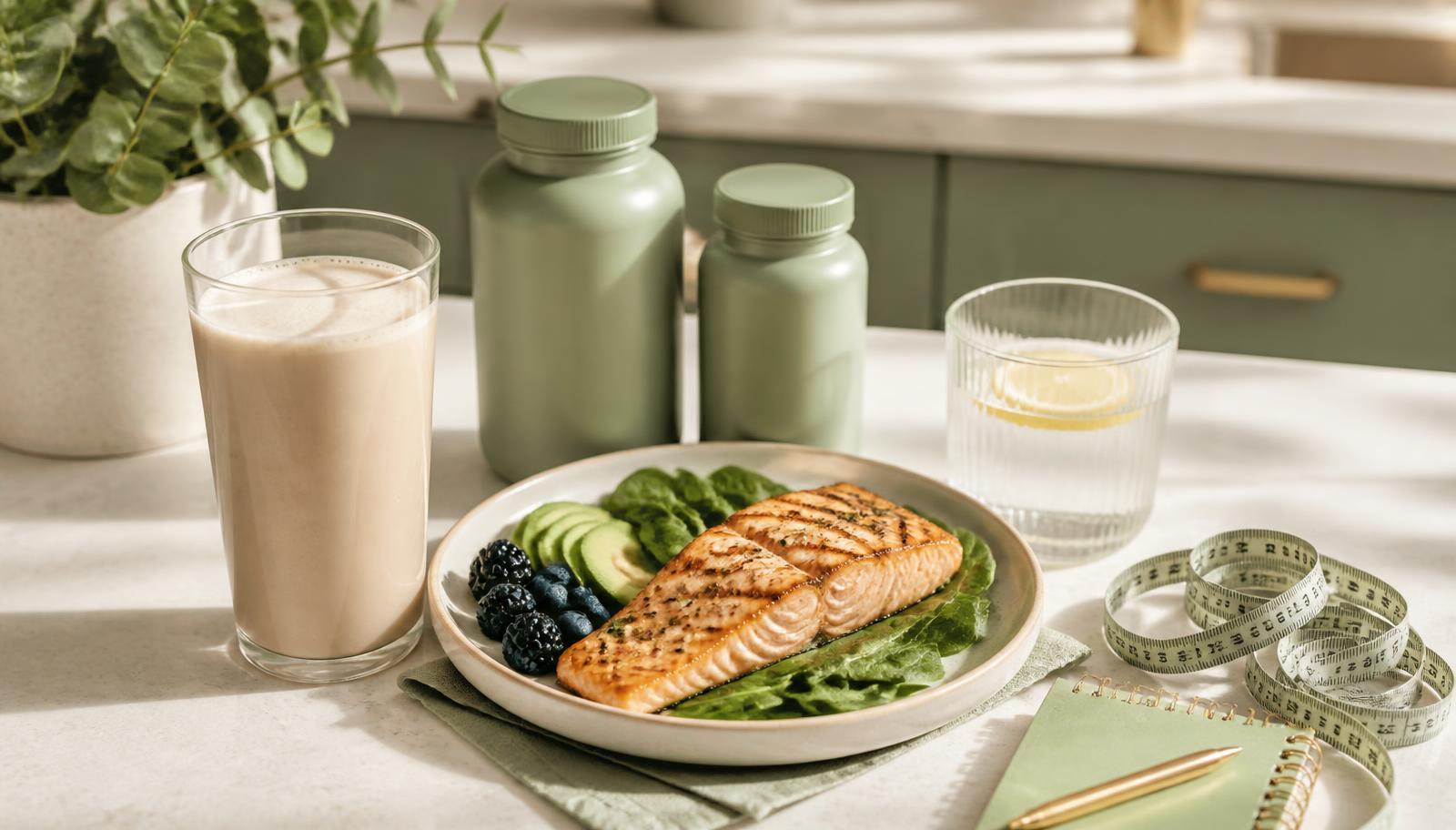
Key takeaways
- Eat protein first at every meal — 0.7–1.0 g per pound of goal body weight protects the muscle you would otherwise lose.
- Drink 80–100 oz of fluid with 500–1,000 mg of sodium daily; most GLP-1 'medication fatigue' is actually dehydration.
- Five supplements cover 90% of the gap: protein, electrolytes, magnesium glycinate, a complete multivitamin, and a gut/fiber blend.
- Two strength sessions a week plus 7,000–9,000 steps a day is the single best predictor of keeping the weight off.
- Almost every side effect — nausea, constipation, fatigue, hair shedding, cramps — has a nutrition or hydration fix. Start it on week one, not week twelve.
GLP-1 medications like Ozempic®, Wegovy®, Mounjaro®, Zepbound®, and Rybelsus® solve the hardest part of weight loss: appetite. What they do not do is tell you how to eat, hydrate, supplement, train, or protect your body while you are eating 30–50% less than you used to. That is the part that decides whether you finish this with strong muscle, steady energy, healthy hair, and a weight you can maintain — or whether you arrive at your goal weight feeling worse than when you started.
This is the complete playbook. It covers the full daily framework: what to eat and in what order, how much protein and water you actually need, the supplement stack that closes the nutritional gap, how to train to keep lean mass, how to fix every common side effect, what your labs should look like, and how to maintain your results after you taper or stop.
Every section links to a deeper guide if you want the detail. If you read nothing else, read the core daily framework and the protein section — those two decide most of your outcome.
How GLP-1 medications change your nutrition needs
GLP-1 receptor agonists slow gastric emptying and dampen appetite signalling in the hypothalamus. Food sits in your stomach longer, you feel full on a fraction of your old portions, and cravings quiet down. Tirzepatide (Mounjaro, Zepbound) adds GIP activity on top of that, which is why appetite suppression is often stronger.
The side effect of that mechanism is a nutritional squeeze. Fewer calories means fewer grams of protein, less fiber, fewer micronutrients, and — because thirst signalling drops too — less fluid and sodium. None of that shows up on day three. It shows up in weeks 6–16 as fatigue, leg cramps, constipation, hair shedding, brittle nails, poor sleep, and a body composition scan where too much of the loss came from muscle.
Research on rapid weight loss consistently finds that 20–40% of total weight lost can be lean mass when protein intake and resistance training are inadequate. That is the single most important number in this guide, because lean mass is what keeps your metabolic rate up and makes maintenance possible.
The whole strategy follows from that: eat in a way that defends muscle and micronutrients, hydrate deliberately, supplement the gaps, and lift something heavy twice a week.
The GLP-1 plate: what to eat at every meal
With a smaller appetite, every bite has to earn its place. The simplest rule that works: protein first, then vegetables and fiber, then a small amount of slow carbohydrate, then fat to taste. Eating in that order means the nutrients you cannot afford to miss land before you fill up.
Aim for three small meals plus one protein-forward snack rather than two large meals. Large meals sit heavily on a slowed stomach and are the most common trigger for nausea and reflux.
- Protein first: 25–40 g per meal — eggs, Greek yogurt, cottage cheese, chicken, fish, lean beef, tofu, tempeh, or a shake
- Fiber and color second: 1–2 cups of vegetables or berries for fiber, potassium, and antioxidants
- Slow carbs third: ½–1 cup of quinoa, oats, beans, lentils, potato, or fruit for energy and gut fuel
- Fat last and modest: olive oil, avocado, nuts — keep meals under about 15 g fat when nausea is active, since fat slows emptying further
- Sip fluids between meals rather than during, so liquid does not crowd out food volume
- Full meal frameworks and shopping lists: GLP-1 nutrition support and high-protein recipes
Protein: your single highest-priority nutrient
Protein is non-negotiable on a GLP-1. Target 0.7–1.0 g per pound of goal body weight per day — roughly 100–150 g for most adults. Spread it across the day in 25–40 g doses, because muscle protein synthesis responds to per-meal dose, not just the daily total.
This is genuinely hard when you are full after half a chicken breast. That is why liquid and concentrated protein sources matter so much: a shake delivers 25–30 g in a volume your stomach barely notices. Most successful GLP-1 users get one to two of their daily protein doses from a shake, especially in the 48 hours after an injection when appetite is lowest.
- Whey isolate or a clean plant blend: 25–30 g per scoop, easiest tolerated form on a slowed stomach
- Greek yogurt (17–20 g per cup) and cottage cheese (24 g per cup): high protein per bite, gut-friendly
- Eggs, fish, poultry, lean beef: prioritise at lunch and dinner when appetite is best
- Protein-fortified soups and broths: the highest-tolerance option on nausea days
- Track for two weeks — nearly everyone underestimates intake by 20–40 g. Use the protein calculator to set your number
- Deep dive: GLP-1 protein support
Hydration and electrolytes: the fix for most 'medication fatigue'
GLP-1s reduce thirst cues at the same time as they reduce food intake — and food supplies roughly 20% of your daily fluid plus most of your sodium. The result is a quiet, chronic deficit that produces headaches, dizziness on standing, afternoon crashes, constipation, and night-time leg cramps. Users routinely blame the drug when the real cause is fluid and sodium.
Target 80–100 oz (2.4–3.0 L) of total fluid daily, and add electrolytes at least once a day — more in heat, after exercise, or during a dose increase.
- Sodium: 500–1,000 mg per day from an electrolyte mix, broth, or lightly salted food
- Potassium: 200–400 mg supplemental, plus potassium-rich foods (avocado, potato, yogurt, leafy greens)
- Magnesium: 200–400 mg elemental, glycinate form, at night
- Front-load: 16–20 oz of water on waking, before coffee
- Signs you are behind: dark urine, standing dizziness, 3 p.m. crash, calf cramps at night
- Calculate your target with the hydration calculator; details in the hydration guide and electrolytes guide
The complete GLP-1 supplement framework
Supplements do not make the medication work better and they are not a substitute for food. Their job is narrower and more important: cover the nutrients that a 30–50% smaller intake can no longer deliver. Five categories cover the overwhelming majority of the gap.
Tier 1 is for everyone from day one. Tier 2 is symptom- and lab-driven. Nothing in Tier 3 is required.
- Tier 1 — Protein: 25–30 g per serving, 1–2 servings daily to hit your target
- Tier 1 — Electrolytes: sodium, potassium, magnesium daily, more on dose-increase weeks
- Tier 1 — Magnesium glycinate: 200–400 mg at night for sleep, cramps, and regularity (magnesium guide)
- Tier 1 — Complete multivitamin with B12, B-complex, iron, zinc, and selenium (vitamin deficiencies)
- Tier 1 — Gut and fiber support: probiotics, prebiotics, digestive enzymes, and 5–10 g soluble fiber (constipation guide)
- Tier 2 — Vitamin D3 + K2 (1,000–2,000 IU), omega-3 (1–2 g EPA/DHA), creatine monohydrate (3–5 g for muscle retention), collagen and biotin for hair and nails
- Tier 3 — Skip: 'natural Ozempic' blends, berberine mega-doses, fat burners, unregulated metabolism boosters
- Timing playbook: best supplements and when to take them
A day in the life: the daily routine that ties it together
- On waking — 16–20 oz water, then coffee. Multivitamin with your first real food
- Breakfast — 25–35 g protein (eggs, Greek yogurt, or a shake) plus fruit or oats
- Mid-morning — electrolyte drink, 16–20 oz
- Lunch — protein first (palm-sized portion), vegetables, small slow carb
- Afternoon — protein snack or shake if you are behind on your daily target; fiber if constipation is active
- Dinner — protein plus vegetables, keep fat moderate if nausea has been present
- Evening — magnesium glycinate 30–60 minutes before bed, plus omega-3 with your last meal
- Twice weekly — full-body strength session; daily — 7,000–9,000 steps
- Injection day and the two days after — lean on liquid protein, extra electrolytes, smaller meals
- Printable version: the GLP-1 daily routine guide
Exercise and muscle preservation
Protein gives your body the raw material to keep muscle; resistance training gives it the reason. Without a training stimulus, the body treats muscle as expendable during a deficit. Two 30–40 minute full-body sessions per week is enough to change your body composition outcome substantially — you do not need a bodybuilding program.
Add creatine monohydrate at 3–5 g daily if you tolerate it. It is one of the few supplements with strong evidence for preserving strength and lean mass during weight loss, and it does not interact with GLP-1s.
- Two sessions weekly covering squat, hinge, push, pull, and carry patterns
- Progress by adding a little weight or one rep, not by adding sessions
- Walk 7,000–9,000 steps daily — the strongest behavioural predictor of maintained weight loss
- Train on a day when appetite is decent, and take 20–30 g protein within a couple of hours after
- Program details: GLP-1 exercise guide
Side effect playbook: fix it with nutrition first
- Nausea — smaller meals, under 15 g fat per meal, cold or bland foods, ginger, sip fluids between meals (nausea guide)
- Constipation — 5–10 g soluble fiber, magnesium citrate, 80–100 oz fluid, daily walking (constipation guide)
- Fatigue — check protein, sodium, iron, B12, and total calories before assuming it is the drug
- Leg cramps and twitching — magnesium and potassium, plus more sodium and fluid
- Hair shedding — usually telogen effluvium from rapid loss: protein, iron, zinc, biotin, and time (hair loss guide)
- Poor sleep — magnesium glycinate at night, protein earlier in the day, limit alcohol (sleep guide)
- Plateau — recheck protein, steps, strength training, and sleep before assuming the dose is the problem (plateau guide)
- Red flags for your prescriber: severe or persistent abdominal pain, repeated vomiting, signs of gallbladder trouble, or inability to keep fluids down
Labs, tracking, and working with your prescriber
- Ask about a baseline and 6-month panel: CBC, ferritin and iron, vitamin B12, vitamin D, magnesium, potassium, sodium, A1c, lipids, TSH, and liver enzymes
- Track waist circumference and strength, not just scale weight — they tell you whether you are losing fat or muscle
- Log protein and fluid for two weeks at the start of each dose increase; that is where intake quietly falls off
- Photograph your supplements and share the list with your prescriber and pharmacist
- Never stop, split, or change a prescribed dose based on internet advice — including this guide
Maintenance: keeping the weight off
Whether you stay on a maintenance dose or taper off, the habits that hold your results are the same ones from this guide: hit your protein, keep lifting twice a week, stay hydrated, sleep, and keep your supplement basics in place. Appetite returns as the medication tapers — the muscle and the routines you built are what absorb that.
Practical maintenance targets: protein at 0.7 g per pound of body weight, two strength sessions, 8,000+ steps, and a consistent daily electrolyte and magnesium habit. Rebuild slowly, weigh weekly rather than daily, and expect a few pounds of fluctuation.
The Elevate GLP stack: our supplements for this plan
We built our formulas around exactly the gaps described above — nothing exotic, nothing trendy, just the nutrients GLP-1 users actually run short on, at clinically sensible doses and in forms that are gentle on a slowed stomach.
- Elevate Protein — 25 g per serving, smooth and low-volume so it goes down easily on low-appetite days
- Elevate Electrolytes — sodium, potassium, and magnesium in GLP-1-appropriate ratios, no sugar
- Elevate Magnesium Glycinate — 200–400 mg elemental, the gentle form for sleep, cramps, and regularity
- Elevate Multivitamin — complete B-complex, B12, iron, zinc, selenium, and vitamin D for smaller-plate insurance
- Elevate Gut Health — probiotics, prebiotics, and enzymes for constipation, bloating, and digestion
- Not sure where to start? Take the supplement quiz or browse the full shop — bundles cover the Tier 1 essentials in one order, and subscriptions save 10% monthly
Medical disclaimer and how to use this guide
This guide is educational and is not medical advice. Ozempic®, Wegovy®, Mounjaro®, Zepbound®, and Rybelsus® are registered trademarks of their respective owners; Elevate GLP is not affiliated with, endorsed by, or sponsored by any pharmaceutical manufacturer. Our supplements are not drugs and do not treat, cure, or prevent disease.
Always review supplements and nutrition changes with your prescriber or pharmacist, particularly if you have kidney disease, heart conditions, take thyroid medication, diuretics, blood thinners, or are pregnant or breastfeeding.
Frequently asked questions
Elevate Macro Calculator
Calculate your ideal daily calories, protein, carbohydrates, and healthy fats for safe, sustainable weight loss while using GLP-1 medications.
Supplements for this plan
Formulated for the nutrient gaps GLP-1 medications create.
Medication guides for this topic
Related tools
Terms explained
GLP-1
GLP-1 (glucagon-like peptide-1) is a gut hormone released after eating that stimulates insulin, slows gastric
GlossarySemaglutide
Semaglutide is a GLP-1 receptor agonist sold as Ozempic and Rybelsus for type 2 diabetes and as Wegovy for chr
GlossaryTirzepatide
Tirzepatide is a dual GIP/GLP-1 receptor agonist sold as Mounjaro for type 2 diabetes and Zepbound for chronic