
GLP-1 Protein Support: Targets, Sources, and Timing
How much protein you need on a GLP-1 to preserve muscle, the best sources for small appetites, and how to time it through the day.
Key takeaways
- Target 0.7–1.0 g of protein per pound of goal body weight, daily.
- Spread protein across 3–4 servings of 25–40 g to maximize muscle protein synthesis.
- Liquid protein is easier to tolerate than dense meals on a GLP-1.
- Pair protein with resistance training 2–3x per week to actively preserve muscle.
- Creatine monohydrate (3–5 g/day) is a proven ally against lean mass loss.
Muscle loss is the single biggest long-term risk of GLP-1 medications. Studies of semaglutide and tirzepatide consistently show that 25–40% of total weight lost can come from lean mass when protein intake is low and resistance training is absent.
Protein is the lever that protects your strength, metabolism, and how you look at your goal weight. Here is how to actually hit your numbers on an appetite that keeps shrinking.
Your protein target
Aim for 0.7–1.0 grams of protein per pound of your goal body weight, every single day. For a 160-pound goal that is 110–160 g of protein. Spread it across 3–4 servings of 25–40 g each so your body can actually use it.
If you are new to counting protein, the fastest way to check yourself is to add up what you ate yesterday. Most people underestimate — a typical American diet delivers 50–70 g per day, which is roughly half of what you need on a GLP-1.
Best protein sources for small appetites
- Whey or whey isolate shakes — fastest, easiest to tolerate
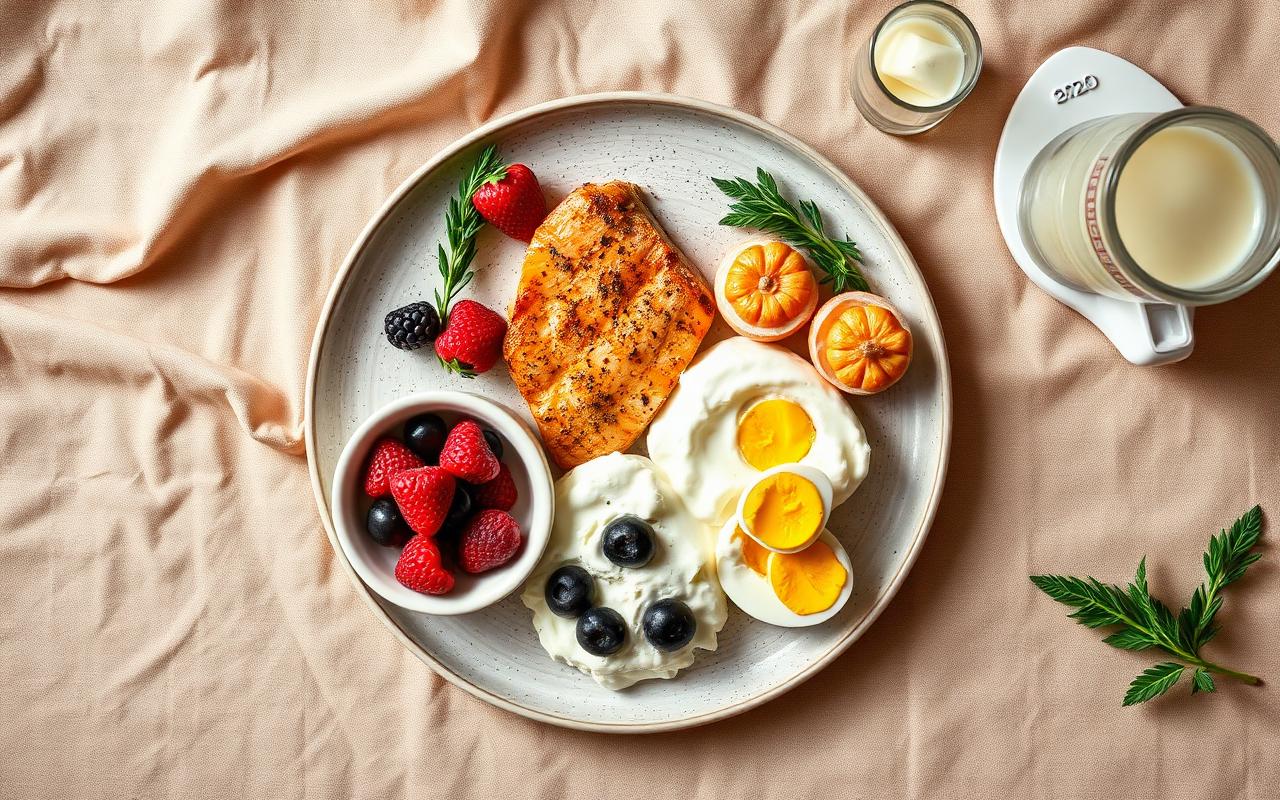
- Greek yogurt and cottage cheese — high protein per bite
- Eggs and egg whites — versatile, easy on the gut
- Chicken, turkey, fish — lean and dense in protein
- Bone broth and clear protein drinks — when food feels heavy
- Tofu, tempeh, edamame — plant-based options with 15–25 g per serving
- Beef or turkey jerky — portable, shelf-stable protein snacks
Timing protein through the day
Muscle protein synthesis responds best to 25–40 g of protein per feeding, every 3–5 hours. Practically: breakfast, lunch, an afternoon snack, and dinner — each with a real protein source.
Front-load protein at breakfast when appetite is often strongest. Save easier options (shakes, yogurt, jerky) for the afternoon and evening when a GLP-1 makes solid food feel heavy.
Protein plus resistance training
Protein alone slows muscle loss. Protein plus 2–3 resistance training sessions per week actively preserves it. You do not need a gym — bands, bodyweight, or dumbbells at home work fine. Focus on compound movements: squats, hinges, presses, pulls, and rows.
Creatine monohydrate (3–5 g/day) is one of the best-studied supplements for maintaining strength during a calorie deficit and is safe for most healthy adults.
Frequently asked questions
Elevate Protein Calculator
Calculate your personalized daily protein goal based on your body metrics, activity level, and GLP-1 medication to help preserve lean muscle during weight loss.
Supplements for this plan
Formulated for the nutrient gaps GLP-1 medications create.