GLP-1 Bloating and Constipation: A Gut-Friendly Daily Routine
Slowed digestion is part of how GLP-1s work — but it doesn't have to leave you uncomfortable. The full daily routine to feel lighter, fast.

GLP-1 medications slow gastric emptying — that's a feature, not a bug. It's part of why they're so effective at reducing appetite and stabilizing blood sugar. But the downside is that food sits in your stomach longer, and the entire downstream pipeline slows with it. The result for many people is bloating, constipation, nausea, reflux, and a general sense of heaviness that's most intense in the first 4–6 weeks of treatment or after every dose increase.
The encouraging news is that almost all of this is manageable. The right combination of meal structure, hydration, movement, fiber, and targeted supplements can make a meaningful difference within days — often without ever needing to adjust your dose. Here's the full routine we walk our Elevate GLP community through.
Why your gut feels different on a GLP-1
Under normal conditions, food spends about 2–4 hours in your stomach before moving into the small intestine. On a GLP-1, that can stretch to 5–8 hours or more, especially after a higher-fat meal. The stomach also relaxes less aggressively, which is why a 'normal' portion can suddenly feel like Thanksgiving dinner.
Further down the line, slower motility through the colon means stool sits longer, water gets reabsorbed, and constipation sets in. The bacteria in your gut ferment whatever's hanging around, producing gas — and that gas has nowhere to go quickly. That's the bloating.
Most of this calms down naturally over 4–8 weeks as your system adapts. But you don't have to white-knuckle it in the meantime.
Eat smaller, more frequent meals
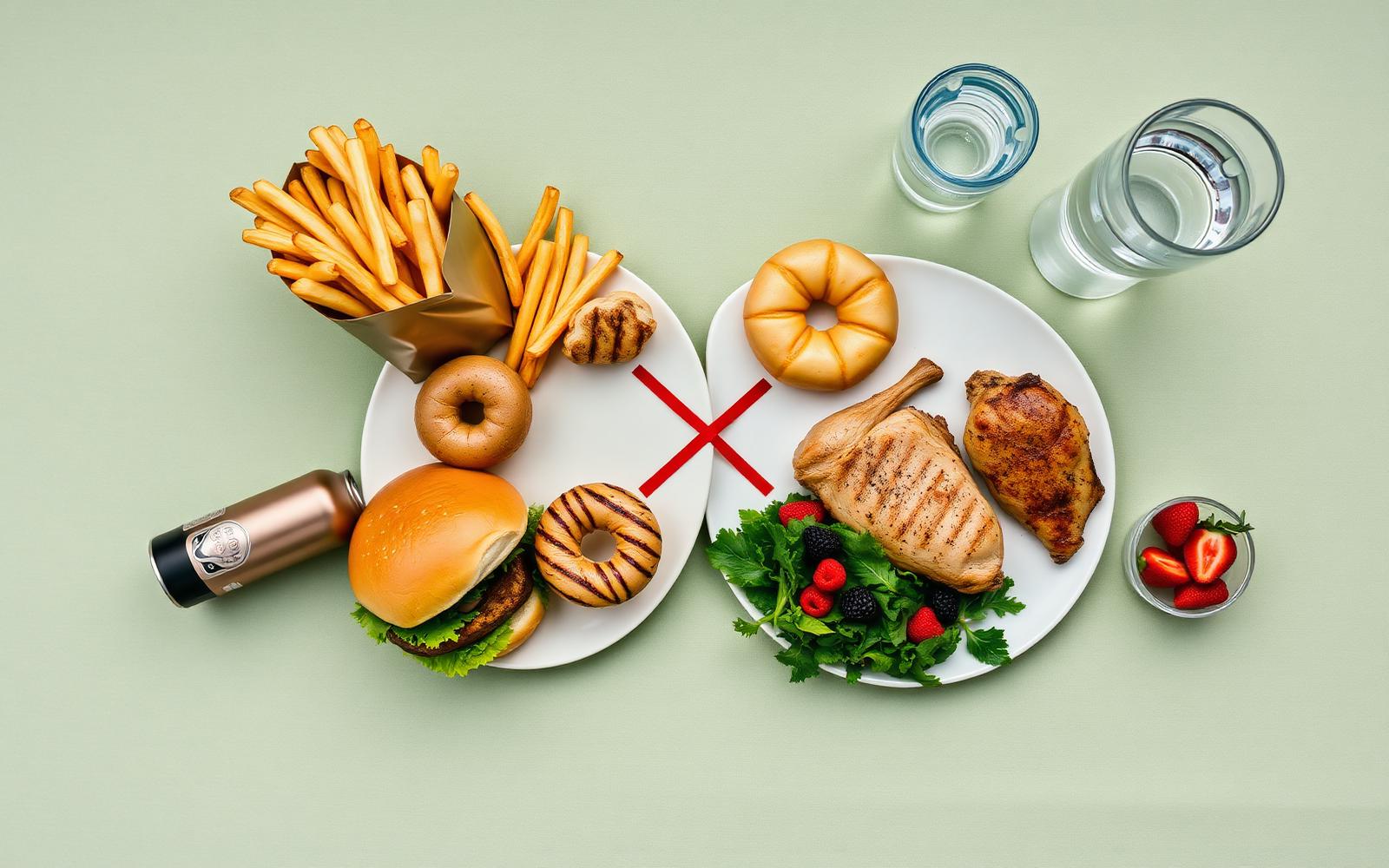
Three large meals are a lot of work for a slower-moving stomach. Most GLP-1 users do dramatically better on four to five smaller meals of 300–500 calories. You'll feel lighter immediately, you'll absorb more nutrients, and you'll cut reflux and nausea sharply.
Practical structure: a protein-forward breakfast within an hour of waking, a mid-morning snack, a moderate lunch, an afternoon snack, and a light early dinner. Stop eating 3 hours before bed — late meals on a GLP-1 are a recipe for overnight reflux.
- Aim for 300–500 calories per meal, 4–5 times a day.
- Lead every meal with protein. Save the densest, heaviest food for the start of the meal when your stomach is most accommodating.
- Chew thoroughly — twice as long as feels normal. Your stomach can't break down what your teeth didn't.
- Avoid carbonated drinks with meals. Sparkling water tastes great but adds gas to an already-slow system.
Hydrate — with electrolytes, not just water
Hydration matters more on a GLP-1 than at almost any other time in your life. You're eating less food, which means you're also getting less water and sodium from food. Dehydration directly worsens constipation, fatigue, and headaches.
Target 80–100 ounces of water daily, and make sure a meaningful portion of it includes electrolytes. Plain water alone can actually worsen bloating in this context by diluting your sodium levels and slowing motility further.
A simple test: if your urine is consistently pale straw color and you're peeing every 2–3 hours, you're well hydrated. If it's darker, add an electrolyte serving and another 16 oz of water and re-check in a few hours.
Move after meals
A 10–15 minute walk after eating is the single most underrated intervention for GLP-1 digestion. It mechanically stimulates gastric motility, blunts the post-meal blood sugar curve, and reduces bloating in studies of healthy adults, diabetics, and people with functional dyspepsia.
You don't need a workout. A slow stroll around the block does it. Stack the habit: every time you finish eating, you head outside. Within a week it becomes automatic, and the difference in how you feel by evening is usually obvious.
Get fiber right — slowly
Fiber is essential for healthy bowel movements, but if you ramp it up too fast on a GLP-1, you'll create more gas and bloating, not less. The trick is to add soluble fiber gradually, alongside enough water to keep things moving.
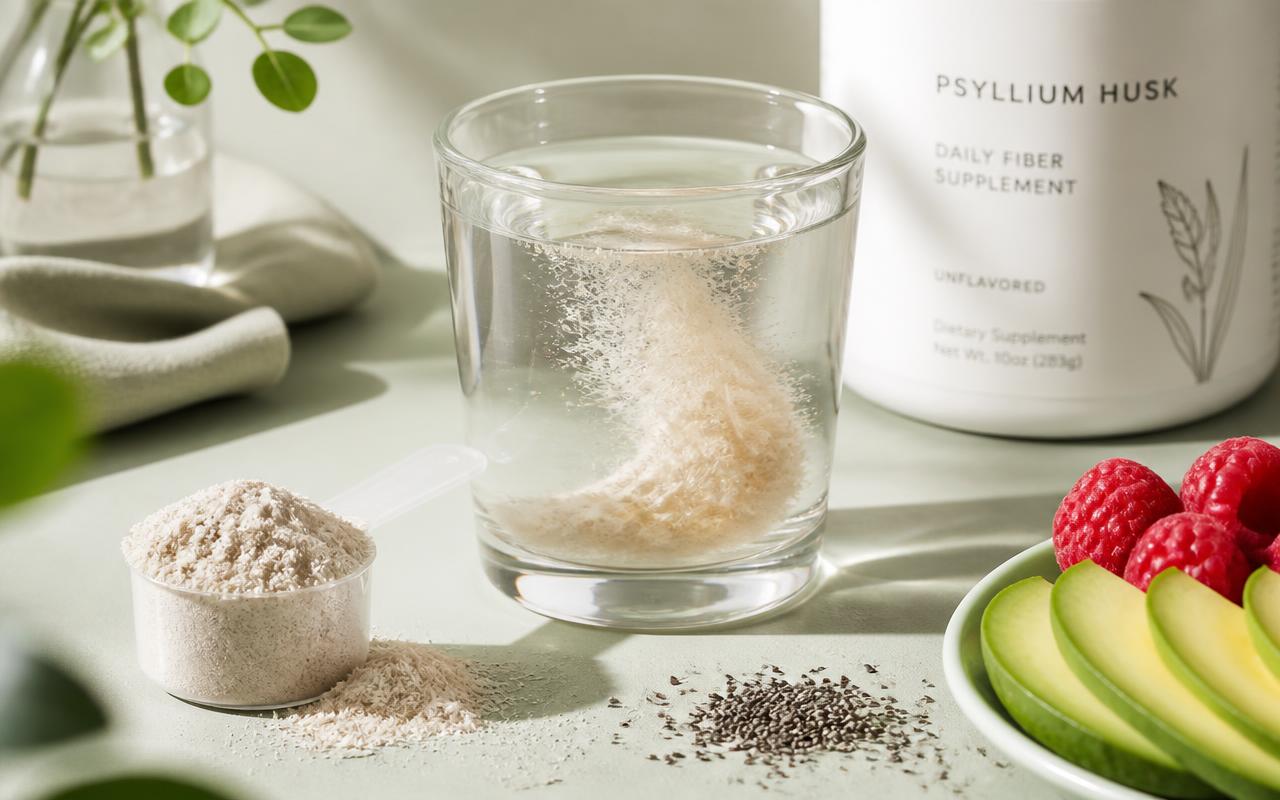
Soluble fibers like oats, chia seeds, ground flax, psyllium husk, and partially hydrolyzed guar fiber are gentler than insoluble fibers like raw cruciferous vegetables. Start with 5 grams of added soluble fiber daily for a week, then increase by 5 grams per week until you're getting 25–35 grams total fiber per day from food and supplements combined.
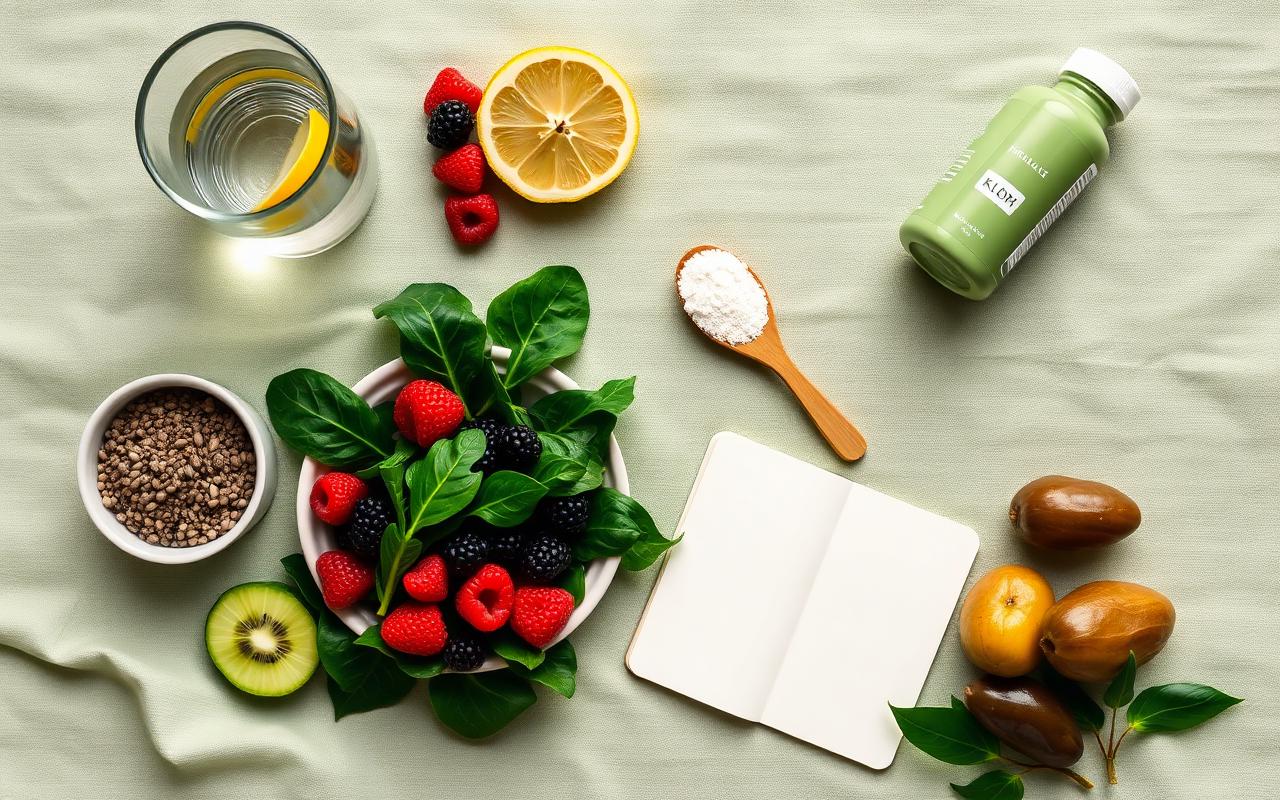
- Oats, chia, ground flax, psyllium — gentle soluble fibers that soften stool.
- Cooked vegetables are easier than raw on a slowed stomach.
- Berries, pears, and kiwi are excellent fruit choices for regularity.
- Add fiber gradually with extra water — never load it in a single day.
Support the microbiome
When food sits longer in your gut, the bacteria there have more time to ferment carbohydrates and produce gas. Supporting a balanced microbiome is one of the most direct ways to reduce that fermentation and the bloating that comes with it.
Three categories of support matter most: probiotics, prebiotics, and digestive enzymes. Each does something different, and they work best together.
- Probiotics — live strains like Lactobacillus and Bifidobacterium support a balanced gut environment and have been shown to reduce bloating and irregularity.
- Prebiotic fibers — inulin and partially hydrolyzed guar fiber feed the bacteria you already have. Start low if you're sensitive.
- Digestive enzymes — help your body break down protein, fat, and carbs you do eat, which reduces fermentation and gas, especially with larger meals or rich foods.
When constipation hits anyway: a gentle protocol
Even with everything dialed in, an occasional bout of constipation is normal on a GLP-1, particularly after dose escalations. Here's a stepwise approach that works for most people without harsh stimulants.
- Morning: warm water with lemon on an empty stomach, plus a 10-minute walk.
- Add 1–2 tablespoons of ground flax or chia to breakfast.
- Increase magnesium glycinate or magnesium citrate to 400mg in the evening — citrate is slightly more laxative.
- Make sure you're hitting 80+ oz of water with electrolytes.
- If nothing moves in 48 hours, a single dose of an osmotic laxative (like polyethylene glycol) is reasonable. Avoid stimulant laxatives like senna as a daily habit — they can create dependence.
When to talk to your prescriber
Most GLP-1 digestive symptoms are uncomfortable but not dangerous. A few warrant a call to your doctor: severe, persistent abdominal pain (especially upper right or radiating to your back), vomiting that prevents you from keeping fluids down, signs of dehydration that don't respond to electrolytes, no bowel movement for more than 5 days, or any blood in stool.
Pancreatitis and gallbladder issues are rare but documented risks on GLP-1s, and they need rapid evaluation. Don't tough out severe pain.
Related guides
Medication guides mentioned in this article
Related tools
Supplements built for your GLP-1 journey
Formulated for the exact nutrient gaps GLP-1 medications create — protein, electrolytes, magnesium, digestive support, and more. Trusted by thousands staying strong, energetic, and healthy on Ozempic, Wegovy, Mounjaro, and Zepbound.