How to Increase GLP-1 Naturally: Foods, Supplements, and Habits That Actually Work
Your gut already makes GLP-1 every time you eat — the same hormone Ozempic, Wegovy, Mounjaro, and Zepbound mimic. Here's the science-backed playbook for raising it naturally with fermentable fibers, specific probiotics, berberine, protein-first meals, and daily habits — whether you're not on a GLP-1 medication or want to amplify the one you're taking.
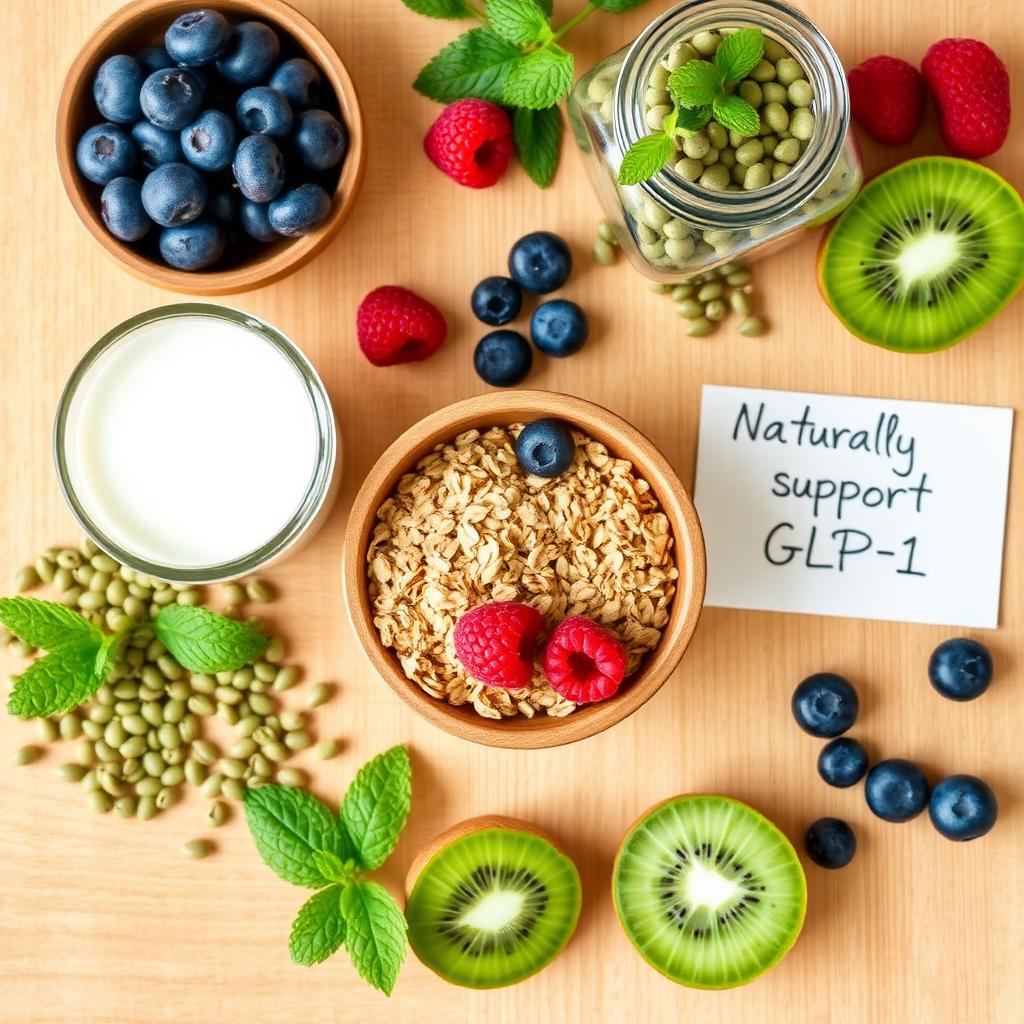
Every time you eat, specialized L-cells in your small intestine and colon release a hormone called GLP-1 (glucagon-like peptide-1). It slows stomach emptying, signals fullness to your brain, and helps regulate blood sugar — the exact mechanism Ozempic, Wegovy, Mounjaro, and Zepbound exploit at much higher pharmacological doses.
The good news: you can meaningfully raise your body's own GLP-1 with food, fiber, specific probiotics, and a few well-studied supplements. The honest news: natural increases are modest compared to a weekly injection — but they're real, sustained, and they stack beautifully on top of a GLP-1 medication if you're already taking one.
This guide covers what actually moves the needle, what doesn't, and a simple daily template you can start tomorrow.
What GLP-1 does (and why raising it matters)
GLP-1 is an incretin hormone released within minutes of eating. It tells your pancreas to release insulin, slows gastric emptying so you feel full longer, suppresses glucagon, and sends satiety signals to the hypothalamus. Higher endogenous GLP-1 is linked to better blood sugar control, lower appetite, and improved metabolic health.
People with obesity and type 2 diabetes tend to release less GLP-1 in response to meals. The strategies below are designed to fix that gap with food and lifestyle — not to replace medication, but to support it or, for people who don't need pharmacology, to build the same physiology naturally.
1. Eat more fermentable fiber (the #1 lever)
When fermentable fibers reach your colon, gut bacteria ferment them into short-chain fatty acids (SCFAs) — primarily butyrate, propionate, and acetate. SCFAs directly stimulate L-cells to release GLP-1 and PYY. This is the single most evidence-backed natural pathway.
- Oats and oat bran (beta-glucan) — 40–80 g cooked at breakfast
- Barley, rye, and whole-grain sourdough
- Legumes: lentils, black beans, chickpeas, edamame — 1/2–1 cup daily
- Resistant starch: cooked-then-cooled potatoes, green bananas, cooked-then-cooled rice
- Inulin foods: chicory root, Jerusalem artichoke, garlic, onion, leek, asparagus
- Psyllium husk: 5–10 g daily — one of the most studied SCFA-producing fibers
- Aim for 30–40 g of total fiber per day, ramped up slowly over 2–3 weeks to avoid bloating
2. Prioritize protein at the start of every meal
Protein triggers a strong, fast GLP-1 release — larger than carbs or fat gram-for-gram. Whey protein in particular has been shown in multiple trials to raise GLP-1 within 30 minutes of intake. Eating protein first in a mixed meal (the "protein-first" sequence) further amplifies the GLP-1 spike and blunts the post-meal glucose curve.
- Target 30–40 g of protein per meal, especially breakfast
- Best triggers: whey or casein, eggs, Greek yogurt, cottage cheese, fish, chicken, lean beef, tofu, tempeh, edamame
- Eat protein and vegetables before starch — the order matters
- A pre-meal whey shake (20–30 g) is one of the easiest, best-studied natural GLP-1 boosters
3. Feed the right gut bacteria
Specific bacterial strains are tied to higher GLP-1 production — most notably Akkermansia muciniphila, Bifidobacterium, and Lactobacillus species. You feed them with the fibers above and seed them with fermented foods and targeted probiotics.
- Fermented foods daily: kefir, plain yogurt with live cultures, sauerkraut, kimchi, miso, tempeh, low-sugar kombucha
- Probiotic strains with the best GLP-1 / metabolic evidence: Akkermansia muciniphila (pasteurized), Bifidobacterium lactis, Lactobacillus rhamnosus GG, Lactobacillus gasseri
- Polyphenols feed Akkermansia: berries, pomegranate, green tea, dark chocolate (85%+), extra virgin olive oil, red grapes
- Avoid routine sweeteners and ultra-processed food, which suppress beneficial strains
4. Berberine — the most-studied natural GLP-1 supplement
Berberine, an alkaloid from plants like barberry and Oregon grape, has more than a dozen randomized trials behind it for blood sugar, insulin sensitivity, and modest weight loss. Mechanistically it activates AMPK and has been shown to increase GLP-1 secretion and improve L-cell function. It is not "nature's Ozempic" — effects are far smaller — but it is the closest natural compound with consistent human data.
- Typical dose: 500 mg, 2–3 times daily with meals
- Dihydroberberine is better absorbed at lower doses (100–200 mg with meals)
- Take with food to reduce GI upset; common side effects are cramping, diarrhea, or constipation in the first 1–2 weeks
- Do not combine with GLP-1 medication, metformin, or blood-thinners without checking with your provider — additive blood-sugar lowering is real
5. Other supplements with supportive (not headline) evidence
- Psyllium husk (5–10 g daily): direct SCFA precursor and one of the most reliable fiber sources
- Magnesium glycinate (300–400 mg at night): supports insulin sensitivity and reduces stress-driven cortisol that suppresses GLP-1
- Omega-3 (1–2 g EPA/DHA): improves gut barrier and reduces low-grade inflammation that blunts L-cell signaling
- Vitamin D (1,000–2,000 IU if low): deficiency is tied to lower GLP-1 response
- Apple cider vinegar (1–2 tbsp before carb-heavy meals): blunts glucose spikes; modest GLP-1 effect in small studies
- Bitter foods and herbs (gentian, dandelion, arugula, radicchio): activate bitter taste receptors in the gut that nudge GLP-1 release
6. Habits that raise GLP-1 without changing what you eat
- Walk 10–20 minutes after meals — improves post-meal GLP-1 response and lowers glucose curves
- Resistance training 2–4× per week — increases insulin sensitivity and amplifies meal-related incretin response
- Sleep 7–9 hours — short sleep suppresses GLP-1 and raises ghrelin (hunger hormone) the next day
- Eat in a 10–12 hour window — earlier, compressed eating windows are associated with stronger incretin response
- Manage chronic stress — sustained cortisol blunts GLP-1 and drives insulin resistance
- Don't drink your calories — liquid sugar bypasses much of the GLP-1 response
What doesn't work (skip the hype)
- "Nature's Ozempic" cocktails: lemon water, chia, and apple cider vinegar will not replicate a 2.4 mg semaglutide dose. They help, modestly.
- Generic "GLP-1 booster" gummies: most contain sub-therapeutic doses of berberine, chromium, or fiber blends
- Extreme low-carb without fiber: drops fermentable fiber to near zero and starves the bacteria that produce SCFAs
- Sweeteners marketed as gut-friendly (sucralose, ace-K): suppress beneficial strains in several human studies
A simple daily template
- Morning: 30–40 g protein breakfast (Greek yogurt + berries + chia + oats, or eggs + sourdough + avocado), 16 oz water, 10-minute walk
- Mid-morning: green tea or coffee, fruit + nuts
- Lunch: protein first (chicken, fish, tofu), large vegetable portion, lentils or beans, olive oil; 10-minute walk after
- Afternoon: kefir or kombucha, fermented vegetable side, handful of berries
- Dinner: protein + roasted vegetables + cooked-then-cooled potato or rice (resistant starch); finish 3 hours before bed
- Optional supplements: psyllium 5 g with one meal, magnesium glycinate 300 mg at night, berberine 500 mg with 1–2 meals (only if not on glucose-lowering medication)
If you're already on a GLP-1 medication
Everything above still applies and amplifies the medication's effect — but check two things with your provider first: (1) berberine added to semaglutide or tirzepatide can stack blood-sugar lowering and may need dose adjustment, and (2) high-dose soluble fiber close to oral medications (like Rybelsus) can blunt absorption — space them 1–2 hours apart.
For most people on injectable GLP-1s, the highest-leverage natural additions are: 30+ g protein per meal to protect lean muscle, 30–40 g fiber to ease constipation and feed SCFA-producing bacteria, daily fermented foods, post-meal walks, and 300–400 mg magnesium glycinate at night.
Frequently asked questions
- Can I really increase GLP-1 naturally? Yes — fermentable fiber, protein-first meals, fermented foods, and post-meal walking are all shown to raise endogenous GLP-1. Effects are modest compared to medication but real and sustainable.
- Is berberine "nature's Ozempic"? No. It has real metabolic effects but is roughly 5–10% as powerful as semaglutide for weight loss in head-to-head comparisons. It's the best-studied natural option, not an equivalent.
- Do GLP-1 supplements actually work? Some ingredients — psyllium, berberine, whey protein, specific probiotic strains — have human evidence. Most branded "GLP-1 booster" blends underdose the ingredients that matter. Read labels.
- What food increases GLP-1 the most? A combination: high-protein meal eaten protein-first, plus 10–15 g of fermentable fiber (oats, lentils, kiwi, psyllium). Whey protein and oat beta-glucan have the strongest single-food data.
- Does apple cider vinegar boost GLP-1? Slightly. It mainly blunts post-meal glucose. Useful, not transformative.
- How long until natural strategies show results? Glucose and satiety changes within 1–2 weeks. Gut microbiome shifts that support GLP-1 take 4–8 weeks of consistent fiber and fermented food intake.
- Can I take berberine with Ozempic, Wegovy, Mounjaro, or Zepbound? Talk to your provider first. Additive blood-sugar lowering and GI side effects are real, and dose adjustment may be needed.
- What's the single best thing I can do today? Add 30 g of protein to breakfast, walk 10 minutes after each meal, and start a daily serving of fermented food (kefir, yogurt with live cultures, or sauerkraut).
Related guides
Medication guides mentioned in this article
Related tools
Supplements built for your GLP-1 journey
Formulated for the exact nutrient gaps GLP-1 medications create — protein, electrolytes, magnesium, digestive support, and more. Trusted by thousands staying strong, energetic, and healthy on Ozempic, Wegovy, Mounjaro, and Zepbound.
Continue reading
What to Eat on GLP-1 Medications: 25 Foods That Are Easy on Your Stomach
What to Eat When You're Not Hungry on GLP-1: 15 Small, Protein-Rich Meals
The Best Multivitamin for GLP-1 Users: What to Look For (and What to Skip)
GLP-1 Vitamins: The Daily Supplements Worth Taking (and Why)