
7 Warning Signs Your GLP-1 Diet Is Missing Essential Nutrients
Fatigue, hair thinning, cramps, brain fog — the 7 warning signs of nutritional gaps on a GLP-1 and the habits that help close them.
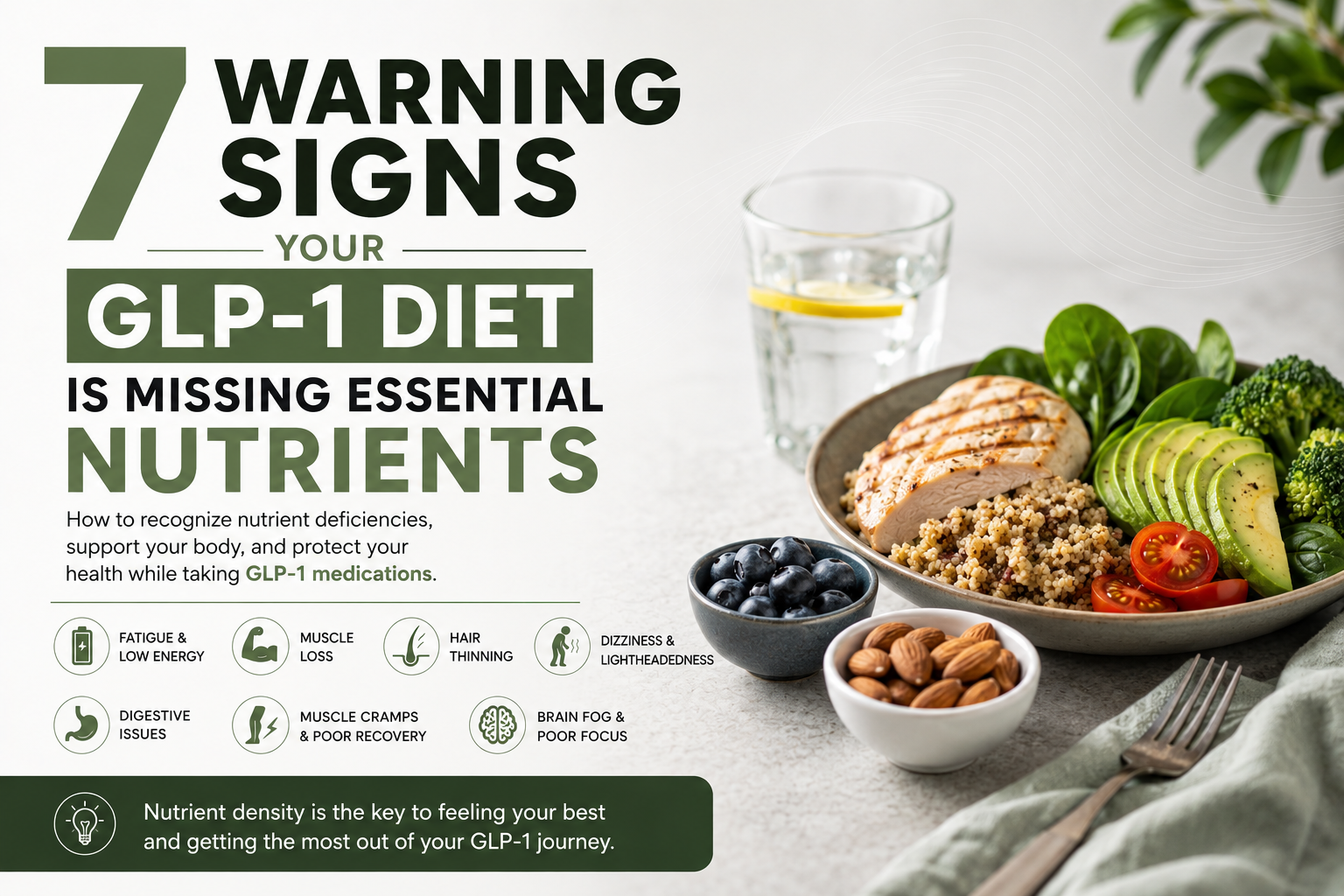
GLP-1 medications have changed the weight loss landscape in a remarkable way. Drugs such as Ozempic, Wegovy, Mounjaro, and Zepbound have helped millions of people lose significant amounts of weight, improve blood sugar control, reduce cravings, and take meaningful steps toward better health.
But when you dramatically reduce your food intake, you also reduce the amount of vitamins, minerals, protein, healthy fats, and other nutrients entering your body. While consuming fewer calories can support weight loss, consuming too few essential nutrients can create a new set of health concerns.
Many people taking GLP-1 medications are surprised to discover that symptoms such as fatigue, muscle loss, constipation, hair thinning, dizziness, and brain fog are not always caused by the medication itself. In many cases, these issues are linked to nutritional deficiencies that develop as appetite decreases and eating patterns change. This guide breaks down the seven warning signs to watch for — and the practical fixes that protect your health, preserve muscle, and maximize your results.
Why nutritional deficiencies are common among GLP-1 users
GLP-1 receptor agonists mimic naturally occurring hormones that help regulate appetite, blood sugar, and digestion. One of their primary effects is slowing gastric emptying, which means food remains in the stomach longer. This creates a prolonged feeling of fullness and reduces hunger.
Someone who previously consumed 2,500 calories daily may suddenly consume only 1,200 to 1,500 calories. Unless every meal is carefully planned, it becomes much harder to meet daily nutritional requirements.
- Protein, magnesium, potassium, and sodium
- Omega-3 fatty acids and vitamin D
- Vitamin B12, iron, zinc, and folate
- Fiber and calcium
Warning Sign #1: Persistent fatigue and low energy
One of the most common complaints among people taking GLP-1 medications is a constant lack of energy — afternoon crashes, poor workout performance, mental exhaustion, and physical weakness.
Every cell in your body requires nutrients to produce energy. Protein provides amino acids for muscle and metabolism. Iron transports oxygen. B vitamins fuel cellular energy production. Magnesium participates in hundreds of biochemical reactions. Without enough of these, energy production becomes inefficient.
Protein deficiency is especially overlooked. Many GLP-1 users unknowingly consume far less protein than they need because they feel full after only a few bites. When protein intake falls too low, the body breaks down muscle tissue — which further reduces energy and metabolic rate. Focus on protein first at every meal: chicken, turkey, fish, eggs, Greek yogurt, cottage cheese, or a whey isolate shake.
Warning Sign #2: Muscle loss and declining strength
Without adequate protein and resistance training, a portion of weight lost on a GLP-1 comes from muscle tissue rather than fat. Muscle supports healthy metabolism, blood sugar regulation, strength, balance, and long-term weight maintenance — the more you preserve, the better your long-term results.
Signs you may be losing muscle include reduced gym performance, smaller muscle size, increased weakness, difficulty carrying groceries, reduced endurance, and slower recovery after exercise. To protect lean mass: prioritize protein, strength train 2–3 times per week, stay hydrated, consume adequate calories, and supplement when needed.
Warning Sign #3: Hair thinning and excessive shedding
Hair follicles require substantial nutrients to remain in active growth phases. When intake drops, the body prioritizes essential functions — organ health, immunity, hormone production — and hair growth becomes a lower priority. The result is increased shedding, thinning around the crown, and changes in texture.
Key nutrients that support healthy hair include protein, biotin, iron, zinc, vitamin D, B vitamins, and omega-3 fatty acids. Hair follicles depend on steady protein and micronutrient intake. Keeping nutrition consistent supports the nutrients hair relies on — and if shedding is significant or persistent, talk to your healthcare provider.
Warning Sign #4: Frequent dizziness and lightheadedness
If you frequently feel dizzy when standing up, get headaches, or feel faint, your body may be struggling with hydration and electrolyte balance. Electrolytes — sodium, potassium, magnesium, chloride — regulate nerve signaling, muscle contractions, fluid balance, blood pressure, and heart function.
GLP-1 users are at high risk because reduced appetite often decreases thirst, and nausea can make drinking fluids less appealing. The result is chronic dehydration and electrolyte depletion that shows up as dizziness, headaches, cramps, palpitations, fatigue, and brain fog. Drink water consistently, add an electrolyte serving daily, eat potassium-rich foods, and increase magnesium intake. Dizziness, palpitations, or fainting can have many causes — if these symptoms are frequent or severe, see your healthcare provider before assuming nutrition is the reason.
Warning Sign #5: Constipation and digestive problems
Constipation is one of the most common complaints among GLP-1 users. Delayed gastric emptying contributes, but nutritional deficiencies make it worse. Common symptoms include bloating, stomach discomfort, irregular bowel movements, excess gas, and constant fullness.
The biggest issue is fiber. Many people dramatically reduce vegetables, fruits, whole grains, and legumes, so fiber intake drops well below recommended levels. Fiber promotes regular bowel movements, supports gut bacteria, and improves satiety. Support gut health with fiber-rich vegetables, probiotics, digestive enzymes, adequate water, and consistent meal patterns.
Warning Sign #6: Muscle cramps and poor recovery
Many GLP-1 users notice their muscles feel tighter, weaker, or slower to recover. These symptoms are often linked to deficiencies in magnesium, potassium, sodium, calcium, and protein — the nutrients that drive proper muscle contractions and repair.
Watch for leg cramps, muscle twitching, prolonged soreness, reduced exercise performance, and fatigue during workouts. Support recovery with adequate protein, hydration, electrolyte replacement, magnesium supplementation, and quality sleep. Many people notice substantial improvements within days of correcting electrolyte deficiencies. Dizziness, palpitations, or fainting can have many causes — if these symptoms are frequent or severe, see your healthcare provider before assuming nutrition is the reason.
Warning Sign #7: Brain fog and difficulty concentrating
Your brain is one of the most nutrient-dependent organs in your body. When intake declines, cognitive performance often suffers — trouble focusing, poor memory, mental fatigue, slower thinking.
Omega-3 fatty acids, B vitamins, magnesium, iron, and protein all support brain health. Without adequate intake, neurotransmitter production, mood regulation, and focus can all decline. Consume fatty fish, omega-3 supplements, high-quality protein, a multivitamin, and magnesium-rich foods. Mental clarity often improves once nutritional gaps are corrected.
The most important nutrients for people on GLP-1 medications
Every meal should focus on nutritional density. The goal is to maximize nutrients in every bite, since appetite is limited.
- Protein — muscle preservation, satiety, recovery, and healthy aging
- Electrolytes — hydration, energy, nerve function, and muscle performance
- Omega-3 fatty acids — heart, brain, joints, and inflammation management
- Magnesium — sleep, stress, recovery, and muscle function
- Multivitamin — broad coverage for gaps from smaller meals
- Probiotics and digestive enzymes — gut health, digestion, and nutrient absorption
A simple nutrient-dense GLP-1 day
- Breakfast: protein shake, eggs, or Greek yogurt with berries
- Lunch: lean protein, vegetables, and a healthy fat
- Dinner: fish or poultry, colorful vegetables, and a nutrient-dense side
- Snacks: protein-rich options, electrolytes, and fiber-rich foods
Long-term consequences of ignoring deficiencies
When deficiencies go unaddressed, they can contribute to chronic fatigue, ongoing muscle loss, hair thinning, digestive problems, poor recovery, a reduced metabolic rate, and decreased quality of life. Many of these issues develop slowly, making them easy to dismiss until symptoms become severe. The good news: most deficiencies can be prevented with proper planning and nutritional support.
Related guides
Medication guides mentioned in this article
Related tools
Supplements built for your GLP-1 journey
Formulated for the exact nutrient gaps GLP-1 medications create — protein, electrolytes, magnesium, digestive support, and more. Trusted by thousands staying strong, energetic, and healthy on Ozempic, Wegovy, Mounjaro, and Zepbound.
Continue reading

How to Protect Lean Muscle While on GLP-1 Medications

What to Eat When You're Not Hungry on GLP-1: 15 Small, Protein-Rich Meals

What to Eat on GLP-1 Medications: 25 Foods That Are Easy on Your Stomach
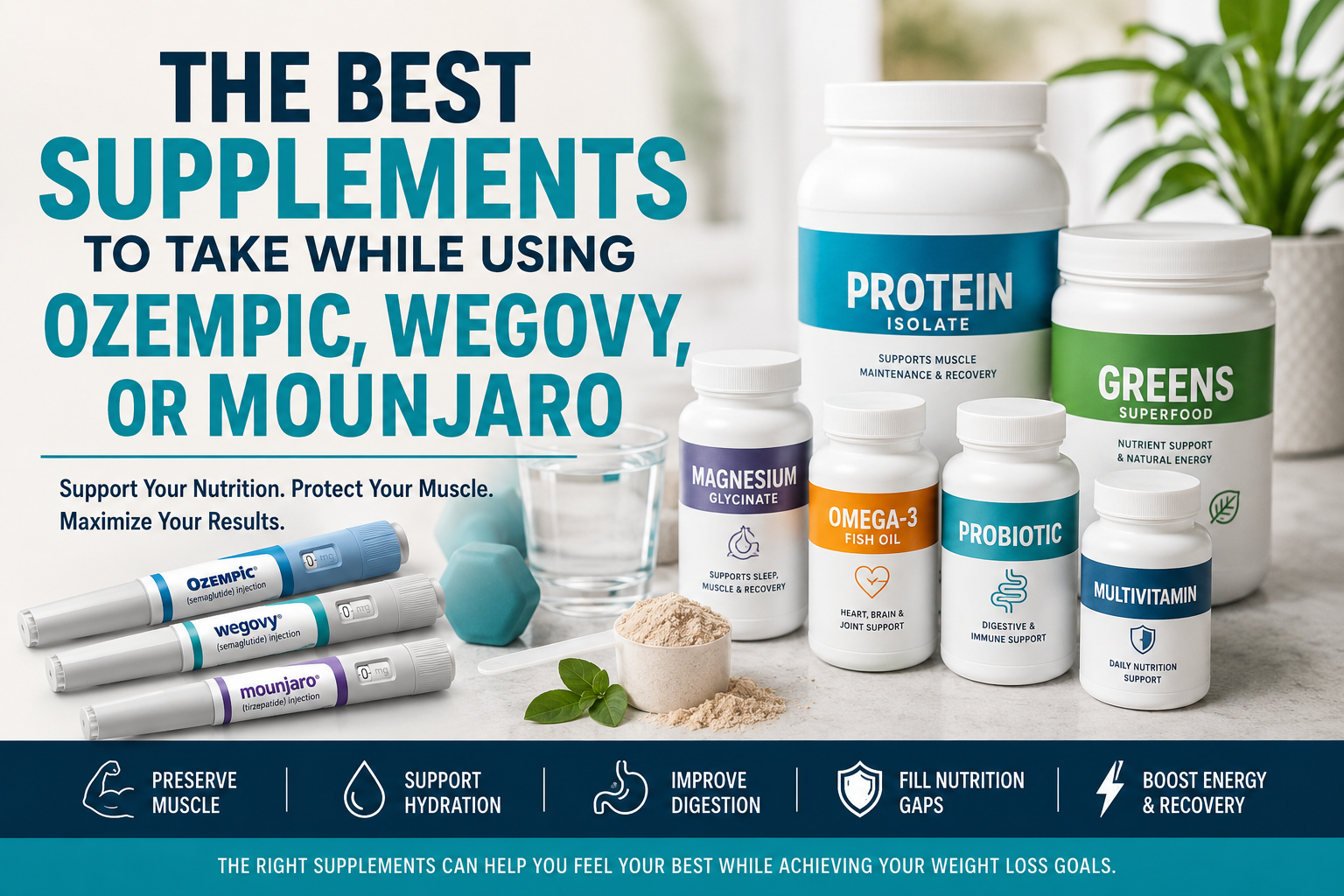
Do GLP-1 Supplements Actually Work? A Science-Backed Guide