
Supplements to Take With Zepbound: The Complete 2026 List
Exactly which supplements to take with Zepbound (tirzepatide) — protein, electrolytes, magnesium, a complete multivitamin, fiber, and creatine — with doses, timing around your weekly shot, and what to skip.
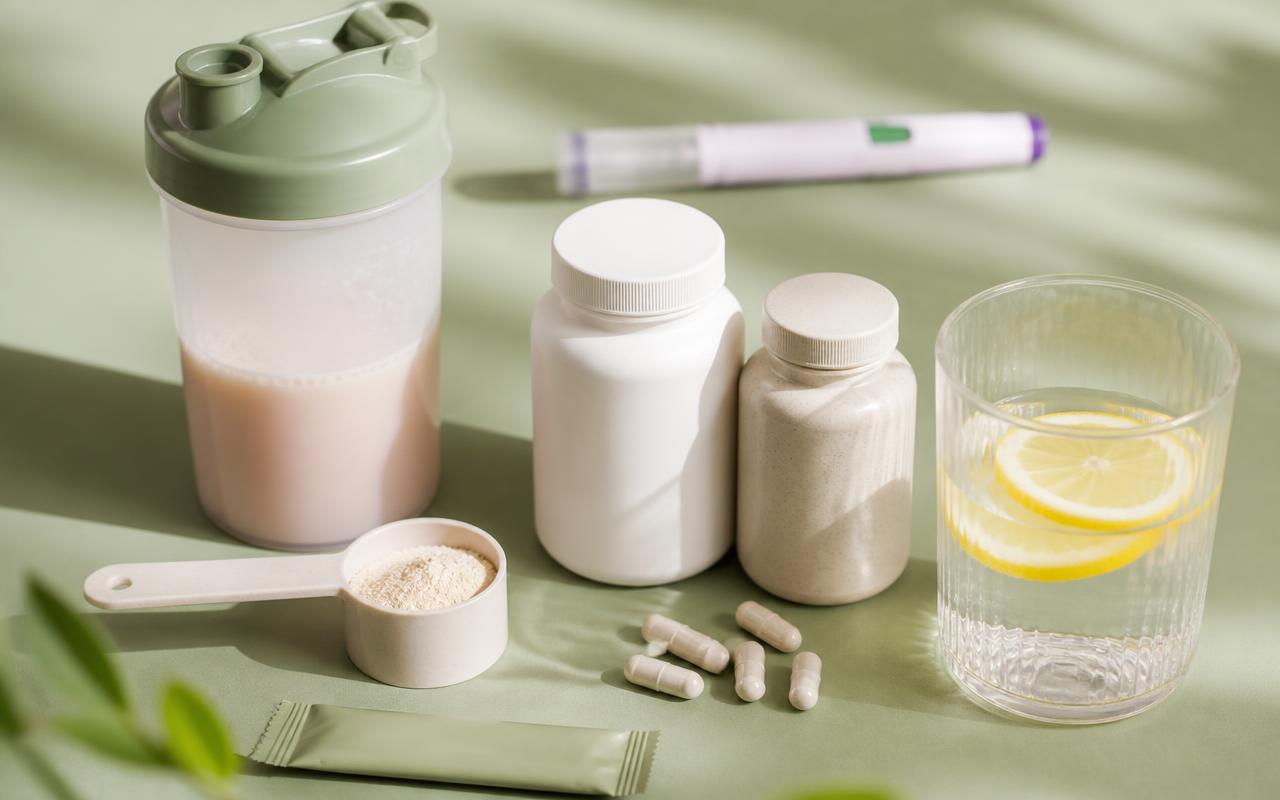
Short answer: on Zepbound, six supplements do almost all the work — protein, an electrolyte blend with real sodium, magnesium glycinate, a complete multivitamin, gentle fiber, and creatine monohydrate. Nothing on that list boosts tirzepatide. Every item replaces something a much smaller appetite stops delivering.
Zepbound is tirzepatide, the same molecule as Mounjaro, and it hits both GIP and GLP-1 receptors. That dual action is why appetite suppression is often stronger than on semaglutide — and why nutrient, fluid, and protein gaps open faster. People routinely drop 30–50% of their previous food volume within the first two dose steps, which quietly cuts sodium, potassium, magnesium, B12, iron, and total protein at the same time.
Below is the full list with doses, exactly when to take each one relative to your weekly shot, and the supplements that are not worth your money. If you are on Mounjaro, Wegovy, or Ozempic, the same list applies — only the timing of the rough days shifts.
The short list: 6 supplements to take with Zepbound
That is the whole stack. It is deliberately short. The Elevate GLP range is built around these six slots specifically because they are the ones that change how people feel on tirzepatide — not because any of them make the medication work harder.
- Protein — 1.2–1.6 g per kg of body weight daily; a shake covers the meal you cannot finish
- Electrolytes — 1,000–2,000 mg sodium, 400–1,000 mg potassium, 100–200 mg magnesium from your drink mix
- Magnesium glycinate — 200–400 mg elemental at night for cramps, sleep, and regularity
- Complete multivitamin — methylated B12, D3, chelated iron and zinc, in absorbable forms
- Gentle fiber — 5 g/day working up to 10–15 g; psyllium or partially hydrolyzed guar gum
- Creatine monohydrate — 3–5 g daily to protect strength and lean mass in a steep deficit
1. Protein: the single highest-impact item on Zepbound
Tirzepatide creates one of the steepest sustained calorie deficits available outside of surgery. In a deficit that large, the body pulls amino acids from muscle unless protein intake and resistance training tell it otherwise. Clinical weight-loss data consistently shows higher protein intake preserves more lean mass, and analyses of GLP-1 trials suggest a meaningful share of total weight lost can be lean tissue when protein is neglected.
The practical target is 1.2–1.6 g per kilogram of body weight per day — roughly 0.55–0.73 g per pound. For a 180 lb person that is about 100–130 g daily. The problem is not knowing the number; it is fitting it into an appetite that fills up after six bites.
This is why a protein shake is the first thing to add. Liquid protein bypasses the fullness that solid food triggers through slowed gastric emptying, and it lets you bank 25–30 g in a serving you can actually finish on a shot day.
- Front-load protein at breakfast, when appetite is usually highest
- Aim for 25–35 g per eating occasion rather than one large dinner
- Whey isolate sits easier than concentrate if lactose bothers you on tirzepatide
- Run the numbers for your body weight with the free protein calculator
2. Electrolytes: why plain water is not enough
Lower food volume means lower sodium and potassium intake, because most dietary sodium comes from food rather than the salt shaker. Add reduced thirst signalling and any vomiting or loose stools during dose escalation, and it is easy to run mildly depleted for weeks. The symptoms — lightheadedness on standing, afternoon fatigue, headache, calf cramps at night, a foggy feeling that water alone does not fix — get blamed on the drug when they are usually electrolytes.
Look for a mix supplying 500–1,000 mg sodium per serving, plus potassium and magnesium, with little or no sugar. Most conventional sports drinks are the wrong shape for this: high sugar, low sodium. On Zepbound you need the reverse.
Take one serving mid-morning and a second in the afternoon on shot day, hot days, or after training. Check your daily water and sodium targets with the hydration calculator.
3. Magnesium glycinate: cramps, sleep, and regularity
Magnesium deficiency is common even before a GLP-1, and a smaller volume of food makes it more likely. It shows up as night cramps, restless sleep, twitchy eyelids, and constipation. Glycinate is the form worth paying for on Zepbound — it absorbs well and, unlike magnesium oxide or citrate, does not usually add urgency to a gut that is already unpredictable.
Take 200–400 mg of elemental magnesium about an hour before bed. If constipation is your main issue, magnesium citrate at a similar dose works harder on the bowel but is more likely to cause cramping; many people take glycinate nightly and reserve citrate for stuck days.
4. A complete multivitamin: the deficiency insurance policy
Eating 40% less food means eating 40% fewer micronutrients, even when the food you do eat is excellent. The deficiencies that show up first on tirzepatide are B12, vitamin D, iron, and zinc — which together explain a large share of the fatigue, hair shedding, and slow-healing complaints in GLP-1 forums.
Choose a multivitamin that uses methylcobalamin rather than cyanocobalamin, D3 rather than D2, and chelated iron and zinc. Take it with the largest meal of your day and, if it includes iron, keep it several hours away from calcium, coffee, and tea.
- B12 — energy, nerve function; low intake follows reduced meat and dairy
- Vitamin D3 — mood, immune function, bone density during rapid loss
- Iron — a common driver of fatigue and hair shedding, especially in women
- Zinc — wound healing, taste, hair and skin integrity
5. Fiber: the biggest lever on Zepbound constipation
Constipation is one of the most reported Zepbound side effects, and it has a mechanical cause: slowed gut transit plus far less food and fluid moving through. Fiber fixes it more reliably than laxatives, and it does not create the dependence stimulant laxatives can.
Start low. 5 g per day for a week, then step up by 2–3 g weekly toward 10–15 g of supplemental fiber. Jumping straight to a full dose on a slow gut produces gas and bloating and convinces people fiber does not work. Psyllium husk and partially hydrolyzed guar gum are the two best-tolerated options; take either with a full glass of water, away from your multivitamin.
6. Creatine monohydrate: cheap muscle insurance
Creatine monohydrate is one of the most studied supplements in existence and one of the few with a clear role during rapid weight loss: it supports strength output in the gym, which is what actually signals the body to keep muscle. 3–5 g daily, any time of day, no loading phase needed.
The scale may tick up 1–2 lb in the first couple of weeks from intracellular water. That is not fat, and it settles. Creatine pairs naturally with your protein shake — same glass, same habit.
How to time supplements around your weekly Zepbound shot
Tirzepatide is dosed once weekly, and most people find the 24–72 hours after injection are the hardest — appetite lowest, nausea most likely, fluid intake worst. Shifting your supplement plan around that window makes it far easier to stay consistent.
- Shot day: prioritize electrolytes and a protein shake; skip large solid meals
- Days 1–2 after: two electrolyte servings, protein shake in place of the meal you cannot face, keep the multivitamin with whatever food you manage
- Days 3–5: appetite returns — this is your window for solid protein, fiber ramp-ups, and training
- Every night: magnesium glycinate, regardless of where you are in the cycle
- Every day: creatine, either in the shake or with water
A sample Zepbound supplement schedule
The full hour-by-hour version, including which combinations to keep apart, is in our guide to the best time to take GLP-1 supplements.
- Morning — multivitamin with breakfast; protein shake with 3–5 g creatine
- Mid-morning — electrolyte serving in 16–20 oz water
- Lunch — 25–35 g protein from food; fiber dose with a full glass of water
- Afternoon — second electrolyte serving on shot days, hot days, or training days
- Dinner — 25–35 g protein from food
- Bedtime — 200–400 mg magnesium glycinate
What to skip
Two more rules. Clear anything new with your prescriber if you take blood thinners, thyroid medication, blood pressure medication, or are managing kidney disease. And avoid stacking multiple products that each contain the same nutrient — doubling up on iron or zinc through a multivitamin plus a standalone is a real risk, not a theoretical one.
- "Natural GLP-1 boosters" — you are already dosing a GLP-1 agonist; these add cost, not effect
- Berberine — it works on AMPK, not GLP-1 receptors, and can interact with other medications
- Stimulant laxatives as a daily habit — fiber, magnesium, and fluid are the durable fix
- High-dose fat burners — appetite is already suppressed, and stimulants worsen dehydration symptoms
- Proprietary blends that hide doses — if the label will not tell you the amount, assume it is too low
Frequently asked questions
- Do I need supplements on Zepbound? Not legally required, but protein and electrolytes are close to essential in practice — most side-effect complaints on tirzepatide track nutrient and fluid gaps rather than the dose itself.
- What vitamins should I take with Zepbound? A complete multivitamin with methylated B12, D3, and chelated iron and zinc covers the deficiencies that appear first. Add magnesium glycinate separately, since multivitamins rarely carry a useful dose.
- Are Zepbound and Mounjaro supplements different? No. Both are tirzepatide; the label differs, not the molecule. The same six-item stack applies.
- Can supplements stop Zepbound hair loss? Hair shedding on tirzepatide is usually telogen effluvium from rapid weight loss. Adequate protein, iron, and zinc shorten it; no supplement prevents it entirely.
- Should I take supplements on an empty stomach? No. Take your multivitamin and fiber with food and water — an empty stomach on a slowed-transit gut is the fastest route to nausea.
- When should I take magnesium on Zepbound? At night. It supports sleep quality and overnight bowel motility, and it keeps magnesium away from your morning iron.
Related guides
Medication guides mentioned in this article
Related tools
Supplements built for your GLP-1 journey
Formulated for the exact nutrient gaps GLP-1 medications create — protein, electrolytes, magnesium, digestive support, and more. Trusted by thousands staying strong, energetic, and healthy on Ozempic, Wegovy, Mounjaro, and Zepbound.
Continue reading
Supplements for GLP-1 Users: The 2026 Buyer’s Guide
Best Vitamins to Take While on GLP-1: The 2026 Checklist

The Best GLP-1 Supplement Stack: What to Take Daily (2026 Guide)

What to Eat on Ozempic to Avoid Nausea: 21 Foods That Actually Help (2026)