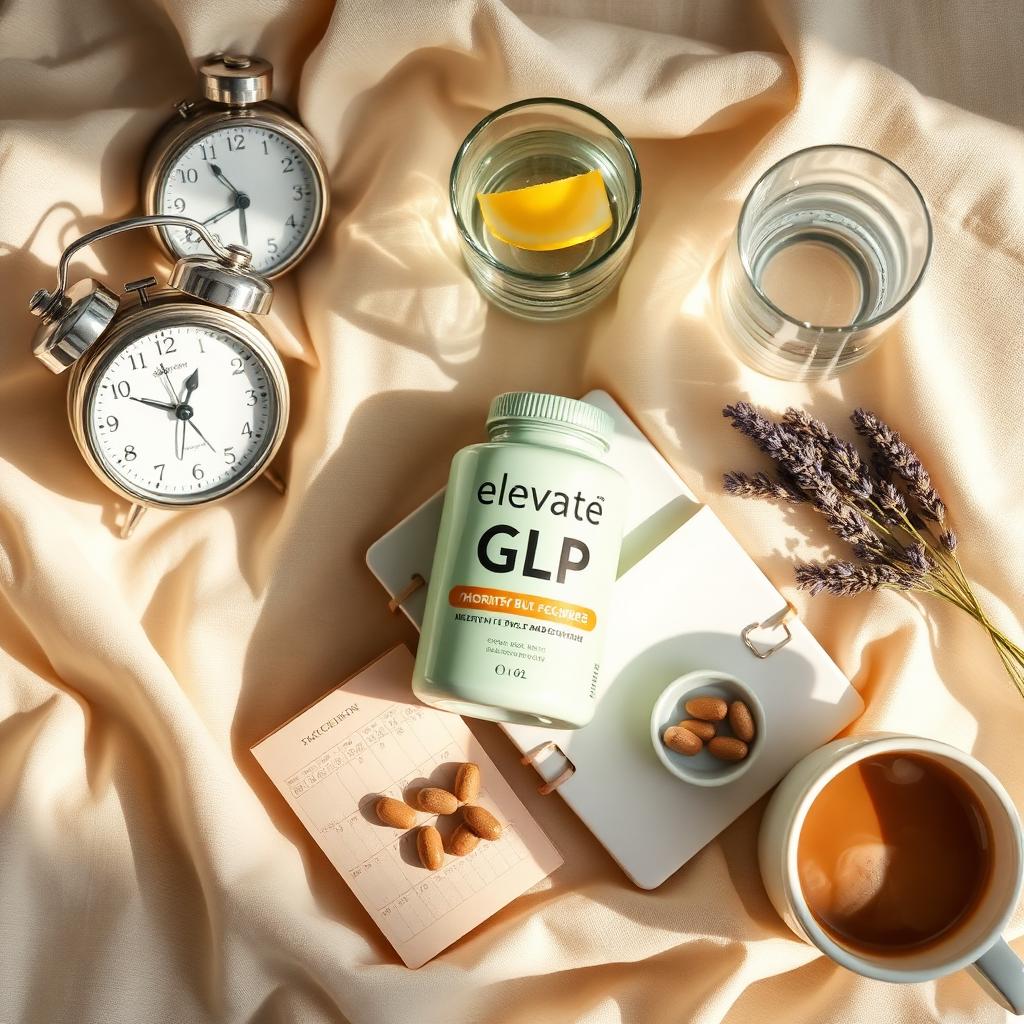
The Best GLP-1 Supplement Stack: What to Take Daily (2026 Guide)
The six-part daily supplement stack for people on Ozempic, Wegovy, Mounjaro, or Zepbound — what each one does, exact doses, when to take it, and how the Elevate GLP range maps to each slot.
Short answer: the best GLP-1 supplement is not one pill — it is a small, boring stack that replaces what a 30–50% smaller appetite stops delivering. For most people on semaglutide (Ozempic, Wegovy) or tirzepatide (Mounjaro, Zepbound) that means six things: protein, electrolytes, magnesium glycinate, a complete multivitamin, gentle fiber, and creatine. Everything else is optional.
This matters because the products marketed hardest — "natural GLP-1 boosters" that claim to replace or amplify your medication — are the least useful part of the category. Your medication already does the appetite work. Your job is to protect muscle, hydration, digestion, energy, and micronutrient status while it does.
Below is the exact stack, with doses, timing, what each slot solves, and which Elevate GLP product fills it. Every product we make exists because it fills one of these six slots — not because it promises to boost a hormone you are already dosing.
Why a stack beats a single "best" supplement
GLP-1 medications slow gastric emptying and blunt hunger signals. The result is not just fewer calories — it is less total food volume, narrower food variety, and lower fluid and sodium intake, all at once. A single multivitamin cannot cover protein needs. A protein shake cannot cover sodium losses. That is why the useful answer is a stack of a few well-chosen items rather than one hero product.
The other reason: the side effects people blame on the drug — fatigue, night cramps, constipation, hair thinning, feeling weak in the gym — track much more closely with nutrient and fluid gaps than with the dose itself. Fix the gaps and most of those symptoms shrink.
- Protein — protects lean muscle in a deep calorie deficit
- Electrolytes — sodium, potassium, magnesium lost with lower food intake
- Magnesium glycinate — cramps, sleep, bowel regularity
- Complete multivitamin — B12, D3, iron, zinc in absorbable forms
- Gentle fiber — the single biggest lever on GLP-1 constipation
- Creatine monohydrate — strength and lean-mass retention
1. Protein: 1.2–1.6 g per kg of body weight daily
In a large deficit, the body draws on muscle unless protein intake and resistance training tell it not to. Research on weight loss consistently shows higher protein intake preserves more lean mass, and GLP-1 users are in an unusually steep deficit — often 800–1,200 calories per day below maintenance.
The practical problem is not knowing the target; it is hitting it on a stomach that fills after half a plate. A shake is the highest-density option available: 25–30 g of protein in 8–10 oz of liquid, sipped over 20 minutes, with no chewing fatigue.
Use the Elevate Protein Calculator to get your exact number, then work backwards: whatever whole food leaves short, cover with one or two shakes.
- Target: 1.2–1.6 g/kg (roughly 0.55–0.73 g per pound) of body weight
- Form: whey isolate or a pea-rice blend if dairy causes bloating
- Timing: one shake mid-morning, one after training or in the evening
- Elevate GLP slot: Elevate Protein — 25 g per serving, low lactose, no sugar alcohols
2. Electrolytes: 500–1,000 mg sodium, 200–400 mg potassium
Most people cut sodium hard without meaning to — sodium comes from food volume, and food volume dropped. Add blunted thirst and you get the classic pattern: standing dizziness, dull afternoon headaches, calf cramps at night, and post-injection fatigue that looks like the drug but is really low sodium and low fluid.
Plain water alone can make this worse by diluting the sodium you still have. The fix is fluid plus minerals: 2.5–3.5 L (85–120 oz) of total fluid with an electrolyte serving on injection day, hot days, and any day you train.
- Look for: 500–1,000 mg sodium, 200–400 mg potassium, 60–120 mg magnesium per serving
- Avoid: high sugar, sugar alcohols (erythritol, sorbitol) and stimulant blends
- Timing: morning serving, second serving on injection day or after sweating
- Elevate GLP slot: Elevate Hydration — sugar-free, glycinate-form magnesium
3. Magnesium glycinate: 200–400 mg at night
Magnesium is the quiet fix for three complaints at once — muscle cramps, poor sleep, and sluggish bowels. Form matters more than dose here: magnesium oxide is cheap and poorly absorbed, citrate is absorbable but laxative for some, and glycinate is the gentlest on a slow-emptying stomach.
Take it in the evening, with or after your largest meal, and keep it separate from a high-dose iron or zinc supplement by a couple of hours.
- Dose: 200–400 mg elemental magnesium — check the elemental number, not the compound weight
- Form: glycinate first, citrate if you also want mild bowel help
- Timing: evening, with food
- Elevate GLP slot: Elevate Magnesium Glycinate
4. A complete multivitamin — with the right forms
Eating 30–50% less food means eating 30–50% fewer micronutrients unless something covers the difference. The nutrients most often short in GLP-1 users are B12, vitamin D, iron, zinc, and folate. Absorbable forms matter because there is less stomach acid contact time and less food to carry them.
Skip megadoses. More than 200% of the daily value on fat-soluble vitamins (A, D, E, K) is not a bonus — it accumulates. And skip gummies: they trade nutrient density for sugar and rarely include iron or a meaningful B12 dose.
- Prefer: methylcobalamin B12, methylfolate, D3 with K2 (MK-7), zinc picolinate, iron bisglycinate
- Take with your largest meal to reduce nausea
- Ask for bloodwork at 3–6 months: B12, ferritin, vitamin D, metabolic panel
- Elevate GLP slot: Elevate Daily Multivitamin
5. Fiber: start at 3–5 g, build to 5–10 g
Constipation is the most common non-nausea complaint on GLP-1 medications, and it is mostly mechanical: less food, less fiber, less fluid, slower transit. Fiber is the highest-leverage supplement for it — but only if you start low and drink enough water, otherwise you make a slow gut slower.
Begin at 3–5 g per day for a week alongside a full glass of water, then move up. If bloating spikes, hold the dose rather than pushing through.
- Form: psyllium husk or a gentle soluble blend; avoid inulin-heavy formulas if you bloat
- Always take with 8–12 oz of water
- Pair with magnesium at night if transit is very slow
- Elevate GLP slot: Elevate Gut Health / fiber support
6. Creatine monohydrate: 3–5 g daily
Creatine is the most-studied supplement in sports nutrition and unusually well matched to this situation: it supports strength output in a calorie deficit, which is what actually drives lean-mass retention. No loading phase is needed, and timing does not matter much — take it whenever you will remember.
The water-weight worry is mostly misplaced. Creatine draws water into muscle cells, not under the skin, and the 1–2 lb shift on the scale is not fat gain.
- Dose: 3–5 g monohydrate daily, every day including rest days
- Timing: any time; with your protein shake is easiest to remember
- Pair with two resistance sessions a week — creatine without training does little
What to skip
- "Natural GLP-1 boosters" and GLP-1 drops — you are already dosing the real thing; these add unknown blood-sugar-active ingredients
- Proprietary blends that hide individual doses
- Berberine, bitter melon, gymnema, chromium without prescriber sign-off — all can stack with your medication's glucose effects
- Stimulant appetite suppressants — appetite is not your bottleneck
- Megadose single vitamins, unless a blood test showed a deficiency
A daily schedule that actually gets taken
- Morning: electrolyte serving in 16 oz water
- Mid-morning: protein shake with 3–5 g creatine
- Largest meal: multivitamin (and omega-3 if you use one)
- Afternoon: fiber in a full glass of water
- Evening: 200–400 mg magnesium glycinate
- Injection day: double the electrolytes, keep protein liquid, eat smaller and slower
Frequently asked questions
- What is the best supplement for GLP-1 users? Protein, if you can only pick one — it protects the lean muscle you are most likely to lose. Electrolytes are second.
- Do GLP-1 supplements interfere with Ozempic or Mounjaro? Nutrient supplements — protein, electrolytes, magnesium, a multivitamin, fiber, creatine — do not change how the medication works. Blood-sugar-active herbal "boosters" can, so clear those with your prescriber.
- How long until I feel a difference? Electrolytes and magnesium often within days. Protein and creatine show up as strength and body-composition changes over 4–8 weeks. Micronutrient status is a bloodwork question at 3–6 months.
- Is an over-the-counter GLP-1 supplement a substitute for the medication? No. Nothing sold over the counter reproduces the effect of semaglutide or tirzepatide, and products claiming otherwise are the ones to avoid.
- Should I take fiber and magnesium together? You can, but start each one separately for a week so you know which is helping — and which is causing bloating if it appears.
Related guides
Medication guides mentioned in this article
Related tools
Supplements built for your GLP-1 journey
Formulated for the exact nutrient gaps GLP-1 medications create — protein, electrolytes, magnesium, digestive support, and more. Trusted by thousands staying strong, energetic, and healthy on Ozempic, Wegovy, Mounjaro, and Zepbound.
Continue reading
Supplements for GLP-1 Users: The 2026 Buyer’s Guide
Best Over-the-Counter GLP-1 Supplements (2026): What Actually Helps
Elevate GLP Supplements Review: What’s Inside and Is It Worth It?

The Best Electrolytes for GLP-1 Users (What to Look For & When to Take Them)