
Ozempic and Bone Loss: Does It Happen & How to Protect Your Bones
Does Ozempic cause bone loss? What the research actually shows about semaglutide, tirzepatide, and bone density — plus the calcium, vitamin D, magnesium, protein, and training plan that protects your bones while the weight comes off.
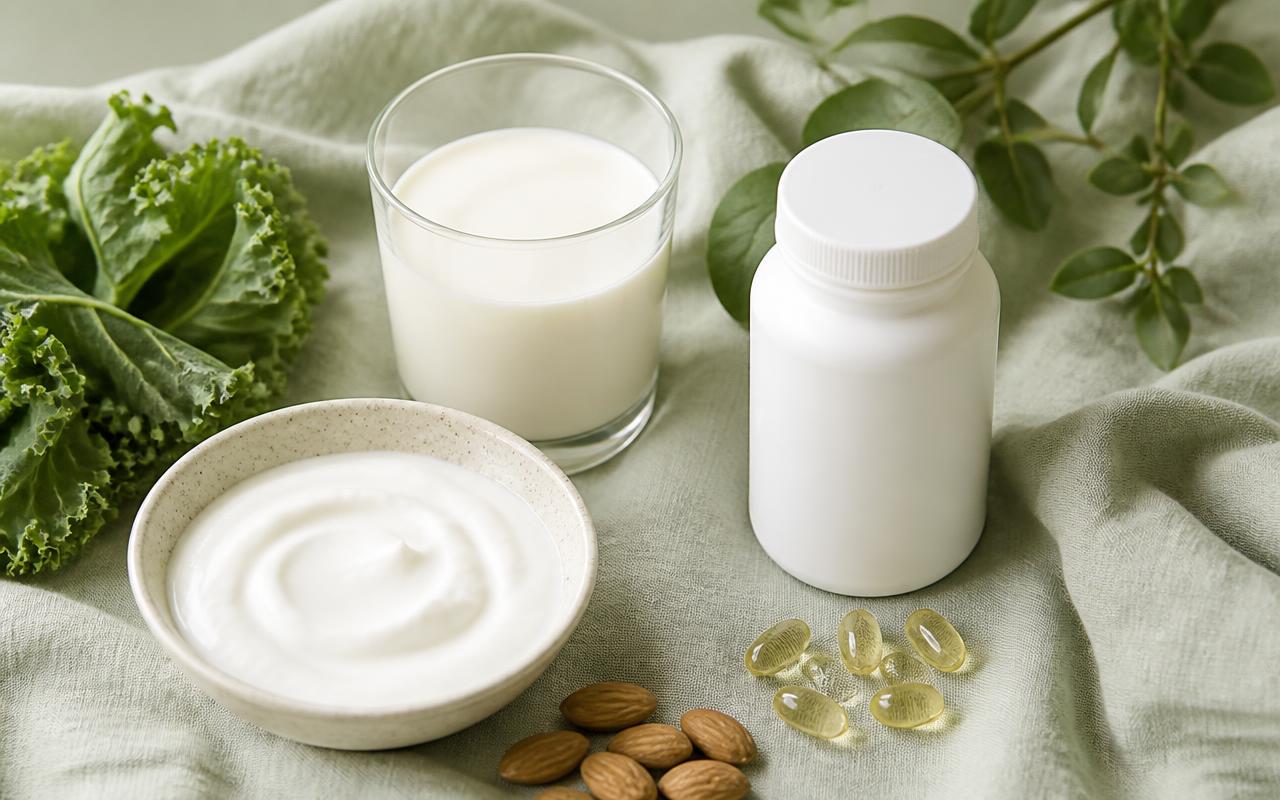
Short answer: GLP-1 medications like Ozempic, Wegovy, Mounjaro, and Zepbound do not directly attack bone, but the rapid weight loss they produce is associated with measurable reductions in bone mineral density — especially at the hip and spine — and fracture risk rises when weight drops fast without resistance training, adequate protein, calcium, and vitamin D. The bone loss is driven mostly by the speed and size of the weight loss, not by a toxic effect of the drug itself.
This matters more than most people realize. Bone is living tissue that responds to mechanical load: when you weigh less, your skeleton carries less load every day, and it adapts by shedding density. Add a suppressed appetite that quietly cuts calcium, vitamin D, and protein intake, and the conditions for bone thinning are in place — particularly for postmenopausal women, adults over 60, and anyone losing more than about 1–2 pounds per week.
The good news: bone loss on a GLP-1 is largely preventable with a specific, boring, well-studied playbook. This guide covers what the research actually shows, who is most at risk, and the exact supplement, nutrition, and training plan that protects bone density while you lose weight. It is educational content, not medical advice — if you have osteoporosis or a fracture history, talk to your prescriber about a DEXA scan and a monitoring plan.
What the research actually shows about GLP-1s and bone
The honest summary of the evidence: rapid weight loss of any kind reduces bone mineral density, and GLP-1 trials follow that pattern. In studies of semaglutide and tirzepatide, participants losing 10–20% of body weight showed small but real declines in hip and spine bone density over 12–18 months — on the order of a few percent. Bariatric surgery research, where weight loss is even faster, shows the same effect more strongly.
What the evidence does not show is a direct bone-toxic effect of the drugs. Animal data on GLP-1 receptors and bone is actually mildly positive in places, and fracture rates in the large cardiovascular outcome trials have not clearly increased. The working interpretation among researchers is straightforward: lose 15% of your body weight quickly, and your skeleton remodels for a lighter frame. That is physics and appetite, not a poisoned bone marrow.
The practical takeaway is that the risk is real but manageable — and concentrated in specific groups.
- Postmenopausal women — estrogen loss already accelerates bone turnover; rapid weight loss stacks on top
- Adults over 60 — age-related bone loss is already underway
- Anyone losing faster than ~1–2 lbs per week or more than 15% of body weight
- People with a prior fracture, low BMI, or a family history of osteoporosis
- Anyone eating very little dairy, leafy greens, or protein because appetite is suppressed
Why weight loss shrinks bone (the simple mechanics)
Bone density follows load. Every step you take at a heavier body weight is a strength signal to your hips, spine, and legs. Lose 30 pounds, and you have permanently removed a 30-pound weighted vest you used to wear everywhere. Bone, being efficient tissue, responds by reducing the density it no longer needs.
The second mechanism is nutritional. Bone is built from calcium, phosphate, protein, vitamin D, magnesium, and vitamin K2. On a GLP-1, total food intake often drops 20–40%, and micronutrient intake drops with it — which is why nutrient deficiency warning signs show up so often in this community. Your skeleton cannot maintain density on a construction site with no materials delivered.
The third is hormonal: rapid fat loss lowers leptin and can lower estrogen signaling, both of which influence bone turnover. You cannot supplement your way out of this one — but you can blunt it by losing at a sane pace and lifting weights.
The bone-protection supplement stack
Supplements cannot replace load-bearing exercise, but they close the nutritional gaps that suppressed appetite creates. These are the four with real evidence behind them for bone density — and they map directly onto what GLP-1 users most commonly under-consume.
Elevate GLP's stack was built around exactly these gaps: magnesium glycinate for the evening dose, a daily multivitamin covering vitamin D3 and K2, and a whey isolate that makes the protein target achievable when food is unappealing. If you take nothing else, take vitamin D — it is cheap, safe, and the deficiency is near-universal.
- Vitamin D3 (1,000–2,000 IU daily, ideally with K2) — vitamin D is required to absorb calcium at all; most adults are insufficient, and deficiency accelerates bone loss. This is the single highest-priority bone supplement.
- Calcium (1,000–1,200 mg daily, food first) — get it from dairy, yogurt, fortified milks, sardines, and leafy greens; supplement only the gap, in doses of 500 mg or less at a time for absorption.
- Magnesium glycinate (200–400 mg in the evening) — about 60% of the body's magnesium lives in bone, and magnesium is required to activate vitamin D. It also covers the cramps, poor sleep, and fatigue that show up alongside on a GLP-1.
- Protein (1.2–1.6 g/kg/day) — bone is roughly one-third protein by volume. Low protein intake is independently associated with lower bone density during weight loss, which is why a daily whey isolate shake does double duty for muscle and bone.
The training rule: bone needs impact and resistance
Here is the part no pill replaces: bone density is maintained by mechanical loading. Swimming and cycling, excellent as they are for fitness, do almost nothing for bone. The two stimuli that work are resistance training (progressive lifting, 2–3 sessions per week) and impact (walking, hiking, light jogging, stair climbing, or even heel drops).
You do not need a bodybuilding program. Squats, lunges, rows, presses, and deadlift-pattern movements with weights that feel challenging by rep 8–10, twice a week, is enough signal to hold hip and spine density during weight loss in the exercise trials that have tested it. Pair it with a daily walk and you have covered the impact side.
Creatine monohydrate at 3–5 g daily is a worthwhile add-on here — not for bone directly, but because it helps you keep strength and training quality while in a calorie deficit, and training quality is what protects bone.
Warning signs and when to ask for a DEXA scan
Bone loss is silent — there is no sensation of losing density until a fracture. That is why screening beats symptoms. Ask your prescriber about a baseline DEXA scan (a quick, low-radiation bone density X-ray) if any of these apply to you.
A DEXA gives you a T-score and a baseline to compare against 12–18 months later. If density is already low, your prescriber may adjust the weight-loss pace, add a bone-specific medication, or refer you to endocrinology — all far easier to do early.
- You are a postmenopausal woman or over 60
- You have lost more than 10–15% of your body weight on a GLP-1
- You have had a fracture from a minor fall as an adult
- A parent had osteoporosis or a hip fracture
- You are shrinking in height, or your posture is rounding forward
- You take long-term steroids, PPIs, or have a history of disordered eating
Frequently asked questions
- Does Ozempic directly damage bone? Current evidence says no — the density loss tracks with the speed and amount of weight lost, not with a direct drug effect. Fracture rates in major trials have not clearly risen.
- Is bone loss on a GLP-1 permanent? Partly. Density lost during rapid weight loss is not fully regained when weight stabilizes, which is why prevention — protein, calcium, vitamin D, lifting — matters more than repair.
- Does Mounjaro or Zepbound affect bone differently than Ozempic? Tirzepatide produces more weight loss on average, so the bone-density effect scales with it. The protection plan is identical.
- How much calcium do I need on a GLP-1? 1,000–1,200 mg per day total, food first. Three servings of dairy or fortified alternatives covers most of it; supplement only the gap in 500 mg doses.
- Should I take vitamin D with K2? K2 (MK-7) helps direct calcium into bone rather than arteries and is a sensible pairing, though vitamin D3 is the non-negotiable half of the combination.
- Can walking protect my bones? Walking helps (it is impact loading for the hips and spine) but is not sufficient alone — add resistance training twice a week for a meaningful protective effect.
Related guides
Medication guides mentioned in this article
Related tools
Supplements built for your GLP-1 journey
Formulated for the exact nutrient gaps GLP-1 medications create — protein, electrolytes, magnesium, digestive support, and more. Trusted by thousands staying strong, energetic, and healthy on Ozempic, Wegovy, Mounjaro, and Zepbound.
Continue reading
Best Over-the-Counter GLP-1 Supplements (2026): What Actually Helps

Supplements for GLP-1 Users: The 2026 Buyer’s Guide

Best Vitamins to Take While on GLP-1: The 2026 Checklist
GLP-1 Fatigue: Why Energy Dips When You Eat Less — and the Nutrition Habits That Help