A Day in the Life on a GLP-1: The Simple Routine That Keeps You Healthy (2026)
GLP-1 medications like Ozempic, Wegovy, Mounjaro, and Zepbound do the heavy lifting on appetite and weight — but staying strong, energetic, and healthy while eating less is on you. Here's a realistic, hour-by-hour daily routine used by the Elevate GLP community to protect muscle, energy, hair, digestion, and mood at every stage of the journey.

Starting a GLP-1 medication is the beginning of a very different relationship with food. Your appetite drops, meals shrink, and for the first time in years — sometimes decades — the constant background noise around eating quiets down. That's the miracle everyone talks about. The part they talk about less: eating a lot less food, day after day, is exactly the situation where nutrition, hydration, sleep, and movement start to matter more, not less.
Almost every problem GLP-1 users run into — fatigue, hair thinning, muscle loss, constipation, plateaued weight loss, brittle nails, wrecked sleep, the dreaded "Ozempic face" — traces back to the same root cause. When total food volume falls 30–50%, protein, electrolytes, fiber, and micronutrients quietly fall with it. The medication keeps working; you just start feeling worse while it does.
The fix is not another prescription. It's a boring, repeatable daily routine — the kind you can actually keep on a Tuesday when you're tired and don't want to think. Below is the day-in-the-life protocol we walk our Elevate GLP community through: what to do from the moment you wake up until you go to bed, with the specific role each Elevate GLP supplement plays in filling the exact gaps a GLP-1 creates.
This isn't a diet plan or a supplement pitch. It's the schedule most of our long-term customers actually run on — refined against thousands of check-ins with people at every dose, every stage, every body type.
Why a routine matters more on a GLP-1
GLP-1 receptor agonists — semaglutide (Ozempic, Wegovy, Rybelsus), tirzepatide (Mounjaro, Zepbound), and their cousins — work in four places at once: they trigger insulin only when your blood sugar is elevated, block glucagon, slow how quickly food leaves your stomach, and turn down appetite signals in your brain. The result is that you feel full on smaller portions, snack less, and think about food far less often.
That is enormously helpful for weight loss. But three predictable things also happen:
- Total protein intake drops sharply. Most GLP-1 users eat 30–50% less food overall, and protein is usually the first thing to fall because it feels heavy on a slow stomach. Under-eating protein for even a few weeks accelerates muscle loss, hair shedding, and metabolic slowdown.
- Fluid and electrolyte intake drops. GLP-1s reduce thirst signaling in the same brain centers that suppress appetite. Sodium, potassium, and magnesium quietly slip below normal — which shows up as fatigue, headaches, dizziness, muscle cramps, constipation, and brain fog.
- Micronutrient intake drops. Less food equals less B12, less vitamin D, less iron, less zinc, less omega-3. Deficiencies build slowly over months and finally surface as low energy, mood dips, and thinning hair.
The Elevate GLP daily routine, hour by hour
Below is the full day — 7 a.m. to 10 p.m. — designed to protect the five things GLP-1 users lose fastest: muscle, energy, hair, gut regularity, and sleep quality. Each supplement referenced from the Elevate GLP line is timed to when your body can actually use it.
7:00 a.m. — Wake, water, electrolytes
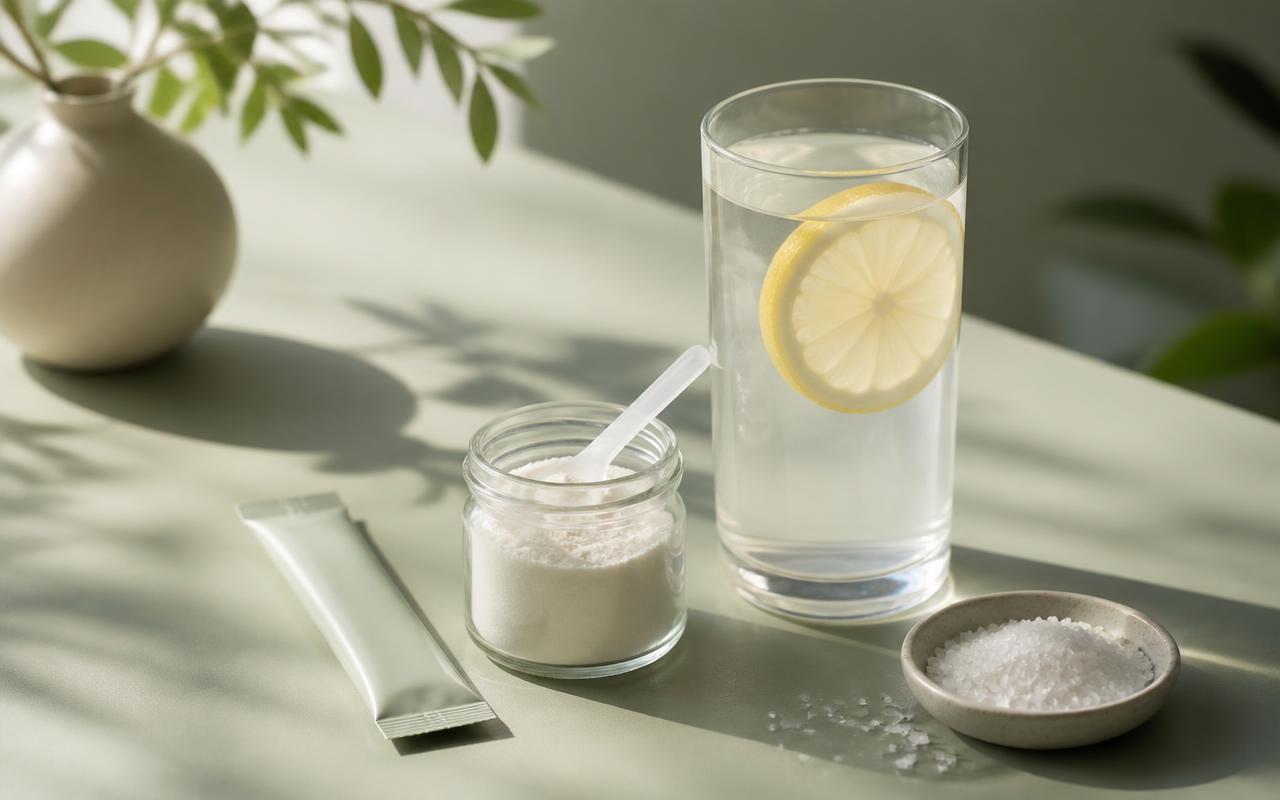
Before coffee, before your phone, drink a full glass of water — ideally with electrolytes stirred in. Overnight you've breathed out roughly 300–400 mL of water, and on a GLP-1 you woke up already running low on sodium and potassium.
This one step, done for a week, ends most morning fatigue, headaches, and dizziness people blame on the medication. It's not the injection making you tired at 8 a.m. — it's mild dehydration and low electrolytes stacked on top of a night's fast.
- Elevate GLP Hydration+ — a sodium-forward electrolyte formula (roughly 1,000 mg sodium, 200–300 mg potassium, magnesium) built for GLP-1 physiology, not for endurance athletes. One scoop in 16 oz of water.
- A second plain glass of water within 30 minutes of waking. If you feel thirsty later, you're already behind.
7:30 a.m. — Protein-forward breakfast + daily foundation
The single most important habit on a GLP-1 is a protein-forward first meal. Muscle protein synthesis is highest in the morning window, and hitting 30–40 g of protein by mid-morning sets the tone for the whole day. If you skip this and start with coffee and toast, you almost never catch up before dinner.
This is also when your daily foundation supplements go in — with food, so fat-soluble vitamins actually absorb.
- Meal idea: Greek yogurt with berries, chia, and a scoop of Elevate GLP Protein Isolate stirred in — roughly 35 g protein, low volume, easy on a slow stomach.
- Or: two eggs, one slice of whole-grain toast, half an avocado. Add a small protein shake alongside if appetite is low.
- Elevate GLP Daily Multivitamin — fills the B12, D3, zinc, iron, and folate gaps that appear within the first 60–90 days of reduced eating.
- Elevate GLP Greens Formula — a concentrated shortcut to the vegetables you can no longer fit onto a plate. Especially useful during the first months, when even a small salad feels like a lot.
10:00 a.m. — Mid-morning movement + hydration check
Stand up. Walk for 10 minutes. Refill your water bottle. This one small habit, three or four times a day, adds up to 30–40 minutes of low-intensity movement that improves gastric emptying, reduces bloating, and quietly protects insulin sensitivity between meals.
GLP-1 side effects — fullness, mild reflux, sluggish digestion — respond better to gentle movement than to lying down. A ten-minute walk after eating is worth more than most supplements on the market.
12:30 p.m. — Lunch: protein, plants, slow carbs
By lunch, appetite is often still low. Aim for another 30–40 g of protein alongside real vegetables and a small amount of slow-digesting carbohydrate. The frame is boring on purpose: it's what keeps energy steady into the afternoon.
- Meal idea: grilled chicken or salmon (4–6 oz), roasted vegetables, half a cup of quinoa or sweet potato, olive oil. Chew slowly, stop at comfortable — not full.
- If solid food is a struggle, an Elevate GLP Protein Isolate shake with a piece of fruit is a legitimate lunch, not a shortcut. Getting the protein in matters more than how it looks on the plate.
- Sip water between bites, not during them — large volumes of liquid on top of food are what trigger most mid-meal nausea on a GLP-1.
1:00 p.m. — Fiber, digestion, and gut support
After lunch is when GI symptoms — constipation, bloating, sulfur burps — usually flare. Slowed gastric emptying means food ferments longer, and low fiber intake compounds it. This is the moment to add support, not to power through.
- Elevate GLP Digestive Enzymes with a heavier meal — helps break protein and fat down faster on a stomach that's now working at 30% speed.
- Elevate GLP Probiotic once daily, taken with lunch or dinner — a multi-strain formula (with Saccharomyces boulardii where appropriate) that helps rebalance the microbiome shift caused by eating dramatically less food.
- 5–10 g of soluble fiber (psyllium or acacia) somewhere in the afternoon, in a full glass of water. Keeps stool soft, blood sugar steady, and cravings quiet. Space it at least 1 hour away from oral medications.
3:00 p.m. — Afternoon dip: rehydrate, don't caffeinate
The 3 p.m. energy crash is almost always dehydration and low electrolytes — not a coffee shortage. Under-eating means your usual mid-afternoon glucose bump from lunch is smaller, and adding another espresso on an already-slow stomach usually just tips you into jitters and heartburn.
The better move: a second smaller serving of electrolytes, another walk, and a protein-forward snack if you're genuinely hungry.
- Half a serving of Elevate GLP Hydration+ in 12 oz of water.
- Snack idea (only if hungry): a small handful of almonds and a piece of fruit, or a mini Protein Isolate shake.
5:30 p.m. — 20–30 minutes of resistance work
This is the single highest-leverage habit for anyone on a GLP-1. Resistance training — bodyweight, bands, dumbbells, machines, it doesn't matter — is what tells your body to keep the muscle it would otherwise burn for fuel. Without it, roughly 25–40% of the weight you lose on a GLP-1 can come from lean mass. With it, that number drops to something closer to 10%.
You do not need to become a lifter. Two to four short sessions per week — squats, hinges, pushes, pulls, carries — are enough to change the ratio of fat to muscle in the weight you lose.
- Post-workout: 30 g of fast protein within an hour. An Elevate GLP Protein Isolate shake is the simplest option — the appetite window right after training is often the easiest food moment of the day on a GLP-1.
- Creatine monohydrate 3–5 g/day (any time — consistency matters more than timing) is the single best-researched supplement for holding onto strength while eating less.
7:00 p.m. — Dinner: keep it small, protein first
By evening, gastric emptying is slowest and appetite is often gone. The temptation is to skip dinner entirely. Don't. A small, protein-first dinner keeps overnight muscle protein synthesis running and prevents the 2 a.m. blood sugar dips that wreck sleep quality on a GLP-1.
- Meal idea: 4 oz of fish, chicken, tofu, or lean beef, a big pile of low-FODMAP vegetables (zucchini, spinach, carrots, green beans), a small amount of olive oil.
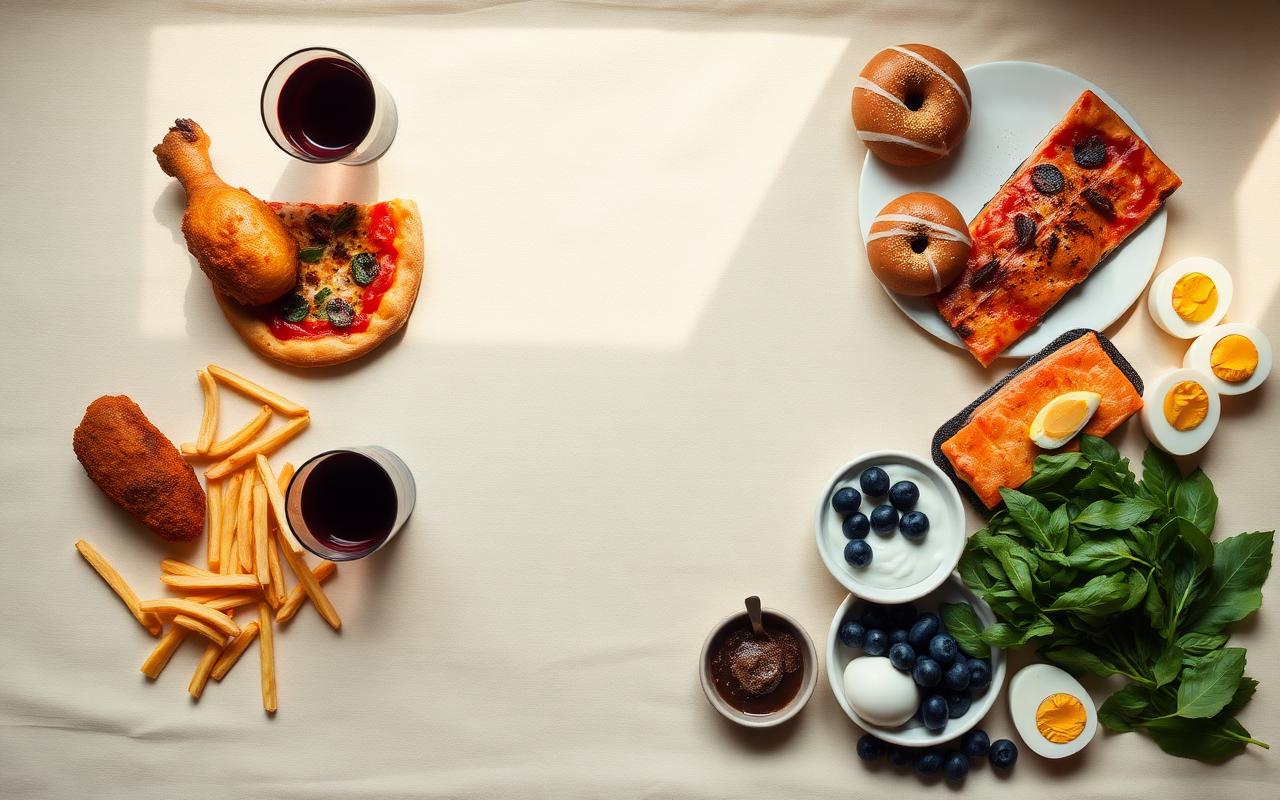
- Avoid the classic GLP-1 dinner traps: fried food, cream sauces, large portions of sugar-alcohol "diet" desserts, and carbonated drinks. These are the biggest sources of overnight reflux and sulfur burps.
- Finish eating at least 2–3 hours before bed. On a GLP-1, food eaten late is still in your stomach at midnight.
9:00 p.m. — Wind-down: magnesium, collagen, and sleep
Sleep is where the body actually rebuilds. Growth hormone, muscle repair, appetite regulation, and skin turnover all peak in the deep-sleep windows of the first half of the night. GLP-1 users who sleep 7+ hours consistently lose more fat, hold more muscle, and report far fewer cravings than those averaging under 6 — the effect is real and measurable.
- Elevate GLP Magnesium Glycinate 200–400 mg, 30–60 minutes before bed — chelated magnesium is the form best absorbed on a slow stomach, and glycinate specifically supports both sleep quality and constipation relief without the laxative punch of citrate.
- Elevate GLP Collagen Peptides 10–20 g with warm decaf tea — supports the skin, joints, and connective tissue that lose density during rapid weight loss (this is what most people mean by "Ozempic face," and it is largely preventable).
- Screens off 30 minutes before bed. Room cool, dark, and quiet. Same bedtime seven days a week — GLP-1 appetite regulation is measurably worse after a single night of short sleep.
Elevate GLP Hair Support: the exception to "take with food"
Hair shedding on a GLP-1 usually appears 2–4 months after starting or after a dose bump — and it's almost always driven by three things at once: telogen effluvium (fast weight loss stress), low protein, and low micronutrients. Elevate GLP Hair Support delivers the biotin, zinc, iron, vitamin D, and marine collagen that hair follicles need most, at doses that actually match the research.
Take it consistently, once a day, at whichever meal you're most likely to remember. Hair regrowth timelines are 3–6 months regardless of what you do — but that clock only starts once the underlying gaps are filled.
The weekly rhythm: what to check in on
- Weight: once a week, same day, same time, same clothing. Ignore daily fluctuations — they're water, not fat.
- Waist and one photo: monthly. Muscle-protective GLP-1 users often see the waist drop while the scale stalls. That's the goal, not a plateau.
- Protein: hit at least 1.2 g/kg body weight per day, four days out of seven. This is the single biggest lever.
- Steps: aim for 7,000–10,000 daily average across the week. Two "long walk" days count more than a perfect Tuesday.
- Sleep: 7+ hours, five nights out of seven. Track it.
- Bloodwork: baseline before starting, then B12, vitamin D, ferritin, and a lipid panel every 6 months on a GLP-1. Any hair, energy, or mood change should trigger a re-check, not another supplement guess.
The Complete Transformation Protocol
For people who don't want to build the stack piece by piece, Elevate GLP's Complete Transformation Protocol bundles the core of this routine — Protein Isolate, Daily Multivitamin, Magnesium Glycinate, Hydration+, Digestive Enzymes, and Collagen Peptides — into one system with a simple daily schedule. It's how most long-term users end up running once they realize the routine matters more than any single supplement.
You don't need every product to do this well. Even three habits — a protein-forward breakfast, daily electrolytes, and magnesium at night — will transform how someone feels on a GLP-1 within a week.
The three composite journeys we see most often
Behind every check-in with the Elevate GLP community, the same three storylines keep appearing. None of these are individual people — they're composite patterns pulled from thousands of conversations, and one of them is almost certainly closer to your experience than a generic "average GLP-1 user." Recognizing which one you're in makes the routine above easier to prioritize.
The Fast Starter (weeks 1–8)
You just started semaglutide or tirzepatide at the entry dose. Appetite dropped almost overnight, the scale is moving, and the mood is euphoric — until week three, when the fatigue, headaches, and constipation hit at the same time. Your first instinct is to blame the medication. The real culprit is that food, water, sodium, magnesium, and fiber all fell off a cliff at once, and your body noticed before you did.
What fixes the Fast Starter almost every time: two servings of electrolytes a day, a protein-first breakfast even when you're not hungry, magnesium at night, and a 10-minute walk after each meal. Add those four habits for a single week and most people describe feeling "normal again" — not because the medication changed, but because the deficits closed.
The Titration Rider (months 2–6)
You've been on a GLP-1 for a couple of months and just moved up to a therapeutic dose. Weight loss accelerates, but so does everything else: sulfur burps after protein, reflux at night, waking up already tired, and the first signs of hair shedding in the shower. This is the stage where people quietly drop off their medication because "the side effects got worse" — when what actually happened is that the dose crossed a threshold and the nutritional gaps outran the routine.
The Titration Rider needs the full stack: protein at 1.2–1.6 g/kg every day, digestive enzymes with heavier meals, a probiotic to steady the microbiome shift, hair support to preempt the 2–4 month shedding wave, and dinner finished 3 hours before bed. This is not the moment to "push through" — it's the moment the routine earns its keep.
The Long-Term Maintainer (month 12+)
You've lost the weight, your dose is stable or you're tapering, and the medication is no longer the loudest voice in the conversation. Your appetite is starting to return, workouts feel good, and the risk shifts from side effects to muscle re-loss and slow rebound weight gain. This is the stage where most people quietly stop the routine — and where they most need to keep the essentials.
The Maintainer's non-negotiables: protein target every day, resistance training two to four times a week, magnesium at night, and a multivitamin. Everything else can flex with the season. The habits you kept while losing the weight are what protect the version of you at your goal weight.
Common mistakes we see every week
- Skipping breakfast "because I'm not hungry." You are on a medication specifically designed to blunt hunger. Waiting for hunger to appear before eating is a strategy that no longer works — schedule the meal instead. A 200-calorie protein-forward breakfast is a completely different day than a coffee-only one.
- Chasing hydration with water alone. Plain water without sodium can actually make GLP-1 fatigue and headaches worse, because you dilute an already-low sodium level. Electrolytes fix in a day what water alone can't fix in a week.
- Under-eating protein and blaming the medication for hair loss. Most GLP-1 hair shedding at month 3–4 is protein-driven telogen effluvium. Hitting 1.2–1.6 g/kg protein for eight weeks straight is the single highest-impact fix.
- Doing only cardio. Long walks are wonderful, but they don't tell your body to keep muscle. A GLP-1 user who only walks loses more lean mass than one who walks and lifts.
- Piling on new supplements at the first side effect. If you're constipated, the fix is usually water + magnesium + fiber before more probiotics. Add one thing at a time, give it 5–7 days, and keep what actually works.
- Late, large dinners. Slowed gastric emptying + a big meal at 9 p.m. = reflux, poor sleep, and worse morning energy. Eat the biggest meal of the day at lunch, not dinner.
- Weekend collapse. Five clean days followed by two chaotic ones on a GLP-1 doesn't average out — the weekend food often drives Monday's nausea, headaches, and stalls. The routine works because it's boring seven days a week.
Meal ideas for a slow stomach
The eating window on a GLP-1 is smaller and the stomach is slower — which means volume, texture, and protein density all matter more than usual. A few meals that consistently work for the community:
- Breakfast: Greek yogurt + Elevate GLP Protein Isolate + berries + chia. Roughly 35 g protein in a small bowl.
- Breakfast (savory): two eggs + smoked salmon + half an avocado + a small slice of sourdough. Around 30 g protein.
- Lunch: grilled chicken + roasted vegetables + quinoa or sweet potato + olive oil. Warm food usually settles better than cold on a slow stomach.
- Lunch (on the go): a large protein shake + a banana + a hard-boiled egg. Legitimate meal, not a compromise.
- Dinner: baked white fish or tofu + zucchini or spinach + a small serving of rice + olive oil. Low volume, easy to digest, finishes before 7 p.m.
- Emergency low-appetite day: a Protein Isolate shake with whole milk or oat milk, plus half an avocado. Non-negotiable protein floor of ~30 g for the day.
- Post-workout: Protein Isolate shake in water + a piece of fruit within an hour of training. The easiest appetite window most GLP-1 users get.
Traveling on a GLP-1
- Pack single-serve Hydration+ sticks. Airplane air is dry, airport food is salty and low-protein, and a full day of travel is exactly when GLP-1 fatigue and headaches spike.
- Bring at least two Protein Isolate servings per travel day. It's the one macro you can't reliably hit at airports.
- Move your magnesium to your carry-on, not checked luggage. Sleep in a new time zone is fragile enough already.
- If you're crossing time zones on your injection day, take the injection at your usual local time in the destination — most prescribers are comfortable with a ±24-hour window when needed.
- Skip the sugar-alcohol "protein" snacks sold near airport gates. They're the fastest route to travel-day diarrhea and bloating on a GLP-1.
The weekend version
Weekends do not have to look like weekdays — but the three anchors should still be in place. Water and electrolytes on waking, one protein-forward meal early, and magnesium at night. Everything else can flex.
You can absolutely have brunch, wine, dessert, a bigger dinner out. The routine is not about restriction; it's about protecting the floor. Two days of forgetting the anchors is what makes Monday feel like a bad injection day — and Monday is not a bad injection day. It's a low-protein, low-sodium, low-sleep hangover the medication happens to sit on top of.
When to loop in your prescriber, not another supplement
The routine handles the everyday. Your prescriber handles the outliers. A good GLP-1 clinician wants to hear about these things early — not after three months of trying to fix them with a new supplement.
- Nausea or vomiting that lasts more than 48 hours or keeps you from holding down water.
- Severe upper-right or central abdominal pain — this can signal gallbladder or pancreas issues and needs same-day evaluation.
- Heart rate consistently above 100 at rest, or new palpitations.
- Hair shedding that continues past month 6, or comes in patches rather than diffuse thinning.
- Persistent mood changes, low motivation, or new anxiety — worth flagging early, not powering through.
- Any weight loss faster than ~1% of body weight per week over multiple weeks — usually a signal to slow titration and audit intake.
- Bloodwork drift: low ferritin, low B12, low vitamin D, or rising liver enzymes on a routine panel.
Frequently asked questions
- Do I really need supplements on a GLP-1? Most people don't need every supplement, but nearly everyone needs more protein, electrolytes, and magnesium than they can hit through food alone once appetite drops. Those three are non-negotiable; the rest are personalized.
- When should I take my Elevate GLP supplements — before or after my injection? Timing to your injection day doesn't matter. Timing to meals does: fat-soluble vitamins, digestive enzymes, and collagen with food; magnesium and hydration on an empty stomach or between meals.
- Can I take Elevate GLP supplements with Ozempic, Wegovy, Mounjaro, or Zepbound? Yes — the entire product line is formulated specifically for people taking prescription GLP-1s. There are no known interactions with semaglutide or tirzepatide.
- What if I forget a dose? Skip it and resume the next day. Consistency across weeks matters far more than a single missed capsule.
- How fast will I feel a difference? Most people feel meaningfully better on hydration, magnesium, and protein within 3–7 days. Hair, skin, and body-composition changes show up over 8–16 weeks.
- Do I need to keep taking these after I stop my GLP-1? Protein, multivitamin, and magnesium continue to matter in a maintenance phase — appetite returns, but the muscle you protected during weight loss is what keeps the results.
Related guides
Medication guides mentioned in this article
Related tools
Supplements built for your GLP-1 journey
Formulated for the exact nutrient gaps GLP-1 medications create — protein, electrolytes, magnesium, digestive support, and more. Trusted by thousands staying strong, energetic, and healthy on Ozempic, Wegovy, Mounjaro, and Zepbound.