Ozempic Mouth: Dry Mouth, Metallic Taste & 8 Ways to Fix It (2026)
'Ozempic mouth' covers a cluster of oral side effects — dry mouth, metallic or bitter taste, bad breath, mouth sores, and higher cavity risk — that show up for many GLP-1 users. Here's why it happens on semaglutide, tirzepatide, and Wegovy, and 8 evidence-based ways to fix it fast.
'Ozempic mouth' isn't in any drug label, but it's a real cluster of oral side effects that thousands of GLP-1 users describe: a persistently dry mouth, a metallic or bitter taste that won't rinse away, foods suddenly tasting 'off,' bad breath that survives brushing, occasional mouth sores, and — most concerning long-term — a spike in cavities and gum sensitivity. If you're on Ozempic, Wegovy, Mounjaro, or Zepbound and something's changed in your mouth, you're not imagining it.
The good news: nearly every symptom of Ozempic mouth is mechanical, not permanent, and most of it responds within days to targeted hydration, electrolyte, and oral-care changes. This guide covers what causes each symptom, how long it lasts, and the eight steps that actually fix it — plus the red flags that mean you should call your dentist or prescriber.
What is 'Ozempic mouth'?
Ozempic mouth is an umbrella term for the oral side effects people experience on GLP-1 receptor agonists — semaglutide (Ozempic, Wegovy, Rybelsus) and tirzepatide (Mounjaro, Zepbound). It's not a single diagnosis; it's a pattern of five overlapping issues driven by the same underlying mechanisms.
- Dry mouth (xerostomia) — the most common complaint, reported by roughly 1 in 10 GLP-1 users
- Altered or metallic taste (dysgeusia) — foods taste bitter, metallic, cardboard-like, or simply 'off'
- Bad breath (halitosis) — often ketone-driven or bacterial from reduced saliva
- Mouth sores or a sore, coated tongue — usually mild and self-limiting
- Higher cavity and gum risk — the long-term concern, driven by reduced saliva plus more acidic reflux
Why GLP-1 medications cause dry mouth and taste changes
Four mechanisms combine to produce Ozempic mouth, and understanding them makes the fixes obvious.
First, dehydration. GLP-1s reduce thirst signaling in the same brain centers that suppress appetite. You drink less, eat less water-rich food, and often lose fluids to early GI side effects (nausea, loose stools, vomiting). Saliva is 99% water — cut fluid intake and salivary flow drops within days.
Second, delayed gastric emptying. Food sits in your stomach longer, which increases acid reflux and regurgitation into the mouth. Chronic low-grade acid exposure erodes enamel, irritates the tongue, and produces a sour or metallic aftertaste.
Third, ketosis. When appetite drops and calorie intake falls, many GLP-1 users shift toward mild ketosis. Acetone (a ketone) is exhaled through the lungs and produces a distinctive fruity-metallic breath and taste that toothpaste can't cover.
Fourth, the GLP-1 receptor itself. GLP-1 receptors are expressed on taste buds and in salivary glands. Direct receptor activation appears to modestly reduce saliva output and shift taste perception — which is likely why sweets and rich foods often start tasting unpleasant on semaglutide and tirzepatide.
How long does Ozempic mouth last?
Most symptoms track the same curve as other GI side effects: worst in the first 2–4 weeks of each dose, then easing.
- Weeks 1–2: dry mouth and metallic taste peak, especially in the 48 hours after each injection
- Weeks 3–6: symptoms ease as your body adapts to the current dose
- After each dose bump (0.25 → 0.5 → 1.0 → 1.7 → 2.0 mg): expect a 3–7 day flare that mirrors week 1
- Long-term: dry mouth often becomes a low-grade background issue on maintenance doses; taste changes usually normalize within 2–3 months
- Persistent (>3 months) severe dry mouth is uncommon and worth flagging to your prescriber and dentist
1. Hydrate on a schedule, not by thirst
Thirst is the first casualty of GLP-1 therapy — you cannot rely on it. Set a target and hit it whether you feel like it or not: about half your body weight in ounces of water per day, plus more if you're active or in a hot climate. A 180-lb person should target ~90 oz (about 2.7 L) daily as a baseline.
Sip small volumes frequently rather than chugging large glasses (which triggers nausea on a slow-emptying stomach). Room-temperature water is easier to tolerate than ice-cold when nausea is present.
2. Replace electrolytes daily
Plain water alone can worsen dry mouth by diluting sodium and reducing salivary reflex. Add electrolytes — especially sodium and potassium — daily.
- Sodium: 2,000–3,000 mg/day (about 1 tsp of pink salt, split across drinks and food)
- Potassium: 2,000–3,500 mg/day from food (avocado, potato, banana, spinach) or a low-dose supplement
- Magnesium: 300–400 mg glycinate at night — supports muscle, sleep, and salivary function
- Skip sugary sports drinks; look for low-sugar electrolyte packets sweetened with stevia or monk fruit
3. Stimulate saliva with xylitol
Xylitol is the single most useful ingredient for Ozempic mouth. It stimulates salivary flow, neutralizes acid, and — unlike sugar — actively reduces the bacteria (Streptococcus mutans) that cause cavities. This matters because reduced saliva is the mechanism behind almost every long-term oral risk on GLP-1s.
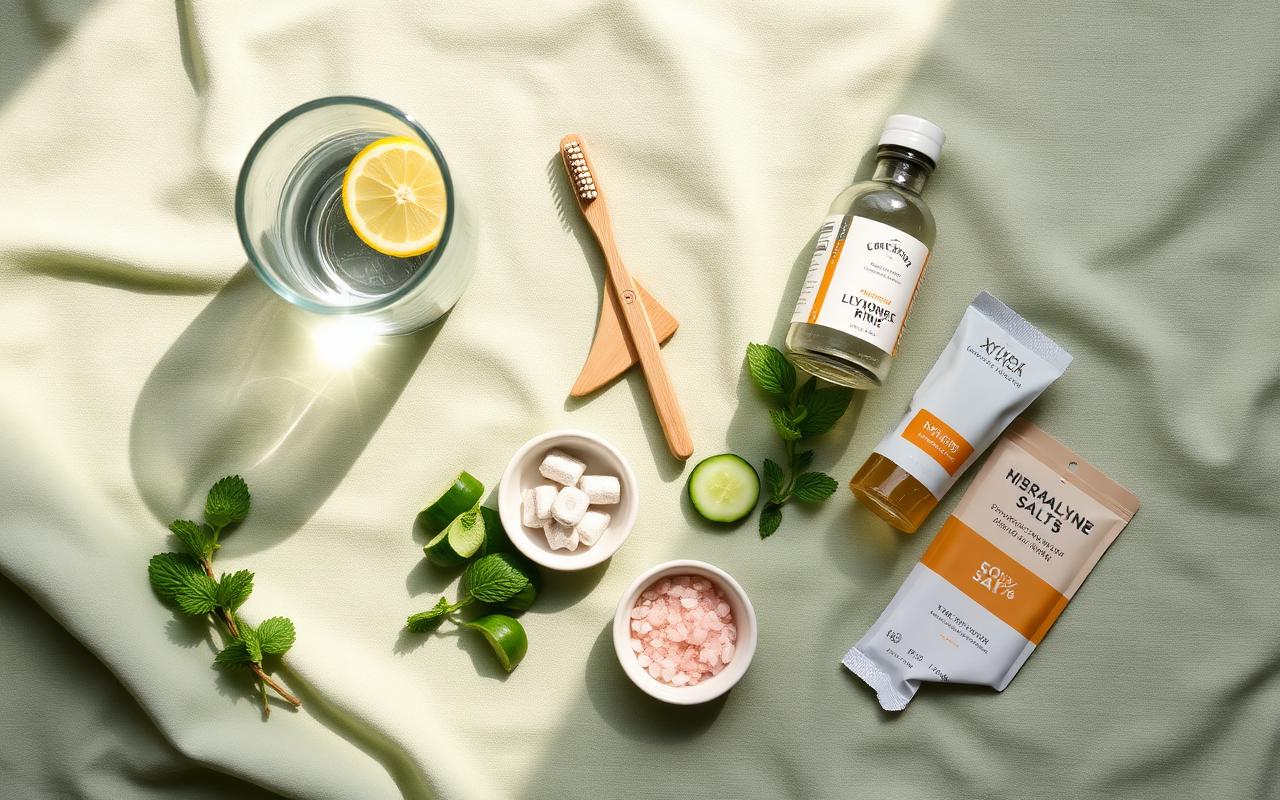
- Xylitol gum or mints after every meal and before bed — aim for 6–10 g total per day
- Xylitol mouth rinse or spray for quick relief during the day
- Xylitol nasal spray at night if you wake with a bone-dry mouth (dry nasal passages worsen mouth breathing)
- Keep xylitol away from dogs — it's toxic to them
4. Fix the metallic and bitter taste
Dysgeusia is one of the most demoralizing symptoms because it makes healthy food (protein, vegetables, water) taste unpleasant right when you need to prioritize it. A few small changes usually help within days.
- Rinse with warm salt water (1/2 tsp salt in 8 oz water) before meals to reset taste buds
- Swap metal utensils for bamboo, plastic, or ceramic — metal amplifies metallic taste
- Add acid: lemon, lime, or a splash of vinegar brightens flat-tasting food and stimulates saliva
- Chill foods slightly — cold blunts strong flavors and off-tastes
- Zinc: a short course of 15–30 mg/day (with food) helps some users; zinc deficiency worsens dysgeusia
- Brush your tongue with a scraper twice daily — the coating on the tongue traps taste-distorting bacteria
5. Upgrade your oral care to protect enamel
This is the step most people skip and later regret. Reduced saliva plus more acid reflux is a fast track to cavities and enamel erosion — dentists are already reporting a spike in GLP-1 patients with new decay. Standard brushing isn't enough.
- Switch to a fluoride toothpaste with 1,450 ppm fluoride (most 'sensitive' pastes qualify)
- Do NOT brush within 30 minutes of vomiting, reflux, or acidic drinks — enamel is soft; rinse with water or baking-soda water first
- Use a soft-bristle toothbrush and a light touch — dry mouth means less mechanical protection
- Alcohol-free mouthwash only — alcohol dries the mouth further; look for CPC or xylitol formulas
- Floss daily and see your dentist every 4–6 months while on a GLP-1, not the standard 6
6. Manage reflux to stop the acid loop
Silent reflux drives a huge share of Ozempic mouth symptoms — metallic taste, sore throat, bad breath, and enamel wear. GLP-1s slow the stomach; volume plus acid backs up more easily.
- Stop eating 3+ hours before bed — a slow-emptying stomach needs the extra time
- Sleep with the head of the bed elevated 6–8 inches (blocks under the frame, not just extra pillows)
- Smaller, protein-forward meals; keep single meals under ~500 kcal and portions palm-sized
- Limit or cut alcohol, coffee on an empty stomach, spicy food, and high-fat meals in the first 8 weeks
- If reflux is daily and severe, ask your prescriber about a short course of an H2 blocker or PPI — do not self-treat long-term
7. Fix bad breath at the source
GLP-1 halitosis has three sources — dehydration, ketones, and bacteria — and treats-the-symptom mints won't touch it. Address each:
- Hydration + electrolytes (steps 1–2) fix the dehydration component
- Modest carbs (30–80 g/day of whole-food carbs like fruit, oats, or squash) blunt ketone breath if it's bothersome
- Tongue scraping twice daily removes the bacterial biofilm that causes most bad breath
- Alcohol-free antibacterial mouthwash (chlorhexidine short-term, or a daily zinc-based rinse)
- Chew xylitol gum after meals to raise saliva and clear food particles
8. When mouth sores or a sore tongue show up
Small, transient canker sores are relatively common on GLP-1s, usually from a combination of dehydration, nutrient shifts (especially B12, folate, and iron), and immune changes during rapid weight loss. They typically heal in 7–14 days.
- Rinse with warm salt water 3–4 times daily to speed healing
- Avoid acidic, spicy, and crunchy foods until sores close
- Check protein intake — under-eating protein delays mucosal healing
- Consider a B-complex and a 2,000 IU vitamin D check if sores are recurrent
- Aphthous ulcers larger than 1 cm, lasting >3 weeks, or with fever need a dental or medical evaluation
When to call your dentist or prescriber
Most Ozempic mouth is a nuisance, not an emergency. Call your dentist or doctor if you see any of these:
- New cavities, tooth sensitivity, or gum bleeding within 3–6 months of starting a GLP-1
- Persistent metallic or bitter taste lasting more than 8–12 weeks despite the steps above
- Mouth sores larger than 1 cm, lasting more than 3 weeks, or accompanied by fever
- Severe dry mouth that interferes with sleeping, eating, or speaking
- White patches on the tongue or cheeks that won't wipe off (possible thrush — treatable but needs a prescription)
- Any facial swelling, difficulty swallowing, or tongue swelling — stop the medication and seek urgent care
Frequently asked questions
What exactly is Ozempic mouth? Ozempic mouth is an informal umbrella term for the oral side effects of GLP-1 medications — most commonly dry mouth, metallic or bitter taste, bad breath, mouth sores, and higher cavity risk. It's driven by reduced saliva, delayed gastric emptying with reflux, mild ketosis, and direct GLP-1 receptor effects on taste buds and salivary glands.
Does Ozempic cause dry mouth? Yes. Dry mouth (xerostomia) is one of the most frequently reported oral side effects of Ozempic, Wegovy, Mounjaro, and Zepbound. It's caused by reduced thirst, dehydration, and direct GLP-1 receptor effects on salivary glands.
Why does Ozempic cause a metallic taste? Metallic taste (dysgeusia) on Ozempic is a combination of altered GLP-1 receptor signaling on taste buds, mild ketosis producing a metallic exhaled breath, and reflux exposing the mouth to stomach acid. It typically improves within 2–3 months and responds to rinsing, zinc, and cutting metal utensils.
Can Ozempic damage your teeth? Not directly — but reduced saliva plus reflux dramatically raises cavity risk if oral care isn't upgraded. Fluoride toothpaste, xylitol gum, avoiding brushing right after vomiting, and dental cleanings every 4–6 months prevent most of the damage.
Does Ozempic mouth go away? Most symptoms ease within 4–8 weeks of each dose. Dry mouth often stays as a low-grade background issue on maintenance doses. Taste changes usually normalize within 2–3 months. Persistent severe symptoms beyond 3 months warrant a check-in with your prescriber and dentist.
What can I drink for Ozempic dry mouth? Water sipped in small amounts throughout the day, electrolyte drinks (low-sugar), and coconut water are all effective. Avoid alcohol, caffeine on an empty stomach, and sugary drinks — all worsen dry mouth and cavity risk.
Is Ozempic mouth the same on Wegovy, Mounjaro, and Zepbound? The mechanism is identical because all four drugs target the GLP-1 receptor (tirzepatide adds GIP). Symptom patterns are similar, though some users report slightly less dry mouth on tirzepatide (Mounjaro/Zepbound) at equivalent weight-loss doses.
Does Ozempic breath smell like acetone? Yes — mildly ketogenic states from reduced calorie intake produce acetone, which is exhaled and produces a fruity-metallic breath. Adding 30–80 g of whole-food carbs per day and hydration usually resolves it.
Related guides
Medication guides mentioned in this article
Related tools
Supplements built for your GLP-1 journey
Formulated for the exact nutrient gaps GLP-1 medications create — protein, electrolytes, magnesium, digestive support, and more. Trusted by thousands staying strong, energetic, and healthy on Ozempic, Wegovy, Mounjaro, and Zepbound.
Continue reading

Can You Drink Alcohol on Ozempic, Wegovy, or Mounjaro? (2026 Guide)

How Long Do Zepbound Side Effects Last? A Week-by-Week Timeline (2026)
Does Ozempic Cause Diarrhea? Why It Happens & How to Stop It Fast
Ozempic and Bone Loss: Does It Happen & How to Protect Your Bones