Sulfur Burps on Ozempic: Why They Happen & How to Stop the Rotten-Egg Taste Fast (2026 Guide)
Sulfur burps — those rotten-egg-tasting belches — are one of the most common (and grossest) side effects of Ozempic, Wegovy, Mounjaro, and Zepbound. Here's exactly why GLP-1 medications cause them, the 9 fixes that actually work, and when to call your doctor.
If you're on Ozempic, Wegovy, Mounjaro, or Zepbound and suddenly tasting rotten eggs every time you burp — you are not alone, and you are not doing anything wrong. Sulfur burps (technically called hydrogen sulfide belches) are one of the most reported gastrointestinal side effects across every GLP-1 medication, and they show up in patient forums far more often than they do in the official prescribing information.
The good news: sulfur burps on GLP-1s are almost always benign, and they respond quickly to a handful of specific, evidence-based fixes. This guide breaks down exactly why semaglutide and tirzepatide cause the rotten-egg taste, the 9 remedies GLP-1 patients report clearing them fastest, what to eat (and stop eating) tonight, and the red-flag symptoms that mean it's time to call your prescriber.
Quick answer: why does Ozempic cause sulfur burps?
GLP-1 medications like Ozempic (semaglutide), Wegovy (semaglutide), Mounjaro (tirzepatide), and Zepbound (tirzepatide) slow gastric emptying by up to 70% in the first weeks of dosing. Food — especially sulfur-rich protein — sits in your stomach far longer than it used to. Gut bacteria ferment the trapped sulfur amino acids (cysteine and methionine) and release hydrogen sulfide gas, the same compound that gives rotten eggs their smell. When that gas escapes upward as a burp, you taste eggs.
In short: delayed gastric emptying + sulfur-rich food + gut bacteria = rotten-egg burps. It's a mechanical side effect, not an allergy or a sign your medication is failing.
How long do sulfur burps last on GLP-1s?
For most people, sulfur burps are worst in the first 2–8 weeks after starting a new dose or a dose increase, and they fade as your gut adapts. A typical timeline:
- Week 1–2 after a dose change: peak frequency, often several times per day
- Week 3–6: noticeable improvement once you adjust food volume and sulfur intake
- Week 8+: burps become occasional, usually tied to a specific meal (eggs, red meat, cruciferous vegetables)
- After a titration increase (e.g., 0.5 mg → 1 mg): expect a 1–2 week flare, then re-adaptation
The 9 fixes that actually stop sulfur burps on Ozempic
These are ranked by how consistently GLP-1 users report relief. Start with #1–3; most people don't need to go past #5.
- 1. Cut portion sizes in half. The single biggest lever. A stomach that empties slowly cannot handle pre-Ozempic portions. Eat until you're 60–70% full, then stop.
- 2. Drop high-sulfur foods for 3–5 days. The main offenders: eggs, red meat, whey protein isolate, garlic, onions, broccoli, cauliflower, cabbage, Brussels sprouts, and cruciferous protein powders. Reintroduce one at a time.
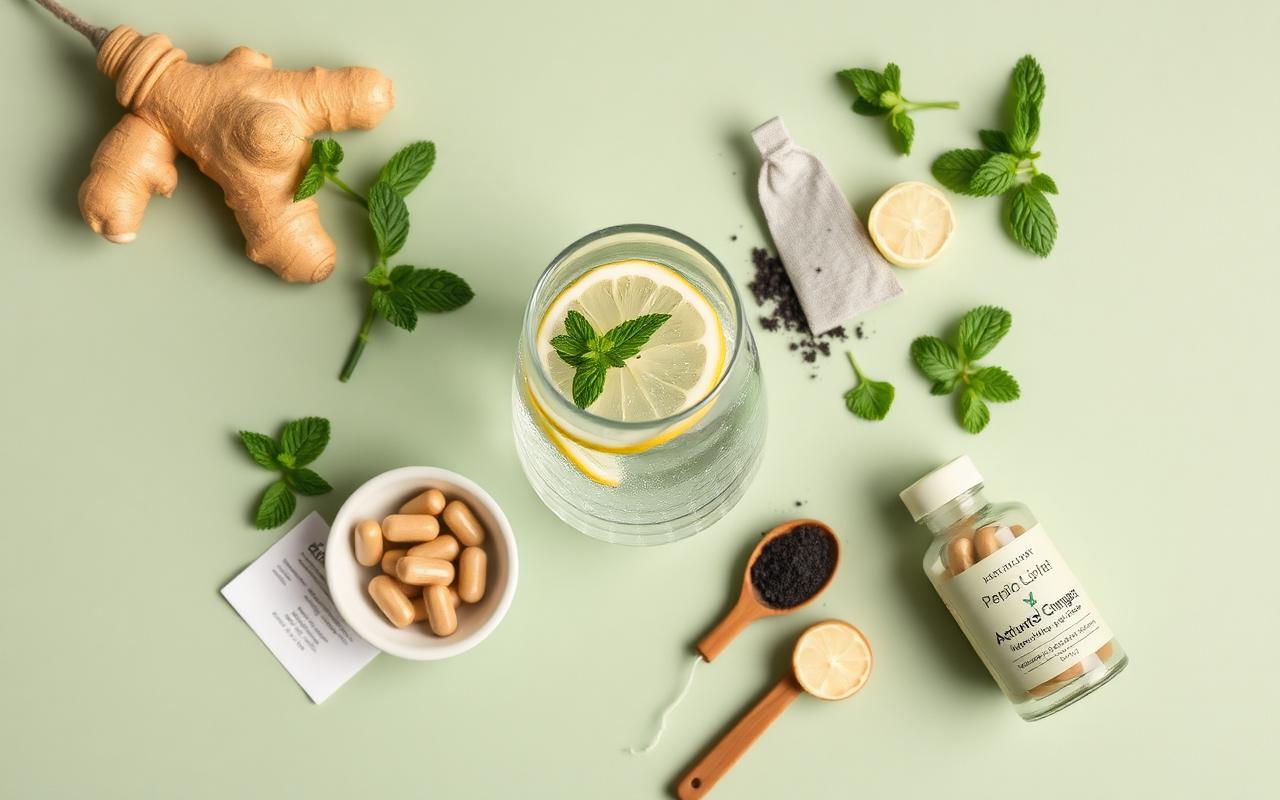
- 3. Add 8–16 oz of water with lemon or apple cider vinegar before meals. Acidifying the stomach speeds emptying slightly and reduces fermentation time.
- 4. Peppermint or ginger tea after meals. Both are clinically studied for reducing upper-GI gas and nausea; ginger also accelerates gastric emptying modestly.
- 5. Activated charcoal (500–1000 mg) at the first sign of a sulfur burp. Binds hydrogen sulfide directly. Take at least 2 hours away from your GLP-1 injection and any oral medications — charcoal binds those too.
- 6. Pepto-Bismol (bismuth subsalicylate). The bismuth binds hydrogen sulfide and forms bismuth sulfide, neutralizing the odor within 30–60 minutes. Follow package dosing; do not combine with other salicylates.
- 7. A digestive enzyme with protease at each meal. Helps break down protein before bacteria can ferment it.
- 8. Walk 10–15 minutes after eating. Light movement measurably speeds gastric emptying and reduces fermentation.
- 9. Skip carbonated drinks, straws, and chewing gum. All three add swallowed air that mixes with sulfide gas and pushes it upward faster.
Foods that trigger sulfur burps on GLP-1s (and what to eat instead)
Sulfur-containing amino acids are the fuel. You don't have to eliminate protein — you just have to shift the source and shrink the portion.
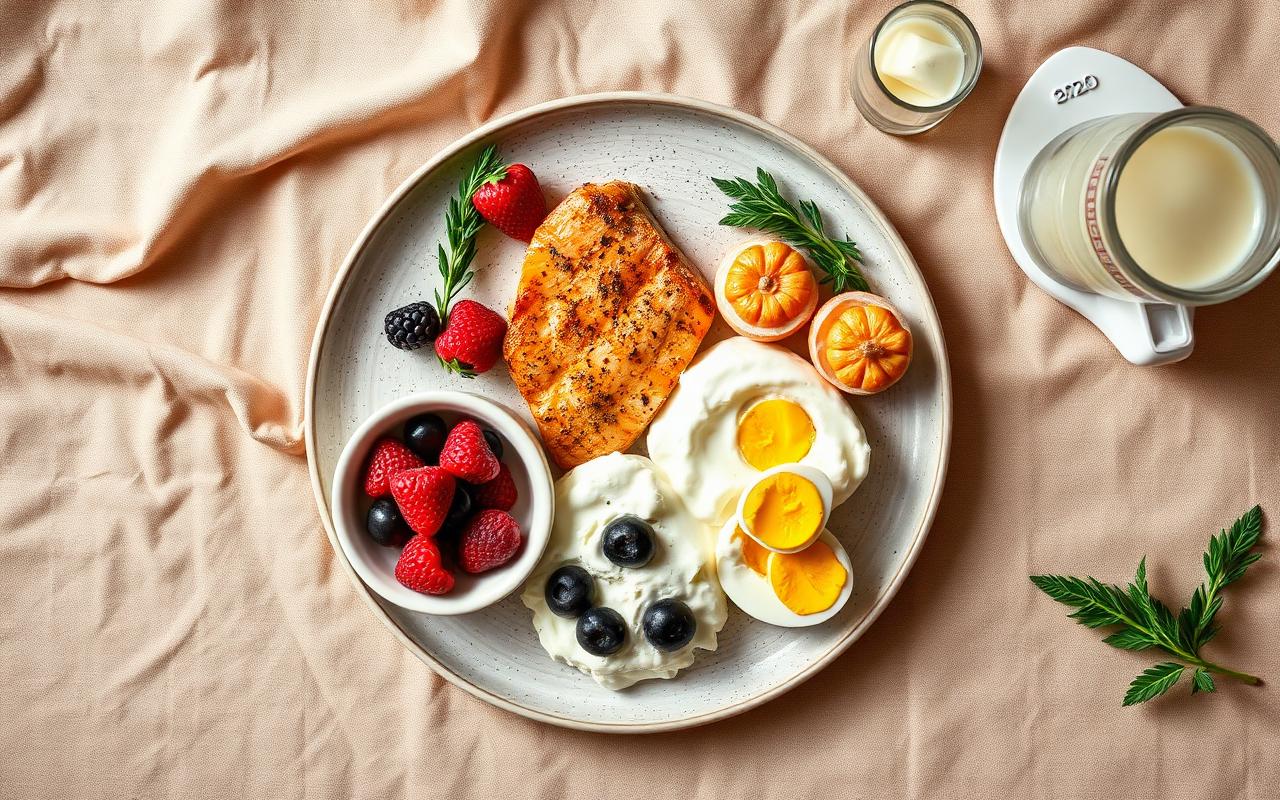
- Trigger: whole eggs and egg-white omelets → Swap: Greek yogurt, cottage cheese, or a small portion of chicken
- Trigger: red meat (especially fatty cuts and beef jerky) → Swap: white fish, shrimp, turkey, or tofu
- Trigger: whey protein isolate shakes → Swap: pea, rice, or collagen protein (lower in cysteine and methionine)
- Trigger: raw cruciferous vegetables (broccoli, cauliflower, cabbage) → Swap: cooked zucchini, cooked spinach, cucumber, bell peppers
- Trigger: garlic, onions, leeks → Swap: fresh herbs (basil, parsley, cilantro), lemon, ginger
- Trigger: high-fat fried food → Swap: baked, grilled, or air-fried lean protein
A sample low-sulfur day for Ozempic users
Use this template for 3–5 days when burps flare, then reintroduce one high-sulfur food at a time to find your personal threshold.
- On waking: 12 oz water with the juice of half a lemon
- Breakfast: ¾ cup Greek yogurt + ½ cup berries + 1 tbsp chia seeds
- Mid-morning: peppermint tea
- Lunch: 4 oz grilled chicken or white fish + cooked zucchini + ½ cup rice
- Afternoon: ginger tea + small apple or a handful of blueberries
- Dinner: 3 oz turkey or tofu + cooked spinach + roasted sweet potato
- After dinner: 10-minute walk, then peppermint tea
Activated charcoal vs. Pepto-Bismol: which works faster?
Both work, and both are considered safe short-term for otherwise healthy adults. In GLP-1 patient reports, Pepto-Bismol tends to neutralize an active sulfur-burp episode faster (30–60 minutes) because bismuth chemically binds hydrogen sulfide on contact. Activated charcoal is better as a preventive taken 30–60 minutes before a suspected trigger meal, or right when the first burp hits.
Critical timing rule: activated charcoal binds medications indiscriminately. Take it at least 2 hours away from oral prescription medications, birth control, and thyroid meds — and never take it in the same hour as another oral medication. Your GLP-1 is injected, so charcoal does not affect its absorption. Always confirm interactions with your pharmacist.
When sulfur burps mean 'call your doctor'
Sulfur burps alone are annoying but rarely dangerous. The combination of sulfur burps with any of the following is a reason to contact your prescriber the same day:
- Severe or worsening upper-abdominal pain, especially radiating to the back (possible pancreatitis)
- Persistent vomiting for more than 24 hours, or inability to keep fluids down
- Signs of dehydration: dark urine, dizziness on standing, no urination for 8+ hours
- Yellowing of the skin or eyes, pale stools, or dark tea-colored urine (possible gallbladder issue)
- Bloody or black tarry stools
- Fever above 101°F with GI symptoms
- Sulfur burps that persist unchanged for more than 4 weeks despite dietary changes
Do sulfur burps happen on every GLP-1?
Yes — sulfur burps are reported on all four major GLP-1 and GLP-1/GIP medications, but frequency varies:
- Ozempic (semaglutide) — very commonly reported, especially at 0.5 mg and 1 mg titration steps
- Wegovy (semaglutide, higher dose) — most frequently reported of the four; burps often peak at 1.7 mg and 2.4 mg
- Mounjaro (tirzepatide) — reported, though many users report slightly less GI upset than semaglutide at comparable weight-loss doses
- Zepbound (tirzepatide) — similar profile to Mounjaro; often improves after 8–12 weeks
- Compounded semaglutide/tirzepatide — reports vary widely with formulation and dose
Frequently asked questions
Do sulfur burps mean Ozempic is working? Not directly. They mean your stomach is emptying slowly — which is one of the mechanisms behind Ozempic's appetite suppression — but the burps themselves are not a required sign of efficacy. Plenty of people lose weight on GLP-1s without ever getting sulfur burps.
Can I take Pepto-Bismol every day on Ozempic? Occasional use (a few days at a time) is generally considered safe for healthy adults, but daily long-term use can cause bismuth toxicity and interacts with blood thinners and NSAIDs. Ask your pharmacist before regular use.
Will probiotics help? Evidence is mixed. Some users report improvement with a broad-spectrum probiotic; others report no change or worse bloating. If you try one, give it 2–3 weeks and stop if symptoms worsen.
Does drinking more water help? Yes — mild dehydration slows gastric emptying further and concentrates fermentation. Aim for 80–100 oz per day while on a GLP-1, more if you're active.
Can I prevent sulfur burps at the next dose increase? Often, yes. In the 3 days before and after your titration step, cut portions by an extra 25%, drop high-sulfur foods, and pre-load with peppermint or ginger tea. Most patients who prep this way report a much milder flare.
Related guides
Medication guides mentioned in this article
Related tools
Supplements built for your GLP-1 journey
Formulated for the exact nutrient gaps GLP-1 medications create — protein, electrolytes, magnesium, digestive support, and more. Trusted by thousands staying strong, energetic, and healthy on Ozempic, Wegovy, Mounjaro, and Zepbound.
Continue reading
Ozempic Burps: Why They Happen + 7 Fixes That Actually Work
Can You Drink Alcohol on Ozempic, Wegovy, or Mounjaro? (2026 Guide)

How Long Do Zepbound Side Effects Last? A Week-by-Week Timeline (2026)
How Much Protein Should You Eat on a GLP-1? (2026 Daily Targets)