Berberine vs Ozempic: Is 'Nature's Ozempic' Actually Comparable? (2026 Evidence Review)
Berberine is being called 'nature's Ozempic' all over TikTok — but the science tells a very different story. Here's the honest, research-backed comparison of berberine vs Ozempic for weight loss, blood sugar, side effects, dosage, cost, and whether you can (or should) take them together.
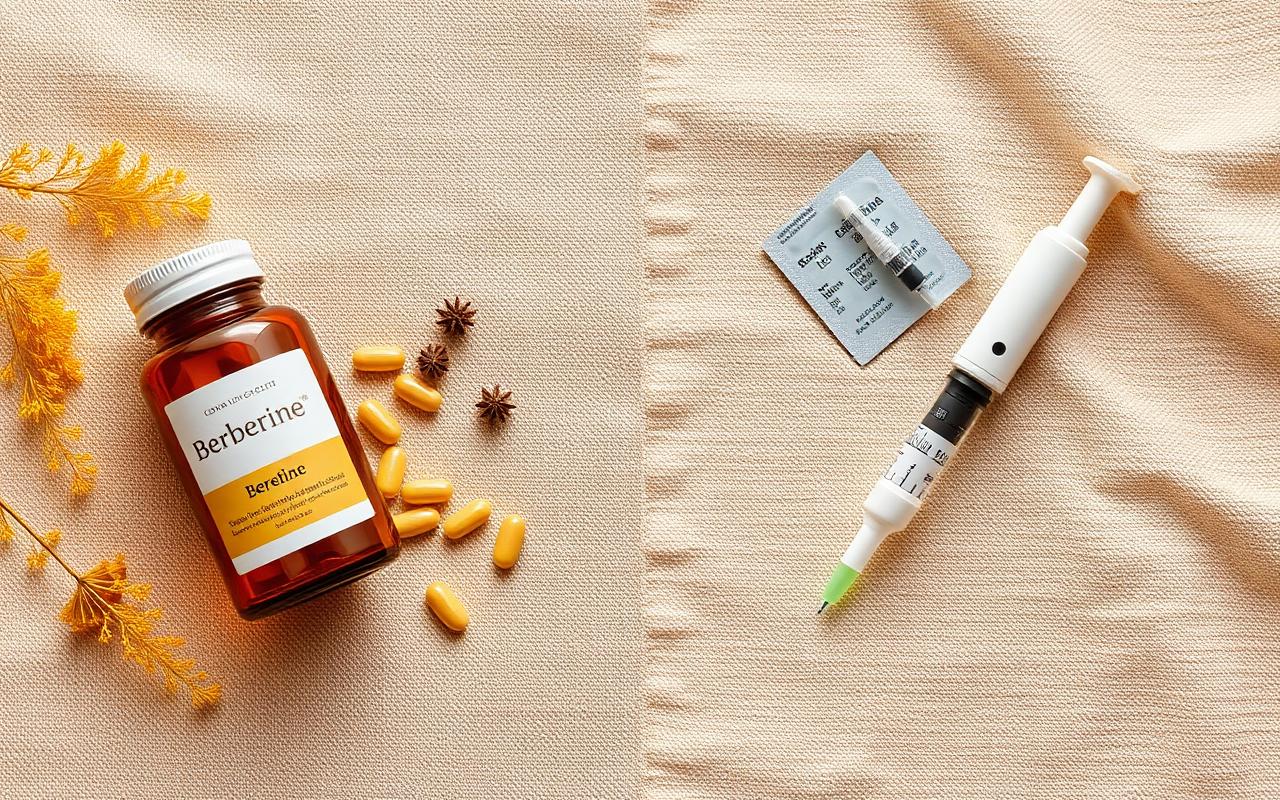
Scroll through TikTok for five minutes and you'll see berberine called 'nature's Ozempic' — a $20 bottle from the vitamin aisle that supposedly does what a $1,000-a-month injection does. It's a great hook. It's also a wild oversimplification.
Berberine is a real, well-studied compound with genuine benefits for blood sugar, cholesterol, and modest weight loss. Ozempic (semaglutide) is a GLP-1 receptor agonist with double-digit percentage-point weight loss in phase 3 trials. They work through different mechanisms, produce very different results, and answer to different problems.
This is the honest, research-backed comparison — what berberine actually does, what it doesn't, how it stacks up against semaglutide on weight loss, blood sugar, side effects, dosage, and cost, and whether stacking the two is safe or smart.
The short answer
Berberine and Ozempic both improve blood sugar and can support weight loss, but they're not equivalent. In head-to-head terms:
- Weight loss: Ozempic ~15% of body weight at 68 weeks. Berberine ~5 lb (2–3% of body weight) at 12 weeks in most studies.
- Blood sugar (HbA1c): Ozempic drops it 1.5–1.8 points. Berberine drops it 0.7–1.0 points — comparable to metformin.
- Mechanism: Ozempic mimics GLP-1 (appetite + gastric emptying). Berberine activates AMPK (cellular energy sensing) and modestly boosts GLP-1 secretion.
- Cost: Ozempic ~$900–$1,300/month cash. Berberine ~$15–$30/month.
- Prescription: Ozempic is Rx-only. Berberine is an over-the-counter supplement.
What is berberine, really?
Berberine is a bright-yellow alkaloid extracted from plants like goldenseal, Oregon grape, barberry, and Chinese goldthread (Coptis chinensis). It's been used in Traditional Chinese Medicine and Ayurveda for over 2,000 years, mostly for digestive issues and infections.
Modern research focuses on its metabolic effects. Berberine activates AMP-activated protein kinase (AMPK) — the same 'metabolic master switch' that exercise and metformin trigger. AMPK activation improves insulin sensitivity, reduces liver glucose output, and shifts cells toward burning fat instead of storing it.
It also has secondary effects that overlap with GLP-1 medications: it slows carbohydrate absorption in the gut, modestly increases GLP-1 secretion from intestinal L-cells, and reshapes the gut microbiome in ways that favor better glucose control.
What is Ozempic, really?
Ozempic is the brand name for semaglutide, a synthetic GLP-1 receptor agonist manufactured by Novo Nordisk. It's structurally similar to the natural GLP-1 hormone your gut releases after eating, but modified to resist breakdown so it lasts about a week per injection instead of a few minutes.
It works through four main mechanisms: it slows gastric emptying (food sits in your stomach longer, so you feel full), it acts on appetite centers in the brain (less food noise, smaller portions feel satisfying), it triggers insulin release when blood sugar is high, and it suppresses glucagon (the hormone that raises blood sugar).
Ozempic is FDA-approved for type 2 diabetes. Wegovy is the same drug at higher doses, approved for weight management. The weight-loss results people talk about mostly come from Wegovy-dose semaglutide.
Berberine vs Ozempic: weight loss head-to-head
This is where the 'nature's Ozempic' framing falls apart. The gap is huge.
Ozempic/Wegovy in the STEP-1 trial: participants lost 14.9% of their body weight over 68 weeks. That's roughly 34 lb for a 230-lb starting weight. About one-third of participants lost 20% or more.
Berberine in meta-analyses: pooled trials show 4.6–5.5 lb of weight loss over 8–12 weeks, roughly 2–3% of body weight. Most trials cap out under 12 weeks, so long-term data is limited, but the trajectory doesn't approach GLP-1 territory.
The realistic framing: berberine can move the needle if you're combining it with diet and exercise and you want mild metabolic support. It cannot replicate a 15% body weight loss. Anyone selling berberine as an Ozempic substitute is overselling.
Berberine vs Ozempic: blood sugar and HbA1c
This is where berberine is genuinely competitive — not with Ozempic, but with metformin (the first-line prescription diabetes drug).
A 2008 randomized trial in Metabolism directly compared berberine (500 mg three times daily) to metformin in newly diagnosed type 2 diabetics. Over 3 months, HbA1c dropped 2.0 points in the berberine group vs 2.0 in the metformin group. Fasting glucose fell similarly. Berberine also improved cholesterol and triglycerides more than metformin did.
Semaglutide typically lowers HbA1c by 1.5–1.8 points in type 2 diabetes trials — very comparable to berberine and metformin on this specific metric. So on blood sugar alone, berberine holds its own against prescription options.
The catch: it doesn't have the appetite-suppression effect, so it doesn't drive the weight loss that amplifies long-term metabolic improvement.
Berberine vs Ozempic: side effects
Both cause GI issues, but through different routes.
Berberine's most common side effects are digestive: diarrhea, constipation, gas, cramping, and mild nausea — usually early and dose-dependent. Splitting the dose across the day (with meals) usually resolves it. Serious side effects are rare in healthy adults at standard doses.
Ozempic's side effects are more intense and longer-lasting: nausea (44% of users in trials), vomiting, diarrhea, constipation, sulfur burps, fatigue, and the appearance changes people call 'Ozempic face.' Rare but serious risks include pancreatitis, gallbladder disease, and (in animal studies) medullary thyroid tumors — Ozempic carries a boxed warning against use in people with a personal or family history of medullary thyroid carcinoma or MEN 2.
Berberine is not risk-free either — it inhibits the liver enzyme CYP3A4, which affects how you metabolize many prescription drugs (statins, blood thinners, certain antibiotics, cyclosporine, some blood pressure meds). It's not recommended during pregnancy or breastfeeding, and can cause dangerously low blood sugar when combined with insulin or sulfonylureas.
Berberine dosage for weight loss (what the research uses)
The dose used in almost every metabolic study is 500 mg, three times per day, taken with meals — total 1,500 mg/day. That's the number to look for on a label.
Splitting the dose matters. Berberine has poor bioavailability (about 1%) and a short half-life. Taking 1,500 mg all at once mostly causes stomach upset without hitting therapeutic blood levels. Three smaller doses across the day is what the trials used and what the evidence supports.
Timing: take each dose with the first bite of a meal. Berberine blunts the post-meal glucose spike most effectively when it's already in your system when the food arrives.
How long before you notice anything: blood sugar changes show up in 2–4 weeks. Weight changes take 8–12 weeks and stay modest.
Berberine + Ozempic together: safe or risky?
This is one of the most-searched questions and the honest answer is: talk to your prescriber, because it depends on your other medications and your blood sugar baseline.
In theory, the combination is complementary — berberine works on AMPK and Ozempic on GLP-1 receptors, so the mechanisms don't overlap and shouldn't compete. Some people report the combo makes GLP-1 side effects (particularly appetite return between shots) more manageable.
In practice, the concerns are: (1) additive hypoglycemia risk, especially if you're also on insulin or a sulfonylurea, (2) additive GI side effects — both cause diarrhea and nausea, and stacking can push it from tolerable to miserable, and (3) berberine's CYP3A4 inhibition can theoretically affect how you metabolize other prescriptions in your regimen.
There's no published human trial specifically studying the combination. If you're going to try it, most integrative-medicine practitioners suggest starting berberine at half dose (500 mg once daily with dinner), staying there for two weeks, and only titrating up if your GLP-1 side effects haven't worsened.
Who berberine actually makes sense for
- You're pre-diabetic or have insulin resistance and want a lower-cost first step before considering prescription meds.
- You have PCOS — berberine has solid evidence for improving insulin sensitivity, androgen levels, and menstrual regularity in PCOS.
- You're on Ozempic/Wegovy/Mounjaro and looking for a complementary tool for the week-end appetite return (with your prescriber's sign-off).
- You want modest metabolic support — better fasting glucose, better cholesterol, 3–5 lb over 3 months — alongside diet and exercise changes.
- You can't take metformin because of GI intolerance and want something with a similar effect profile.
Who berberine is NOT a substitute for Ozempic for
- You have 50+ lb to lose and are looking for GLP-1-level results. Berberine will not get you there.
- You have obesity-related conditions (sleep apnea, fatty liver, joint pain) that require significant weight loss for improvement.
- You're pregnant, breastfeeding, or trying to conceive — berberine is not considered safe.
- You're on medications metabolized through CYP3A4 (many statins, blood thinners, immunosuppressants, some blood pressure meds) without medical supervision.
What to look for when buying berberine
- Berberine HCl form (not just 'berberine complex' or blends where the actual berberine content is unclear).
- 500 mg per capsule so you can hit the studied 1,500 mg/day across three doses without swallowing a handful.
- Third-party tested (USP, NSF, or ConsumerLab verified) — the supplement industry has real quality-control issues with berberine specifically.
- No unnecessary fillers, especially rice flour used to bulk out low-dose capsules.
- Reputable brand with published certificates of analysis. Skip 'proprietary blends' where the berberine dose isn't disclosed.
The real 'natural GLP-1 support' stack
If the underlying question is 'how do I support my body's natural GLP-1 response without a $1,000/month injection?' — the honest answer is that no supplement replicates semaglutide, but several habits genuinely raise endogenous GLP-1 and improve the same downstream metrics:
- Protein at every meal (30–40 g) — protein is the most potent natural stimulus for GLP-1 release.
- Fiber, especially soluble and fermentable (oats, chia, psyllium, legumes, berries) — feeds gut bacteria that produce short-chain fatty acids, which trigger GLP-1 secretion.
- Fermented foods (kimchi, sauerkraut, kefir, yogurt) — the microbiome-GLP-1 axis is real and measurable.
- Walking after meals — 10–15 minutes of easy walking post-meal blunts glucose spikes and supports GLP-1 signaling.
- Berberine (500 mg × 3/day) — modest but real add-on for insulin sensitivity and gentle appetite blunting.
- Sleep 7+ hours — sleep deprivation crashes GLP-1 sensitivity and spikes hunger hormones the next day.
Frequently asked questions
Does berberine work like Ozempic?
No — not at the level TikTok claims. Berberine and Ozempic both improve blood sugar and can support weight loss, but Ozempic drives 3–5× more weight loss and works through a completely different mechanism. Berberine works more like metformin than like a GLP-1 drug.
How much weight can you lose on berberine?
Meta-analyses point to roughly 4–5 lb over 8–12 weeks — about 2–3% of body weight — when combined with diet and exercise. Long-term data past 3 months is limited. It's a helpful add-on, not a transformation.
Is berberine safe long-term?
Most studies run 8–12 weeks; multi-year human safety data is limited. Traditional-medicine use spans centuries with a good safety profile at typical doses, but modern long-term controlled studies don't exist yet. Most integrative practitioners suggest 8–12 weeks on, 4 weeks off, and periodic liver function monitoring if you're taking it continuously.
Can I take berberine with Ozempic, Wegovy, Mounjaro, or Zepbound?
Talk to your prescriber first. There's no published head-to-head trial, but mechanistically the combination is complementary (AMPK + GLP-1). The main risks are additive GI side effects and additive hypoglycemia, especially if you're on insulin or sulfonylureas. Start low (500 mg once daily) and titrate slowly.
What's better for PCOS — berberine or Ozempic?
Berberine has strong evidence for PCOS specifically — improving insulin resistance, lowering androgens, and restoring menstrual regularity, often on par with metformin. GLP-1 medications also help PCOS via weight loss and insulin sensitivity, but berberine is a reasonable, lower-cost first step for many people with mild-to-moderate PCOS.
Is berberine cheaper than Ozempic?
Dramatically. A month of good-quality berberine (1,500 mg/day, third-party tested) runs $15–$30. Ozempic cash price is $900–$1,300/month. Even with insurance, most Ozempic copays exceed berberine's out-of-pocket cost by 10–50×.
Related guides
Medication guides mentioned in this article
Related tools
Supplements built for your GLP-1 journey
Formulated for the exact nutrient gaps GLP-1 medications create — protein, electrolytes, magnesium, digestive support, and more. Trusted by thousands staying strong, energetic, and healthy on Ozempic, Wegovy, Mounjaro, and Zepbound.
Continue reading
GLP-1 Supplements: The Complete 2026 Guide (What Actually Works, What's Hype, and What to Take)
Best Over-the-Counter GLP-1 Supplements (2026): What Actually Helps
How to Increase GLP-1 Naturally: Foods, Supplements, and Habits That Actually Work
GLP-1 Fatigue: Why Energy Dips When You Eat Less — and the Nutrition Habits That Help