Ozempic Burps: Why They Happen + 7 Fixes That Actually Work
Ozempic burps — including sulfur or 'rotten egg' burps — are one of the most talked-about GLP-1 side effects. Here's the science behind why they happen and 7 evidence-based fixes to stop them fast.
If you are on Ozempic, Wegovy, Mounjaro, or Zepbound and have suddenly started burping — sometimes with a sharp sulfur or rotten-egg smell — you are not imagining it, and you are far from alone. 'Ozempic burps' has become one of the most searched GLP-1 side effects on Reddit, TikTok, and Google, and for good reason: they are uncomfortable, embarrassing, and can linger for weeks.
The reassuring news is that Ozempic burps are almost always harmless, predictable, and very fixable once you understand what is causing them. They are a direct, mechanical consequence of how GLP-1 medications slow down your digestion — not a sign that something is wrong with your stomach or the medication.
This guide explains exactly why semaglutide and tirzepatide cause burping (including the dreaded sulfur burps), how long they typically last, and the 7 evidence-based fixes that work fastest — from simple eating tweaks to targeted supplements that support digestion while you are on a GLP-1.
What are Ozempic burps?
Ozempic burps are excessive, often foul-smelling belches that develop after starting a GLP-1 receptor agonist like semaglutide (Ozempic, Wegovy) or tirzepatide (Mounjaro, Zepbound). They typically show up within the first few weeks of treatment or after a dose increase, and many people describe them as tasting or smelling like sulfur, rotten eggs, or whatever they ate hours — sometimes a full day — earlier.
They are not technically listed as an official side effect in the prescribing information, but they fall squarely under the umbrella of 'delayed gastric emptying' and 'dyspepsia,' both of which are extremely common on GLP-1s. Surveys of GLP-1 users on Reddit and patient forums suggest somewhere between 20% and 40% experience noticeable burping, with a smaller subset getting the classic sulfur burps.
Why does Ozempic cause burps? The science explained
GLP-1 medications work, in part, by dramatically slowing how fast food leaves your stomach — a process called delayed gastric emptying. That is part of what keeps you full for so long. But when food sits in the stomach for many extra hours, three things start happening:
- Fermentation in the stomach — Carbohydrates, fats, and proteins that would normally have moved into the small intestine start to ferment. Fermentation produces gas, and that gas has to go somewhere. The easiest exit is up.
- Sulfur-producing bacteria get to work — Foods high in sulfur (eggs, red meat, dairy, garlic, onions, broccoli, cauliflower, protein shakes with whey) feed bacteria that produce hydrogen sulfide gas — the exact compound that gives rotten eggs and sulfur burps their smell.
- Stomach acid backs up — Slower emptying means food and acid sit longer, which can push partially digested contents back toward the esophagus. That triggers reflux, burping, and the sour or bitter taste many people describe.
Are sulfur burps on Ozempic dangerous?
In almost every case, no — they are unpleasant but not harmful. Sulfur burps on Ozempic are a sign that food is sitting too long and fermenting, not a sign of infection or organ damage. They usually improve significantly within 4 to 8 weeks as your body adapts to the medication, or within a few days of adjusting your diet.
That said, you should contact your prescriber if burps are accompanied by severe upper abdominal pain (especially pain that radiates to your back), persistent vomiting, signs of dehydration, fever, or stools that are black or bloody. Those can be signs of pancreatitis, gastroparesis, or gallbladder issues — all of which are rare but documented on GLP-1s and need medical evaluation.
How long do Ozempic burps last?
For most people, Ozempic burps are worst in the first 1 to 2 weeks after starting the medication or stepping up to a higher dose, then steadily improve over 4 to 8 weeks as the body adapts to slower digestion. Sulfur burps that come and go are often tied to specific meals (especially high-sulfur foods) and resolve within 24 to 48 hours of changing what you eat.
Burps that persist beyond 8 weeks, or that get worse rather than better, usually mean either the dose is too high for your body to tolerate or that your eating habits need adjusting — both of which the 7 fixes below directly address.
7 fixes that actually stop Ozempic burps
These are the strategies GLP-1 users and clinicians consistently report as most effective. Start with #1 and #2 — they alone resolve burping for most people within a few days.
1. Eat smaller meals — and stop before you feel full
This is the single most effective fix. Your stomach is emptying at a fraction of its normal speed, so the same meal that used to feel comfortable now sits and ferments for hours. Aim for 4 to 6 small meals of 200 to 400 calories instead of 2 to 3 large ones, and stop eating at the first sign of fullness — not when you feel 'done.' Most people on GLP-1s overshoot by one or two bites and pay for it with hours of burping.
2. Cut back on high-sulfur and high-fat foods
Sulfur burps are caused almost entirely by what you eat. The biggest offenders to reduce — at least during flare-ups — are eggs, red meat, whey protein shakes, garlic, onions, broccoli, cauliflower, cabbage, and dairy. Greasy and fried foods also worsen burping because fat dramatically slows gastric emptying further. Swap toward leaner proteins (chicken, white fish, tofu, plant-based protein powders), cooked low-sulfur vegetables (zucchini, carrots, spinach, green beans), and white rice or oats for easy-to-digest carbs.
3. Take a digestive enzyme with meals
Digestive enzymes (especially blends with protease, lipase, and amylase) help break food down faster so it has less time to ferment in the stomach. Many GLP-1 users report a noticeable reduction in burping and bloating within a few days of adding an enzyme supplement before their two largest meals. This is one of the most consistent wins for people who can't reduce portion size further.
4. Use ginger — fresh, tea, or capsule form
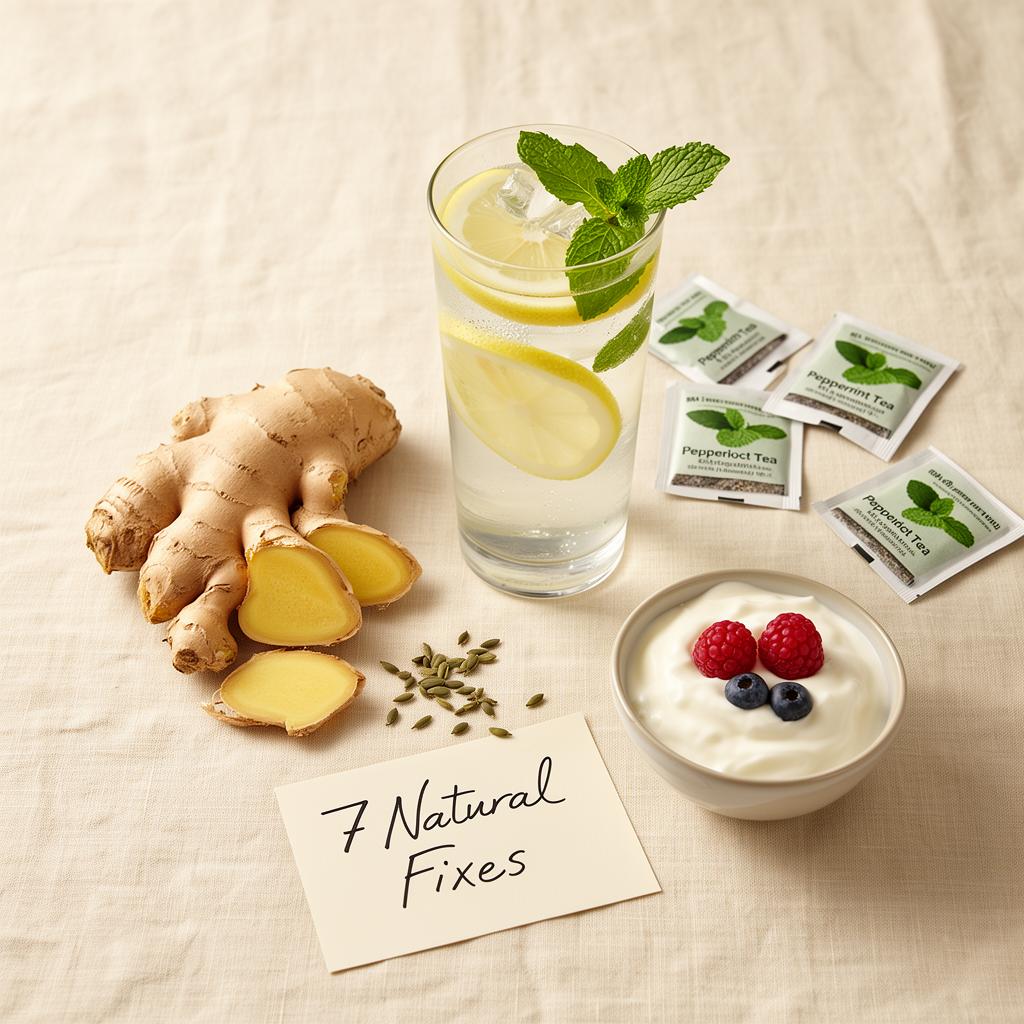
Ginger is one of the few natural remedies with strong clinical evidence for speeding gastric emptying and reducing nausea, indigestion, and burping. A cup of fresh ginger tea after meals, 1 to 2 grams of ginger in capsule form daily, or even a few slices of crystallized ginger can meaningfully reduce GLP-1-related burps for many people.
5. Stay upright for at least 60 minutes after eating
Lying down, reclining on the couch, or even slouching pushes food and stomach acid back toward your esophagus when gastric emptying is already slow. Stay upright — ideally standing, walking, or sitting tall — for at least an hour after meals. A 10 to 15 minute walk after eating is especially effective because gentle movement encourages the stomach to empty.
6. Hydrate steadily — but not during meals
Dehydration thickens stomach contents and worsens digestion, but chugging water during meals stretches an already-slow stomach and triggers more burping. Aim for 80 to 100 ounces of water spread across the day, sipped between meals rather than with them, and stop drinking large amounts 20 to 30 minutes before and after eating.
7. Add magnesium and a probiotic for longer-term gut support
Magnesium glycinate supports smooth-muscle relaxation in the GI tract and helps with the constipation that often accompanies Ozempic burps — and constipation itself can worsen belching by backing up gas. A daily probiotic with strains like Lactobacillus and Bifidobacterium helps rebalance the gut bacteria that contribute to sulfur production. Together, they address the deeper, longer-term gut changes GLP-1s cause, not just the acute burping.
What to take for Ozempic burps: a simple daily stack
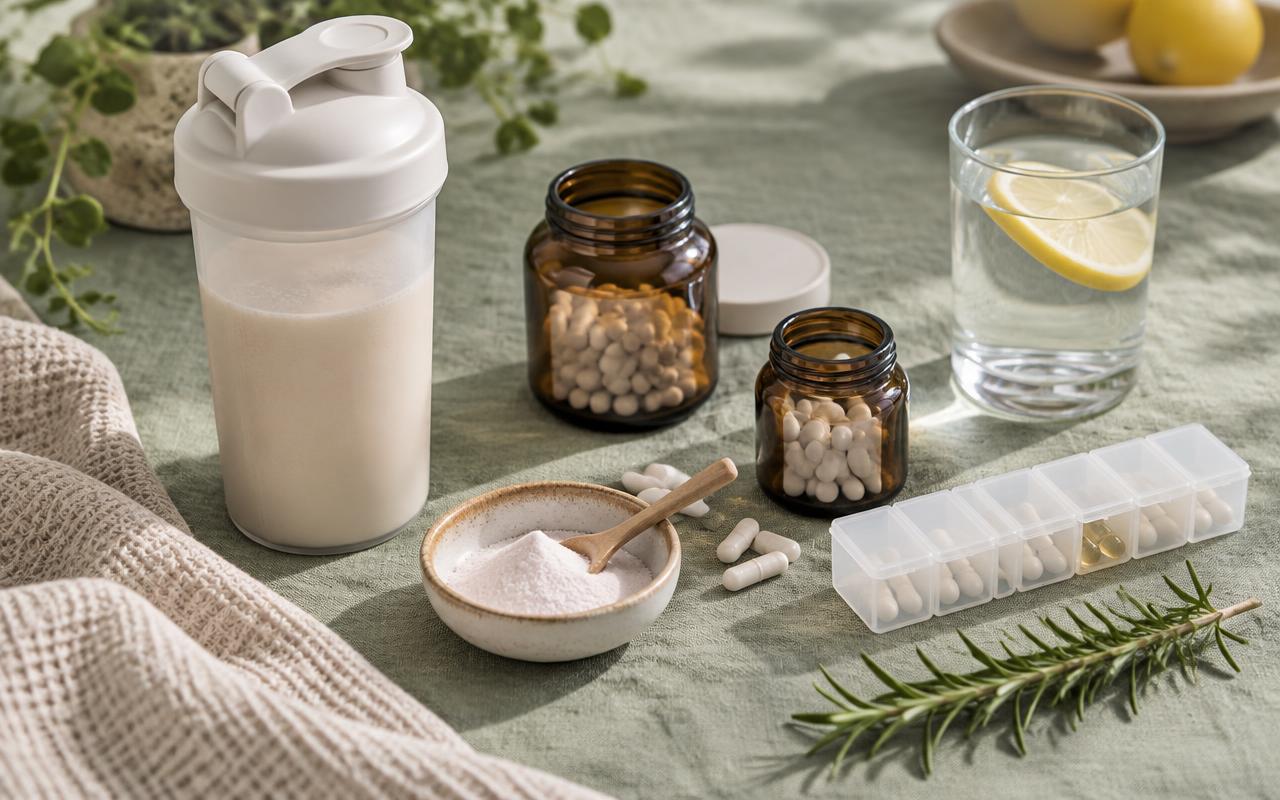
If you want to skip the trial-and-error, here is the supplement stack most consistently reported to reduce GLP-1 burping, bloating, and indigestion:
- Digestive enzymes — Taken with your two largest meals to speed protein, fat, and carb breakdown
- Ginger — 1 to 2 g daily, as tea or capsules, ideally after meals
- Magnesium glycinate — 200 to 400 mg in the evening to support gut motility and relaxation
- Daily probiotic — Multi-strain (Lactobacillus + Bifidobacterium) to rebalance gut bacteria
- Electrolytes — Especially if you are eating less; dehydration worsens every GI symptom
Foods to eat — and foods to avoid — when you have Ozempic burps
- EAT: chicken, turkey, white fish, tofu, plant-based protein, white rice, oats, sourdough, zucchini, carrots, spinach, green beans, bananas, blueberries, peppermint tea, ginger tea, bone broth
- LIMIT: eggs, red meat, whey protein shakes, garlic, onions, broccoli, cauliflower, cabbage, Brussels sprouts, fried foods, heavy cream sauces, soda, beer, large coffees on an empty stomach
When to call your doctor
- Burps lasting longer than 8 weeks with no improvement
- Severe upper abdominal pain, especially radiating to the back
- Persistent vomiting or inability to keep liquids down
- Signs of dehydration (dizziness, very dark urine, rapid heartbeat)
- Black, tarry, or bloody stools
- Fever alongside GI symptoms
Frequently asked questions
Do Ozempic burps mean the medication is working? Not directly — but they are a sign that gastric emptying has slowed, which is part of how Ozempic creates fullness and helps with weight loss. Their presence does not predict how much weight you'll lose.
Will Ozempic burps go away on their own? For most people, yes — within 4 to 8 weeks as the body adapts, especially with diet adjustments. If they persist past 2 months, talk to your prescriber about your dose.
Do Mounjaro, Wegovy, and Zepbound cause the same burps? Yes. All GLP-1 (and GLP-1/GIP) medications slow gastric emptying, so burping, sulfur burps, and indigestion show up across all of them. The same 7 fixes apply.
Can I take Pepto-Bismol or Tums for sulfur burps? Pepto-Bismol (bismuth subsalicylate) is widely used to neutralize sulfur burps quickly and is generally safe short-term — but check with your prescriber first, especially if you take other medications. Tums help with acid but not the underlying fermentation.
Related guides
Medication guides mentioned in this article
Related tools
Supplements built for your GLP-1 journey
Formulated for the exact nutrient gaps GLP-1 medications create — protein, electrolytes, magnesium, digestive support, and more. Trusted by thousands staying strong, energetic, and healthy on Ozempic, Wegovy, Mounjaro, and Zepbound.
Continue reading
Sulfur Burps on Ozempic: Why They Happen & How to Stop the Rotten-Egg Taste Fast (2026 Guide)
Can You Drink Alcohol on Ozempic, Wegovy, or Mounjaro? (2026 Guide)

How Long Do Zepbound Side Effects Last? A Week-by-Week Timeline (2026)
Supplements to Take With Mounjaro: The Complete 2026 List