
How to Avoid Ozempic Face: Prevention Tips, Nutrition & Supplements That Help
Ozempic face is preventable. Here's the science behind facial volume loss on GLP-1s, the nutrition habits that protect collagen and muscle, and the best supplements to keep skin firm while losing weight.
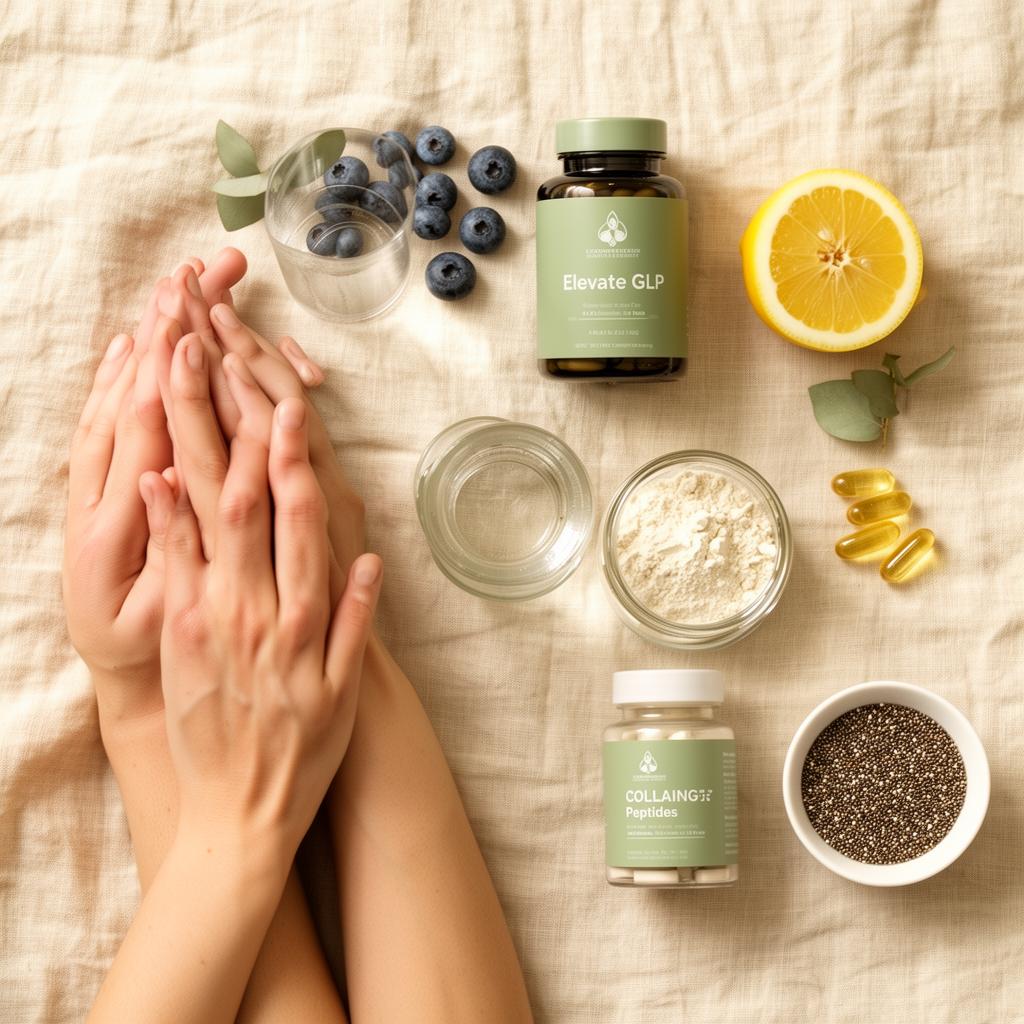
If you have been on TikTok, Reddit, or any wellness forum lately, you have probably seen the phrase 'Ozempic face.' It refers to the gaunt, hollowed appearance some people develop after rapid weight loss on GLP-1 medications like Ozempic, Wegovy, Mounjaro, and Zepbound — sunken cheeks, looser skin around the jawline, and more prominent wrinkles.
The good news: Ozempic face is not inevitable, and it is not permanent if you catch it early. The face loses volume for three very specific, fixable reasons — loss of facial fat, breakdown of collagen and elastin, and loss of the underlying muscle that gives the face its structure. Each of those can be slowed, stopped, and in many cases reversed with the right nutrition, hydration, exercise, and targeted supplements.
This guide breaks down exactly why Ozempic face happens, who is most at risk, the daily habits and nutrients that protect facial volume, and the supplement stack that gives your skin, collagen, and underlying muscle the support they need while the scale drops.
What is Ozempic face — and what actually causes it
Ozempic face is not a medical diagnosis. It is a popular term for the facial changes that can accompany rapid weight loss on GLP-1 receptor agonists. The face is one of the first places the body loses fat during weight loss, and because facial fat pads give the face its youthful fullness and contour, losing them quickly can create a sunken, aged appearance.
But fat loss is only part of the story. Three things happen at once:
- Facial fat pads shrink — The buccal fat pads and subcutaneous fat in the cheeks, temples, and under the eyes get smaller, reducing the plump, rounded look of a youthful face.
- Collagen and elastin decline — Rapid weight loss increases cortisol and oxidative stress, both of which break down collagen and elastin — the proteins that keep skin firm, thick, and springy.
- Facial muscle atrophy — If protein intake is low during weight loss, the body catabolizes muscle everywhere, including the small muscles of the face and jaw, further reducing structural support for the skin.
Who is most at risk for Ozempic face
Not everyone on a GLP-1 develops facial volume loss. The people most likely to notice it are those who lose weight quickly (more than 1–2 pounds per week), are over 40 (natural collagen production drops about 1% per year after age 25), already had low body fat in the face, eat inadequate protein, do not resistance train, or are chronically dehydrated.
Genetics also play a role — some people naturally store more fat in their face, and some have naturally thicker skin with more collagen. But habits matter more than genes for most people.
How to avoid Ozempic face: the daily prevention checklist
The single most important principle: slow, muscle-protecting weight loss is face-protecting weight loss. The strategies that protect your face are the same ones that protect your metabolism, energy, and long-term health.
- Aim for 0.5–1% of body weight lost per week — roughly 1–2 pounds for most people. Faster loss accelerates fat, collagen, and muscle breakdown.
- Eat 0.7–1.0 g of protein per pound of goal body weight daily. This is the most important nutrient for preventing both body and facial muscle loss.
- Drink half your body weight in ounces of water, plus extra during exercise or hot weather. Dehydrated skin looks thinner, looser, and more wrinkled.
- Include a daily electrolyte drink to maintain cellular hydration and skin turgor.
- Eat vitamin C–rich foods at every meal. Vitamin C is required for collagen synthesis — without it, your body cannot build new collagen even if you take a supplement.
- Add omega-3 fatty acids from fatty fish, walnuts, or a quality fish oil. Omega-3s reduce inflammation and support skin barrier function.
- Do resistance training 2–4 times per week. It signals the body to preserve muscle everywhere, including the face, and improves circulation for skin health.
- Sleep 7–9 hours per night. Sleep is when growth hormone peaks and collagen repair happens. Poor sleep accelerates skin aging.
- Avoid smoking and limit alcohol — both are direct collagen destroyers and dehydrating.
The best supplements to prevent Ozempic face
Supplements will not override rapid weight loss or poor nutrition, but the right stack directly supports the tissues most vulnerable on a GLP-1: collagen, elastin, facial muscle, and skin hydration.
1. Collagen peptides (types I & III)
Collagen peptides are the single most evidence-backed supplement for skin elasticity and thickness. Multiple randomized trials show that 5–10 g of hydrolyzed collagen daily improves skin hydration, elasticity, and wrinkle depth within 8–12 weeks. On a GLP-1, where collagen breakdown is accelerated by rapid weight loss and reduced nutrient intake, collagen supplementation is especially sensible. Look for grass-fed bovine or marine collagen with types I and III.
2. Vitamin C (500–1000 mg)
Vitamin C is a cofactor for prolyl and lysyl hydroxylase, the enzymes that stabilize collagen fibers. Without adequate vitamin C, collagen peptides cannot be cross-linked into strong, functional tissue. A separate vitamin C supplement or a multivitamin with 500–1000 mg ensures your body can actually use the collagen you are taking and the protein you are eating.
3. Hyaluronic acid (100–200 mg)
Hyaluronic acid is a molecule that binds up to 1,000 times its weight in water, keeping skin plump, hydrated, and resilient. Studies show oral hyaluronic acid improves skin moisture and reduces wrinkle depth. It is particularly helpful during rapid weight loss when facial fat pads shrink and the skin needs extra hydration support to maintain volume.
4. Protein powder (whey, casein, or plant isolate)
Hitting a high protein target on reduced appetite is genuinely hard. A clean protein powder — whey isolate, micellar casein, or a high-quality plant blend — makes it practical to reach 80–150 g of protein daily. That protein is the raw material your body needs to maintain not just body muscle, but the small muscles and connective tissue that give your face structure. It is one of the best supplements to take with Ozempic for both body composition and facial preservation.
5. Omega-3 fatty acids (EPA/DHA, 1–2 g)
Omega-3s reduce systemic inflammation, support the skin lipid barrier, and improve hydration from the inside out. They also help regulate cortisol, which spikes during rapid weight loss and directly breaks down collagen. A quality fish oil or algae oil at 1–2 g combined EPA and DHA daily is a solid preventive addition.
6. Magnesium glycinate
Magnesium is involved in over 300 enzymatic reactions, including protein synthesis and DNA repair. The glycinate form is gentle, well absorbed, and supports both sleep quality and muscle recovery. Better sleep means more growth hormone–mediated collagen repair overnight. Magnesium also helps regulate cortisol, reducing one of the key drivers of accelerated collagen breakdown during weight loss. Ozempic and magnesium work well together as part of a skin and muscle preservation strategy.
7. A complete multivitamin with zinc, biotin, and vitamin D3
Zinc is essential for collagen synthesis, wound healing, and skin cell turnover. Biotin supports keratin infrastructure for skin, hair, and nails. Vitamin D3 regulates skin cell growth and immune function in the skin. When total food volume drops on a GLP-1, these micronutrients are among the first to fall short — making a daily multivitamin with meaningful doses a simple insurance policy.
Can you reverse Ozempic face once it starts
Yes — for most people, Ozempic face is partially or fully reversible. The strategy is the same as prevention, just more aggressive: increase protein to the top of your range, add collagen and vitamin C if you have not already, ensure optimal hydration and electrolytes, prioritize sleep, and maintain (or start) resistance training. Some people also benefit from facial exercises, though the evidence is weaker than for nutrition and resistance training.
If facial volume loss is significant and not improving after 3–6 months of optimized nutrition, some people consider dermal fillers — a temporary, injectable solution that replaces lost facial fat pads. Fillers are effective but do not address the root cause. The best long-term plan is to protect collagen and muscle while you are still losing weight.
The role of strength training in preventing facial volume loss
Resistance training is usually discussed in terms of body composition — preserving glutes, legs, and arms during weight loss. But it also signals the body systemically to hold onto muscle tissue, including the small muscles of the face and jaw. Improved circulation from regular exercise also delivers more oxygen and nutrients to the skin. And the hormonal environment created by strength training (higher testosterone, lower chronic cortisol) is directly protective of collagen.
You do not need heavy bodybuilding. Two to four sessions per week of progressive resistance training for major muscle groups is enough to send the muscle-preservation signal throughout the body.
What to avoid if you are worried about Ozempic face
Some habits common during rapid weight loss actively accelerate facial aging. Avoid:
- Crash dieting or very low calories (under 1,200 for women, 1,500 for men) — this maximizes muscle and collagen loss everywhere.
- Skipping protein — if you are not hungry, use protein shakes, Greek yogurt, eggs, or lean meats to hit your target anyway.
- Chronic dehydration — coffee and GLP-1 medications both reduce thirst; set reminders to drink water.
- Excessive cardio without resistance training — this burns calories but does not send the 'preserve muscle' signal.
- High sugar intake — glycation (sugar binding to collagen fibers) makes them stiff and brittle, worsening skin sag.
- Tanning and unprotected sun exposure — UV radiation is the single biggest external cause of collagen breakdown.
How Elevate GLP supports skin and facial volume on GLP-1s
Elevate GLP formulas are designed specifically for the nutritional gaps that accelerate facial volume loss: inadequate protein, low collagen, missing micronutrients, dehydration, and poor sleep. Our protein options, collagen support, multivitamin with bioavailable vitamin C and zinc, magnesium glycinate, and electrolyte formulas work together to protect the tissues that give your face its structure — so the version of you at your goal weight looks as healthy as you feel.
Frequently asked questions
Q: Does everyone on Ozempic get Ozempic face? No. People who lose weight slowly, eat adequate protein, stay hydrated, and exercise are far less likely to develop noticeable facial volume loss.
Q: How long does it take for Ozempic face to appear? For susceptible people, changes can become noticeable after 10–20 pounds of rapid weight loss, often within the first 2–3 months.
Q: Will collagen supplements really help prevent Ozempic face? Research shows collagen peptides improve skin elasticity, hydration, and thickness. Combined with vitamin C, adequate protein, and resistance training, they are one of the most evidence-backed preventive tools.
Q: Is Ozempic face permanent? No — for most people, it improves with slower weight loss, better nutrition, and time. Significant cases may take 3–6 months to reverse.
Q: What is the fastest way to avoid Ozempic face? Prioritize 0.7–1.0 g of protein per pound of goal body weight, drink plenty of water with electrolytes, take collagen + vitamin C, sleep 7–9 hours, and do resistance training 2–4 times per week.
Q: Can I take collagen, hyaluronic acid, and a multivitamin together? Yes — these work synergistically and are generally well tolerated. Collagen provides the building blocks, vitamin C assembles them, hyaluronic acid hydrates, and a multivitamin covers cofactors like zinc and biotin.
Related guides
Medication guides mentioned in this article
Related tools
Supplements built for your GLP-1 journey
Formulated for the exact nutrient gaps GLP-1 medications create — protein, electrolytes, magnesium, digestive support, and more. Trusted by thousands staying strong, energetic, and healthy on Ozempic, Wegovy, Mounjaro, and Zepbound.
Continue reading

Can You Drink Alcohol on Ozempic, Wegovy, or Mounjaro? (2026 Guide)

How Long Do Zepbound Side Effects Last? A Week-by-Week Timeline (2026)
Ozempic Mouth: Dry Mouth, Metallic Taste & 8 Ways to Fix It (2026)
The Best Protein Powder for GLP-1 Users (2026 Buyer's Guide)