Do GLP-1 Supplements Actually Work? A Science-Backed Guide
Do GLP-1 supplements actually work? A science-backed look at what helps on Ozempic, Wegovy, and Mounjaro — and what's safe.
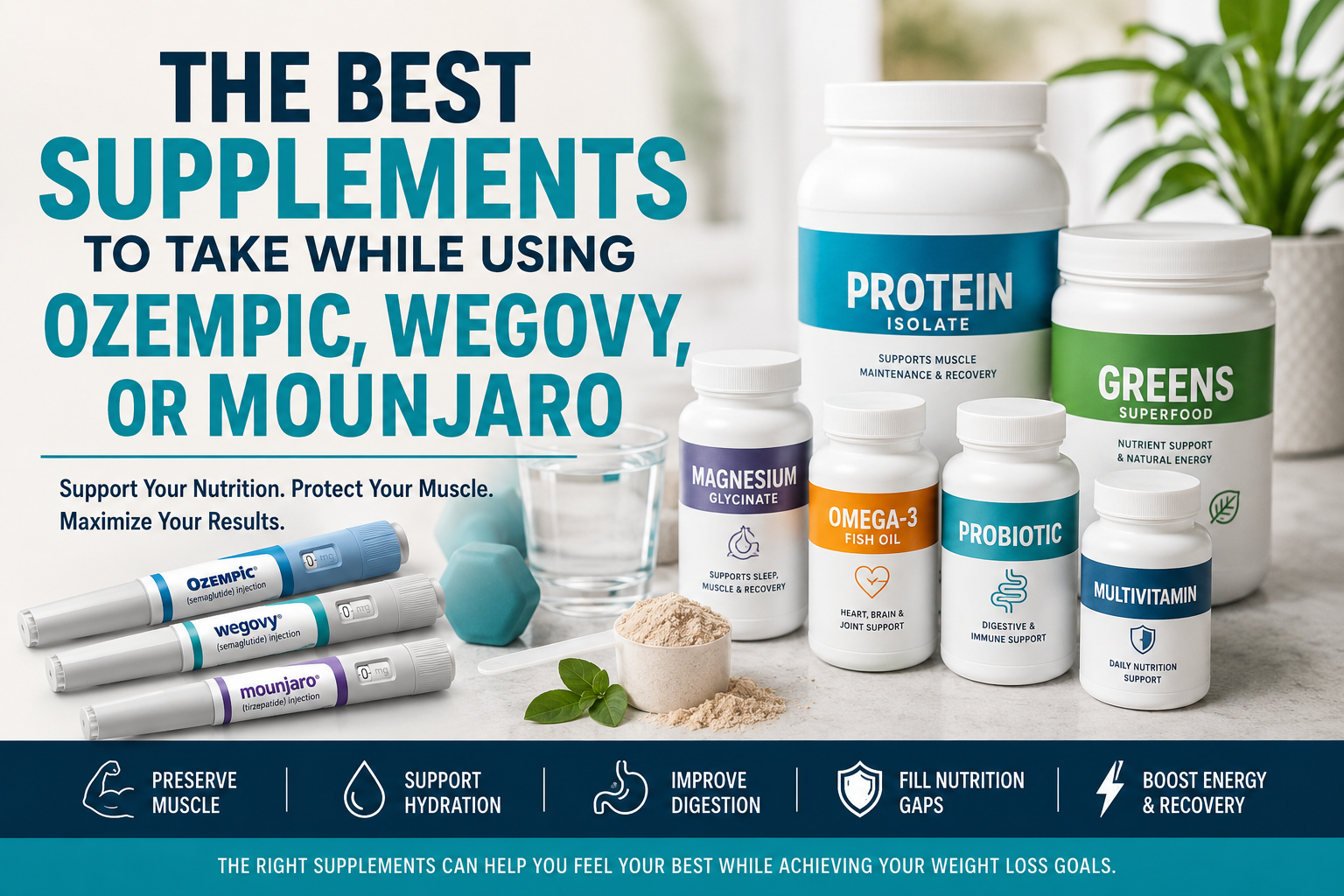
If you're taking Ozempic, Wegovy, Mounjaro, or Zepbound, you've probably seen ads for 'GLP-1 supplements' claiming everything from faster fat loss to fewer side effects. The honest answer is more nuanced: no supplement replaces a GLP-1 medication, but specific nutrients have strong research behind them for the exact gaps these medications create — lower protein intake, reduced electrolytes, slower digestion, and disrupted sleep.
This guide separates marketing claims from what's actually supported by science. We cover which supplement categories have meaningful evidence, which are mostly hype, what's generally considered safe to take alongside a GLP-1, and how to choose the best supplement for your needs.
What people actually mean by 'GLP-1 supplements'
The phrase 'GLP-1 supplement' is used three different ways online, and conflating them leads to confusion. First, products marketed as natural GLP-1 boosters (berberine, certain fibers) claim to mimic or enhance the body's own GLP-1 hormone. Second, support supplements (protein, electrolytes, magnesium, multivitamins) help fill nutritional gaps created by reduced food intake on a GLP-1 medication. Third, side-effect support supplements (digestive enzymes, probiotics, fiber, ginger) target common GI complaints.
Only the second and third categories have a clear, mechanistic reason to help GLP-1 users — they address the specific nutritional and digestive challenges that come with eating significantly less. The 'natural GLP-1 booster' category is where most overpromising happens.
Do natural GLP-1 boosters actually work?
Berberine, often called 'nature's Ozempic' on social media, has shown modest effects on blood sugar regulation in some studies, but its effect on weight loss is small compared to prescription GLP-1 medications. Soluble fibers like glucomannan and psyllium can increase satiety and modestly support weight management, but again, the effect is small and not comparable to medication.
The takeaway: these ingredients are not substitutes for GLP-1 medications. If you're already on Ozempic, Wegovy, Mounjaro, or Zepbound, stacking 'natural GLP-1 boosters' on top is unlikely to add meaningful benefit and may interact with other medications. Always check with your healthcare provider first.
Supplements with the strongest evidence for GLP-1 users
These are the categories that have research support for the specific challenges GLP-1 users face — not for mimicking the drug, but for filling the gaps it creates.
- Protein (whey, casein, or plant isolate) — protein has the strongest evidence of any supplement for preserving lean muscle during weight loss. Research consistently shows that higher protein intake combined with resistance training helps protect muscle mass during a calorie deficit.
- Electrolytes (sodium, potassium, magnesium) — reduced food and fluid intake can lower electrolyte levels, contributing to fatigue, headaches, and cramps. Replenishing electrolytes is well-supported for hydration and exercise performance.
- Magnesium glycinate — magnesium is one of the most common nutrient gaps in modern diets, and glycinate is a well-absorbed form linked in research to improved sleep quality and muscle relaxation.
- Daily multivitamin — when total food intake drops, a basic multivitamin helps cover micronutrient gaps that develop over months.
- Fiber (psyllium, inulin) — supports regularity and helps with constipation, one of the most commonly reported GLP-1 side effects.
- Probiotics — emerging research supports specific strains for digestive comfort and regularity.
- Vitamin D3 — broadly under-consumed in the general population; helpful for immune function, mood, and bone health.
Are GLP-1 supplements safe?
For most healthy adults, the supplement categories listed above are generally well-tolerated when taken at standard doses. That said, 'generally safe' isn't the same as 'safe for everyone.' Supplements can interact with medications, including GLP-1s and other prescriptions you may be taking.
Specific things to discuss with your healthcare provider before starting any supplement on a GLP-1: blood-thinning medications (vitamin E, fish oil, ginger), blood-pressure medications (potassium, magnesium), thyroid medications (calcium, iron — separate by 4 hours), and any history of kidney disease, GI conditions, or pregnancy.
Stick with third-party tested supplements (NSF, USP, or Informed Sport) to confirm what's on the label is what's in the bottle.
What is the best GLP-1 supplement?
There isn't a single 'best' supplement — the right stack depends on what's missing in your current routine. Most GLP-1 users benefit most from the same short list: enough protein, daily electrolytes, magnesium glycinate at night, and a basic multivitamin. From there, add fiber if constipation is an issue, omega-3s if you don't eat fatty fish, and collagen if you're focused on hair and skin.
When evaluating any product, look for: third-party testing, transparent dosing (no proprietary blends), research-backed forms (e.g., magnesium glycinate over oxide, methylated B vitamins for some users), and a formula built around the actual nutritional challenges of GLP-1 use — not just generic weight-loss claims.
What to skip
- Products that claim to 'boost,' 'mimic,' or 'replace' your GLP-1 medication
- Proprietary blends that hide individual ingredient doses
- Fat burners with high-stimulant blends — they can worsen jitters, sleep issues, and dehydration on a GLP-1
- Detox teas and cleanses — no research support, and they can worsen GI side effects
- Anything promising rapid weight loss beyond what your medication delivers
Frequently asked questions
- Do GLP-1 supplements actually work? The right ones — protein, electrolytes, magnesium, multivitamin, fiber — have strong research support for the nutritional gaps GLP-1 medications create. 'Natural GLP-1 boosters' have weak evidence and don't replace medication.
- Are GLP-1 supplements safe? Standard-dose, third-party tested supplements are generally well-tolerated, but always check with your healthcare provider — supplements can interact with prescriptions.
- What is the best GLP-1 supplement? Most users benefit from a stack of protein, electrolytes, magnesium glycinate, and a multivitamin, with fiber and omega-3s as needed. Look for third-party testing and transparent dosing.
- How long until I notice a difference? Hydration and digestion changes can show up in days; protein and muscle benefits show up over weeks with resistance training; sleep and energy improvements from magnesium often appear in 1–2 weeks.
Related guides
Medication guides mentioned in this article
Related tools
Supplements built for your GLP-1 journey
Formulated for the exact nutrient gaps GLP-1 medications create — protein, electrolytes, magnesium, digestive support, and more. Trusted by thousands staying strong, energetic, and healthy on Ozempic, Wegovy, Mounjaro, and Zepbound.
Continue reading

GLP-1 Supplements: The Complete 2026 Guide (What Actually Works, What's Hype, and What to Take)
The Best Supplements to Take While Using Ozempic, Wegovy, or Mounjaro
Supplements for GLP-1 Users: The 2026 Buyer’s Guide
GLP-1 Fatigue: Why Energy Dips When You Eat Less — and the Nutrition Habits That Help