
The Best Supplements to Take While Using Ozempic, Wegovy, or Mounjaro
A complete guide to supplements that support nutrition, muscle, hydration, and digestion on GLP-1 medications like Ozempic, Wegovy, and Mounjaro.
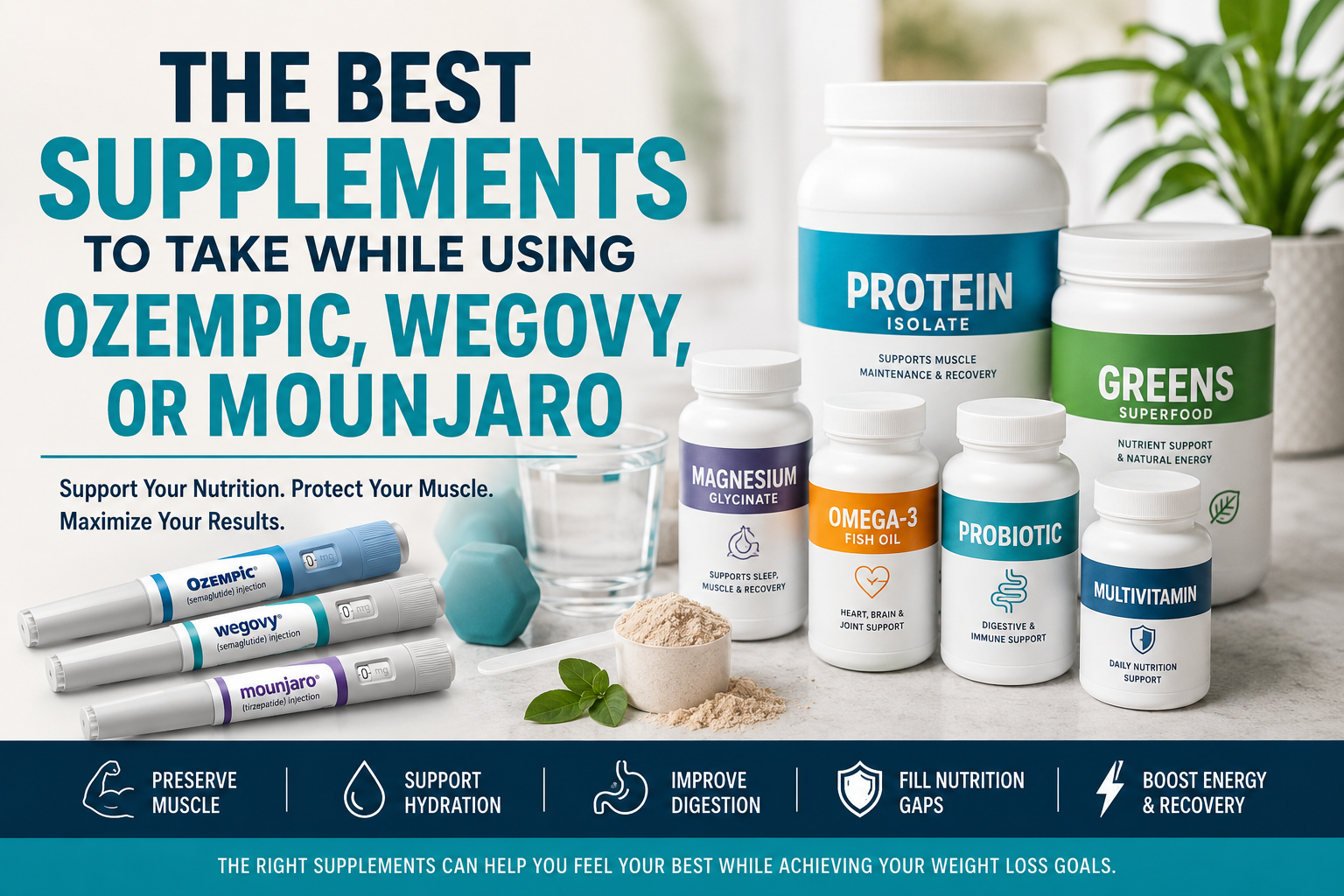
The introduction of GLP-1 medications such as Ozempic®, Wegovy®, and Mounjaro® has fundamentally changed the landscape of weight loss and metabolic health. Millions of people across the United States now use these medications to help manage obesity, improve blood sugar, reduce appetite, and pursue sustainable weight loss that was previously hard to maintain through diet and exercise alone.
While the results can be remarkable, many people quickly discover that eating less food comes with its own challenges. Reduced hunger often means fewer calories — and fewer essential nutrients — entering the body each day. Over time, inadequate protein intake, low hydration, and nutritional gaps can affect energy, muscle mass, digestion, recovery, and overall wellness.
Successful weight loss isn't just about losing pounds. It's about losing body fat while preserving muscle, maintaining energy, supporting digestion, and giving your body what it needs to function well. This comprehensive guide breaks down the best supplements to consider while using Ozempic, Wegovy, or Mounjaro, why each matters, and how a strategic routine can help support your long-term success.
How Ozempic, Wegovy, and Mounjaro affect nutrition
Ozempic and Wegovy contain semaglutide, while Mounjaro contains tirzepatide. These medications mimic naturally occurring hormones involved in appetite regulation, blood sugar control, and digestion. They help you feel full faster, stay satisfied longer, reduce cravings, consume fewer calories, and support steady weight loss.
One of the primary ways these medications work is by slowing gastric emptying — food stays in the stomach longer. That helps with fullness, but it also creates several nutritional challenges. Many GLP-1 users report reduced appetite, difficulty eating large meals, early fullness, nausea, constipation, lower protein intake, reduced water consumption, fatigue, and hair thinning during rapid weight loss.
Your body still requires the same essential nutrients regardless of how many calories you consume. When intake drops dramatically, every meal needs to count — and strategic supplementation can help fill the gaps.
Why nutritional support matters during GLP-1 weight loss
The goal isn't to weigh less — it's to lose excess body fat while preserving lean muscle, bone density, strength, energy, metabolic health, and immune function. Unfortunately, many people lose muscle alongside fat when calories drop sharply.
Research consistently shows that preserving lean muscle is one of the most important factors in long-term weight maintenance. Muscle tissue burns calories, supports movement, improves insulin sensitivity, and helps maintain overall health as we age.
- Muscle loss and weakness
- Fatigue and poor exercise recovery
- Hair shedding and brittle nails
- Vitamin and mineral deficiencies
- Slower metabolism over time
- Increased hunger when medications are discontinued
Protein isolate — the #1 supplement for GLP-1 users
If there's one supplement that deserves top priority while taking Ozempic, Wegovy, or Mounjaro, it's protein. Most people struggle to consume adequate protein because their appetite decreases significantly. Someone who used to eat three large meals may only feel comfortable eating one moderate meal and two small snacks.
Protein helps preserve lean muscle, supports metabolism and recovery, enhances satiety, and supports healthy skin, hair, and immune function. When protein intake is inadequate during weight loss, the body may break down muscle tissue for energy — exactly what you want to avoid.
Whey protein isolate is highly absorbable, rich in essential amino acids, and low in carbs and fat. Most experts suggest aiming for roughly 80 to 150 grams of protein daily depending on body size, activity level, and goals.
Collagen peptides — hair, skin, nails, and joints
Hair thinning is one of the most common concerns during rapid weight loss, often driven by reduced protein intake, nutritional gaps, and physiological stress. Collagen peptides provide amino acids that support connective tissue throughout the body, including glycine and proline.
Many users mix collagen into coffee, smoothies, water, protein shakes, or oatmeal. Because it's virtually tasteless, it's easy to add to a daily routine alongside whole-food protein.
Hydration and electrolytes — the most overlooked piece
Reduced appetite often leads to reduced fluid intake. Dehydration can contribute to fatigue, headaches, dizziness, brain fog, muscle cramps, and reduced exercise performance.
Electrolytes — sodium, potassium, magnesium, and chloride — help regulate hydration, muscle contractions, nerve signaling, and blood pressure. Proper hydration may also help reduce constipation, one of the most common side effects associated with GLP-1 medications. People who exercise, sweat heavily, or spend time outdoors may benefit most from daily electrolyte support.
Magnesium glycinate — a foundational mineral
Magnesium deficiency is surprisingly common. Studies suggest a large share of Americans fail to meet recommended magnesium intake through diet alone. Magnesium participates in more than 300 biological processes including muscle function, energy production, sleep quality, blood sugar regulation, nervous system balance, and cardiovascular health.
Magnesium glycinate is often recommended because it's highly absorbable and generally well tolerated. Many GLP-1 users find it helpful for better sleep, fewer cramps, improved relaxation, and steadier recovery.
Daily multivitamin — covering the basics
When calorie intake decreases, vitamin and mineral intake usually drops too. A high-quality multivitamin provides nutritional insurance against common gaps in vitamins A, C, D, E, K, the B-complex, plus zinc, selenium, iodine, and chromium — nutrients that support immune function, energy production, thyroid and bone health, and cognition.
A multivitamin should never replace a balanced diet, but it can help bridge the gaps created by significantly reduced food intake.
Digestive enzymes — easing meals while emptying slows
Because GLP-1 medications slow stomach emptying, some users experience bloating, fullness, indigestion, gas, or sluggish digestion after meals. Digestive enzymes such as protease, lipase, and amylase help break down protein, fat, and carbohydrates — which can be especially helpful with protein-heavy meals that might otherwise feel heavy.
Probiotics — gut balance and regularity
The digestive system contains trillions of microorganisms — the gut microbiome — that influence digestion, immune function, metabolism, inflammation, and nutrient absorption. Changes in eating habits during GLP-1 therapy can affect digestive function.
A high-quality probiotic with multiple researched strains and adequate colony-forming units may help support regular bowel movements, digestive comfort, immune health, and a balanced microbiome.
Fiber — one of the best tools for constipation
Constipation is among the most commonly reported side effects of Ozempic, Wegovy, and Mounjaro. Reduced food intake, slower digestion, lower fiber consumption, and decreased hydration all contribute.
Fiber supports digestive regularity, gut health, satiety, and healthy cholesterol. Popular options include psyllium husk, acacia fiber, inulin, and partially hydrolyzed guar gum. Increase fiber slowly while increasing water intake to minimize discomfort.
Omega-3 fish oil — heart, brain, and metabolic support
Omega-3 fatty acids are among the most extensively researched supplements available. They support cardiovascular health, brain function, a healthy inflammation response, joint comfort, and triglyceride management. Many Americans consume insufficient fatty fish — a daily EPA/DHA fish oil can help close that gap.
Greens — boosting micronutrient intake
Many GLP-1 users struggle to consume enough fruits and vegetables because appetite is so reduced. Greens powders typically blend vegetable concentrates, fruit extracts, antioxidants, phytonutrients, and digestive ingredients. They don't replace whole vegetables, but they're a convenient addition to a nutrient-focused routine.
Creatine monohydrate — protecting muscle during weight loss
Creatine is one of the most researched supplements in sports nutrition — and it may be especially valuable for people losing weight. Combined with adequate protein and resistance training, creatine may help support muscle preservation, strength, workout performance, recovery, and cognition during significant weight reduction.
Vitamin D3 — a nutrient many Americans lack
Vitamin D deficiency is widespread in the United States. Vitamin D supports bone strength, immune health, muscle function, and mood. Because many people spend limited time outdoors or wear sun protection, supplementation can help support healthy vitamin D levels year-round.
Ox bile — support for fat digestion
Some GLP-1 users report difficulty digesting higher-fat meals. Ox bile supplements may help support fat digestion, nutrient absorption, and digestive comfort — particularly for individuals who have previously had their gallbladder removed.
Common warning signs of nutritional gaps on a GLP-1
If you notice any of the following, review your nutrition intake and talk with your healthcare provider:
- Hair thinning or shedding
- Persistent fatigue or low energy
- Muscle weakness or poor workout recovery
- Frequent headaches or dizziness
- Brittle nails
- Digestive issues or constipation
- Brain fog or difficulty concentrating
The ultimate GLP-1 supplement stack
For many people, this foundation provides comprehensive support across the most common GLP-1 challenges:
- Daily foundation: protein isolate, multivitamin, electrolytes, magnesium glycinate
- Digestive health: digestive enzymes, probiotic, fiber
- Recovery and body composition: collagen peptides, creatine monohydrate, omega-3 fish oil
- Advanced wellness: greens powder, vitamin D3, hair/skin/nail support
Frequently asked questions
What supplements should I take while on Ozempic? Many providers recommend focusing on protein, hydration and electrolytes, magnesium, a multivitamin, digestive support, and muscle preservation through protein and resistance exercise.
Does Wegovy cause vitamin deficiencies? Wegovy doesn't directly cause deficiencies, but reduced food intake can make it harder to get enough nutrients from diet alone.
Can supplements help reduce Ozempic side effects? Certain supplements — electrolytes, probiotics, fiber, magnesium, and digestive enzymes — may help support digestive comfort and hydration.
How much protein should I eat while taking Mounjaro? Most experts suggest 80 to 150 grams daily depending on body size, age, activity level, and goals.
Can I take collagen while using Ozempic? Yes — many people use collagen peptides to support hair, skin, nails, joints, and connective tissue during weight loss.
Related guides
Medication guides mentioned in this article
Related tools
Supplements built for your GLP-1 journey
Formulated for the exact nutrient gaps GLP-1 medications create — protein, electrolytes, magnesium, digestive support, and more. Trusted by thousands staying strong, energetic, and healthy on Ozempic, Wegovy, Mounjaro, and Zepbound.
Continue reading

Supplements to Take With Ozempic: The 9 Best (and 3 to Avoid) in 2026

Supplements to Take With Wegovy: The Complete 2026 List

The Best GLP-1 Supplement Stack: What to Take Daily (2026 Guide)

A Day in the Life on a GLP-1: The Simple Routine That Keeps You Healthy (2026)